Maintenance for the week of May 25:
• PC/Mac: No maintenance – May 25
• ESO Store and Account System for maintenance – May 27, 6:00AM EDT (10:00 UTC) - 4:00PM EDT (20:00 UTC)
• PC/Mac: No maintenance – May 25
• ESO Store and Account System for maintenance – May 27, 6:00AM EDT (10:00 UTC) - 4:00PM EDT (20:00 UTC)
Stadia - new life for ESO?
-
 Linaleah✭✭✭✭✭
✭✭✭✭✭
You could run it as an app on an smart tv as long as you can use an controller or mouse and keyboard on it.anitajoneb17_ESO wrote: »
and to add to the, or more like to reiterate. Stadia is not going to be free. you are going to have to buy the console itself, and pay for its monthly use on top of that.
There is no "Stadia console" and there will not be any "Stadia Console". It will all be playable with what we already have (mouse, controllers, keyboards, touchscreens, etc.)
.
are you SURE about that? well ok, lets assume ts not a console, but rather an app. which you'll have to have something to install it on (hello, google pushing more chrome casts on people) . but ok. lets say you have a device decent enough to run that app. its NOT going to be free, and neither will the service itself.
as for pushing the infrastructure, gaming while a very large industry is still a relatively small industry compared to video streaming. so you can thank Netflix and youtube, not google for any infrastructure advances we get. that said. none of those companies are doing US any favors. they are doing for profit, not out of the goodness of their hearts. so we WILL be paying for it, one way or another. the question is - is that worth it? and personaly I think no. no its not. and second question is - is this replacing traditional computing any time soon no. no its not.
P.S. I'm not sure how old you are. but me personaly, I never though that we'd be quicker with pen and paper then computers. why? cause at the time i was already using calculators. computers were still too expensive to have one at home and us getting a small computer lab in school was a BFD. becasue not every school got those either. and having precedent of other machinery speeding me up, heck I mean... we had typewriters for decades and we had them becasue it was faster and cleaner then writing by hand. however. this is something very different. this is a similar trend that is trying to convince people that renting your housing is soooo much better then ownership. ownership just sucks, its a headache, bla bla bla. done by people who profit more from you renting.
You could run it on an old console as long as controller is compatible. same with weak pc's.
This is the upside together with no install of games and you have no comparability issues client side.
Server side you are obviously limited to the games the system support who is limited compared to total number of games for most systems.
Main downside is that if you have weak internet it will not work or work horribly.
And it cost money obvosly.
playstation now actualy have eso so you can test how it work.
Plastation now is not that expensive a bit more than eso+ but you get access to lots of games.
Pretty sure Sony assume most will install the game rater than stream it for days so performance will be worse than an PS4, PS2 and 3 games must be streamed but they require less resources on server.
it is BECASUE of playstation now that i'm not super excited about stadia. THAT is the point. but even if somehow, they manage to fix all the latency issues that come with PS NOW app (which incidentally i have pointed out earlier in this thread, to show that what google is doing is NOTHING NEW, they are just trying to get a slice of this pie)
and speaking of that app. it doesn't work with every smart TV. in fact, its very specifically only available on select models from select brands. one of which is Sony (gee, what a surprise). and with Sony, it doesn't work on certain older models. which brings me to my next point. what do you want to bet, that this Stadia app will only work on newer models/newer OS? there goes the whole "but it will help with compatibility" only if you go and buy a new TV or a new phone, maybe then.
last but not least. I personaly had playstation now becasue I wanted to try out a bunch of games without having to buy them or ps3. and for that - it was GREAT. in the same way netflix is great if you want to binge watch a show without paying $40 for a box DVD's. but... it is a supplement. NOT a replacement. playing ESO on ps now is cost ineffective. its good for trying out the game, its not so great if you want to keep playing.
Basicaly. Stadia is nothing new. and more importantly, I do not think its even remotely a good idea to let it become anything other then OPTIONAL SUPPLEMENT TO GAMING ON PERSONAL HARDWARE.dirty worthless casual.
Lois McMaster Bujold "A Civil Campaign"Reputation is what other people know about you. Honor is what you know about yourself. Guard your honor. Let your reputation fall where it will. And outlive the ***0 -
 LiquidPony✭✭✭✭✭
✭✭✭LiquidPony wrote: »starkerealm wrote: »Saltypretzels wrote: »ESO would probably never go to Stadia but a sequel could. The software will live at all the Google server stations and Zenimax will pay for them to host it rather than have their own servers.
I for one, welcome our Google overlords and look forward to never paying for a gaming computer again.
Pretty much everything in this thread is just personal guessing, but I can guarantee you one thing; the service will not be free.
If the service did realistically replace powerful gaming systems, you can bet you will be paying at least as much as that system would cost you over the course of a year or two in subscription fees. Google isn't going to leave all that money on the table.
Only, of course, after spending all that money on subscription fees, in the end you have no computer system you can keep playing on at your leisure, unlike if you simply purchased the system up front.
It seems a lot of people are cool with owning less and leasing more. That seems to work pretty well for certain types of streaming services like Netflix, Spotify etc.. where they are only streaming content. They don't require a powerful PC component to compute and stream that info to you. I am not convinced game streaming will work as well. It's a huge added cost to the service provider.
Part of the problem is that, the network infrastructure is just not there to support this technology. There's a whole policy discussion I'm not inclined to get into backing that one up, but we're still a long way out from being able to stream games at a playable rate.
Stadia streaming 4K HDR is no different from streaming Netflix or Youtube 4K HDR, which people already do.
Input latency is another, separate problem. But the infrastructure is certainly there for game streaming for *some* people. I have pretty standard Spectrum internet and I don't see why I'd have any trouble streaming a game. Anyone on gigabit fiber is almost certainly going to be fine as well.
Yah the main difference is you don't notice the compression lag when streaming at 4k since you only input once in a while (pause rewind, etc), although you can certainly notice the delay then!
Compression at 4k takes some serious CPU power to compress, and then again to decompress on the other end. If gaming streaming at 4k is to be usable (read responsive) at some point they will have to find a way to get around that.
exactly. streaming non interactive content that is usually prebuffered (that's why you can keep watching a video for anywhere from 5 to 15 minutes after loosing internet connection) is VERY different from streaming content that requires actual more or less instantaneous imput.
as for the whole infrastructure for" some people" some people indeed. most people do NOT have gigabit internet. and the ones that do - prices can be all over the place (in my area for example - i have a single company unless I pay thousands to verizon to bring fiberoptic to our street, and becasue its essentialy a monopoly, that company charges $129 a month... for the FIRST YEAR, it goes up afterwards.). and with a game like ESO, you will have a cost of Stadia itself, cost of monthly subscription to google (if you think google is not going to charge it? i have a bridge in Brooklyn to sell you - cheap!) AND cost of ESO plus. their main shtick that they are trying to sell you is that you will be able to play as if you had a high end PC, but at a cost of a console. and since its what NVidia has been working on for a while, complete with Beta testing... google are just trying to catch up. and its STILL not going to replace tradictional at home hardware. not yet. not for a while yet. not until its ALL players, not SOME players that have acess to fast enough and affordable enough internet.
The difference is that NVIDIA does not have the network infrastructure, datacenter footprint, or expertise or investment in cloud technologies that Google does. Google is one of the primary drivers of a lot of the big-picture stuff going on in the cloud computing world, see: Kubernetes.
IMO Google's primary competition in this space isn't going to be NVIDIA or Sony but rather Microsoft, since Microsoft is one of the other two big players in this world. The differentiating factor in this isn't going to be hardware (which is just a commodity) or even the cool algorithms used to stream the video or package up inputs to reduce latency, but rather the ability to manage and orchestrate it all efficiently at scale. I doubt anyone other than Google/Microsoft/Amazon has the resources, expertise, or deep pockets to pull that off.
And real-time encoding/compression of the video is a heavy task but not unreasonably so. I transcode HD video in real-time with Plex on basic server hardware at home.
Also, the necessary bandwidth isn't anywhere near gigabit. It's what, 30mbps or something? Where I am, Spectrum's standard speed is 100mbps and it's $64.99/month.
But anyway, I think people are missing the big picture if they think Google is aiming to "replace" consoles/gaming PCs out of the gate. That's not how technology innovation works. Someone has to get the ball rolling. A decade ago people were saying the same things about "the cloud" in the business world, and of course *most* business didn't just tear up their colo datacenter leases, trash all of their hardware, fire all their sysadmin types and throw everything in "the cloud." But those things have been happening gradually over time.1 -
 anitajoneb17_ESO✭✭✭✭✭
✭✭✭✭✭are you SURE about that? well ok, lets assume ts not a console, but rather an app. which you'll have to have something to install it on (hello, google pushing more chrome casts on people) . but ok. lets say you have a device decent enough to run that app. its NOT going to be free, and neither will the service itself.
Yep, I'm sure. It was clearly explained, detailed and emphasized. Not extra hardware required to use Stadia. Unless you believe Google executives would flatout lie at GDC, which I don't believe.
You're right about Chromecast though, that's the way they plan to connect non-smart/older TVs to their service. So they said.
But a ChromeCast is cheap (I know, it depends, but still) and an excellent multi-use device (Am I advertising for Google now ? Shame on me ;-) )
The point is : no extra big and expensive piece of hardware required.
They (obviously intentionally) did not mention anything about pricing. Of course they do it for money, too. But nothing says it will be pricey or costly. Google's model is all about collecting consumer data and reselling it. This service coud just as well be based on that, too. (That raises plenty of other relevant issues, I agree, but let's keep that aside, even though it's a very valid painpoint).as for pushing the infrastructure, gaming while a very large industry is still a relatively small industry compared to video streaming. so you can thank Netflix and youtube, not google for any infrastructure advances we get. that said. none of those companies are doing US any favors. they are doing for profit, not out of the goodness of their hearts. so we WILL be paying for it, one way or another. the question is - is that worth it? and personaly I think no. no its not. and second question is - is this replacing traditional computing any time soon no. no its not.
I wasn't saying we had to be grateful. I'm saying it could be a win/win situation.
Is it going to replace traditional computing "anytime soon" ? Define "soon". But that's all speculation anyway. Anything can happen, and I'm ready to bet that even Google doesn't even really know what's going to happen. They want to be part of the thing in case it happens.
There's also a big factor here: cracked games (not sure I can discuss that here, but let's try). Gamers will want to keep their "own PC" and try/play cracked games. BUT many devs will want to go cloud becaue.. hey ! No more cracked games in the cloud ! Goes together with "no more hacking, no more cheating". And yes, financially, I believe this to be a very important factor for game developers.P.S. I'm not sure how old you are. but me personaly, I never though that we'd be quicker with pen and paper then computers. why?
I'm 51. The dialogue I was referring to took place in 1987.
It was only until 1992 when I first "met" Windows 3.1 that I realized like... wow wow wow... I got my first PC in 1994.. and ever since then, I've been just like "wow wow wow..." . I wasn't much of a gamer when I incidentally had some free time in 2012 and installed Skyrim. I was like "wow wow wow". Then I started ESO, just out of curiosity for how a "Massively Multiplayer" and 'Endless" game could work. And ever since then, I've gone like "wow wow wow". Even - soon - 5 years later, I'm still like "wow wow wow". In the professional area, I'm also nearly every day amazed at how the internet can bring distant people into real-time collaboration.
It may all sound naive and I may look like a child with sparkling eyes. But I've always been a child with sparkling eyes when it came to internet and communication technologies, and fact is, most things that appeared "unbelievable" actually happened when they were about the internet.
I'm not fully naive though, and I consider most of your concerns valid (bandwidth, latency, cost, privacy issues, etc...). I'm just still amazed by the opportunities offered by the cloud - including for gaming. Even if it's not entirely new (Nvidia, Sony, etc... are already in the game). But Google has an investment and marketing power that noone else has, and that can change the rules of the game.
0 -
Sylvermynx✭✭✭✭✭
✭✭✭✭✭anitajoneb17_ESO wrote: »<snipped>
I'm 51. The dialogue I was referring to took place in 1987.
It was only until 1992 when I first "met" Windows 3.1 that I realized like... wow wow wow... I got my first PC in 1994.. and ever since then, I've been just like "wow wow wow..." . I wasn't much of a gamer when I incidentally had some free time in 2012 and installed Skyrim. I was like "wow wow wow". Then I started ESO, just out of curiosity for how a "Massively Multiplayer" and 'Endless" game could work. And ever since then, I've gone like "wow wow wow". Even - soon - 5 years later, I'm still like "wow wow wow". In the professional area, I'm also nearly every day amazed at how the internet can bring distant people into real-time collaboration.
It may all sound naive and I may look like a child with sparkling eyes. But I've always been a child with sparkling eyes when it came to internet and communication technologies, and fact is, most things that appeared "unbelievable" actually happened when they were about the internet.
I'm not fully naive though, and I consider most of your concerns valid (bandwidth, latency, cost, privacy issues, etc...). I'm just still amazed by the opportunities offered by the cloud - including for gaming. Even if it's not entirely new (Nvidia, Sony, etc... are already in the game). But Google has an investment and marketing power that noone else has, and that can change the rules of the game.
I'm 71. I got my first computer in 1984, and played my first CRPG the next year. Still playing them - some are still machine resident, and of course even parts of ESO are same.
My first box was DOS 3.2 maybe - LONG time back now, so not sure. Those early games were very simple. Windows 3.0 released in spring 1990, and I bought a new better machine with two hard drives plus a floppy, and fell in love with windows. Well, more or less. 3.0 was buggier than any anthill.... but of course things got better over time (until ME.... *shudder*).
Now, while I love ESO, and have fun playing, I'm looking at tech that won't be available to me - and wondering if there will be any allowance for those like me who won't be able to "advance" as the cloud does (yes, I fully believe it's all going to wind up there, whether we like it or not - and I just hope it will be very secure....) I'm one of those "disadvantaged" country-dwellers: 40 miles one-way from real broadband. Less than a hundred full time families in the valley; only about 10 of us have no LOS to the cell towers, so only those 10 of us have landlines still - and those landlines are 50+ year old analog copper.
There's another provider who is running fiber into the small town 20 miles northwest of us - I asked one of their reps if they would be considering running fiber into here. She laughed. Nope - too small.
So at some point it's quite likely the only games I will be playing will be antiques like Oblivion and Skyrim....0 -
 klowdy1✭✭✭✭✭green_villain wrote: »Article says it would need around 25 Mb/s to play at just 1080p60. Run the math on that.
That would be 90,000 Mbits per hour of gaming. divide by 8 turn it into 11,000 MB or 11 GB of data per hour.
And for what exactly? To pay Google some large fee to use their proprietary platform? No thanks, I'll keep control over my own software.
its a feature of gaming and sooner or later you will have no choice
That's right, just embrace the total crapfest that will be gaming, don't fight it at all.
I've seen this Google thing brought up in every game I play, and the negatives always outweigh the positives. No one wants to pay Google for a service they can provide themselves. Problem? Gotta wait for Google to get the message, then hope they repair it in a timely manner. Lost players to data usage? We (google) got paid, oh well. But we (google) can give you better graphics. Oh you have to buy a new engine, and redo the game from the ground up? Oh well, no discounts for lower graphics.Edited by klowdy1 on March 23, 2019 10:20PM0 -
InvictusApollo✭✭✭✭✭
✭Can't say I'd mind playing ESO on the Switch, and this would be the most likely way to do it. I don't think ESO is on Google's radar though, and performance is poor enough at the best of times.
I would also love to play ESO on Switch, but the reality is that even Stadia needs Chrome and Switch has no browser.0 -
 starkerealm✭✭✭✭✭
✭✭✭✭✭LiquidPony wrote: »starkerealm wrote: »Saltypretzels wrote: »ESO would probably never go to Stadia but a sequel could. The software will live at all the Google server stations and Zenimax will pay for them to host it rather than have their own servers.
I for one, welcome our Google overlords and look forward to never paying for a gaming computer again.
Pretty much everything in this thread is just personal guessing, but I can guarantee you one thing; the service will not be free.
If the service did realistically replace powerful gaming systems, you can bet you will be paying at least as much as that system would cost you over the course of a year or two in subscription fees. Google isn't going to leave all that money on the table.
Only, of course, after spending all that money on subscription fees, in the end you have no computer system you can keep playing on at your leisure, unlike if you simply purchased the system up front.
It seems a lot of people are cool with owning less and leasing more. That seems to work pretty well for certain types of streaming services like Netflix, Spotify etc.. where they are only streaming content. They don't require a powerful PC component to compute and stream that info to you. I am not convinced game streaming will work as well. It's a huge added cost to the service provider.
Part of the problem is that, the network infrastructure is just not there to support this technology. There's a whole policy discussion I'm not inclined to get into backing that one up, but we're still a long way out from being able to stream games at a playable rate.
Stadia streaming 4K HDR is no different from streaming Netflix or Youtube 4K HDR, which people already do.
Input latency is another, separate problem. But the infrastructure is certainly there for game streaming for *some* people. I have pretty standard Spectrum internet and I don't see why I'd have any trouble streaming a game. Anyone on gigabit fiber is almost certainly going to be fine as well.
The problem here, as I mentioned, is a policy issue. In The States, rollouts for fiber have been agonizingly slow, and legacy ISPs have actively lobbied (and litigated) to prevent their deployment. From what I understand, the potential Fiber market is less than 60 million people. That means less than 20% of the population even has the option for buying Gigabit Fiber service. Which says nothing about how expensive it may be there. (Companies do sometimes gleefully say they offer Fiber service to your address, and count you as a potential customer when they're reporting statistics, but then turn around and tell you that you cannot purchase the service when you attempt to get it because, "oops. But we have a potential pool of 8m Fiber customers, including you, we just won't serve you."0 -
 Elsonso✭✭✭✭✭
✭✭✭✭✭anitajoneb17_ESO wrote: »I wish I could meet most posters of this thread in 10 years from now so they can realize how wrong they were.
Cloud is the obvious future of computing - not only for gaming.
It is a massive boon to studios who want to monetize their games more effectively. They can easily turn off the game for selected players, or all players, set whatever prices and terms that they want for continued play, and do quite a bit to monetize the whole experience. That is on top of the technical platform simplification, the need to deliver patches and updates, and all that. Cheat software becomes irrelevant, but that also applies after market mods and add-ons. All of that while maximizing the number of potential customers.
It is also a boon to the cloud platforms, who get to charge for access to the cloud games. The platform can charge an annual membership. Games can be easily metered by the hour, day, or whatever metric the studio and provider want.
However, I don't expect that all games will go this way. I also don't expect Stadia to be the platform that wins.XBox EU/NA:@ElsonsoJannus
PC NA/EU: @Elsonso
PSN NA/EU: @ElsonsoJannus
Total in-game hours: 11321
X/Twitter: ElsonsoJannus0 -
Linaleah✭✭✭✭✭
✭✭✭✭✭anitajoneb17_ESO wrote: »are you SURE about that? well ok, lets assume ts not a console, but rather an app. which you'll have to have something to install it on (hello, google pushing more chrome casts on people) . but ok. lets say you have a device decent enough to run that app. its NOT going to be free, and neither will the service itself.
Yep, I'm sure. It was clearly explained, detailed and emphasized. Not extra hardware required to use Stadia. Unless you believe Google executives would flatout lie at GDC, which I don't believe.
You're right about Chromecast though, that's the way they plan to connect non-smart/older TVs to their service. So they said.
But a ChromeCast is cheap (I know, it depends, but still) and an excellent multi-use device (Am I advertising for Google now ? Shame on me ;-) )
The point is : no extra big and expensive piece of hardware required.
They (obviously intentionally) did not mention anything about pricing. Of course they do it for money, too. But nothing says it will be pricey or costly. Google's model is all about collecting consumer data and reselling it. This service coud just as well be based on that, too. (That raises plenty of other relevant issues, I agree, but let's keep that aside, even though it's a very valid painpoint).as for pushing the infrastructure, gaming while a very large industry is still a relatively small industry compared to video streaming. so you can thank Netflix and youtube, not google for any infrastructure advances we get. that said. none of those companies are doing US any favors. they are doing for profit, not out of the goodness of their hearts. so we WILL be paying for it, one way or another. the question is - is that worth it? and personaly I think no. no its not. and second question is - is this replacing traditional computing any time soon no. no its not.
I wasn't saying we had to be grateful. I'm saying it could be a win/win situation.
Is it going to replace traditional computing "anytime soon" ? Define "soon". But that's all speculation anyway. Anything can happen, and I'm ready to bet that even Google doesn't even really know what's going to happen. They want to be part of the thing in case it happens.
There's also a big factor here: cracked games (not sure I can discuss that here, but let's try). Gamers will want to keep their "own PC" and try/play cracked games. BUT many devs will want to go cloud becaue.. hey ! No more cracked games in the cloud ! Goes together with "no more hacking, no more cheating". And yes, financially, I believe this to be a very important factor for game developers.P.S. I'm not sure how old you are. but me personaly, I never though that we'd be quicker with pen and paper then computers. why?
I'm 51. The dialogue I was referring to took place in 1987.
It was only until 1992 when I first "met" Windows 3.1 that I realized like... wow wow wow... I got my first PC in 1994.. and ever since then, I've been just like "wow wow wow..." . I wasn't much of a gamer when I incidentally had some free time in 2012 and installed Skyrim. I was like "wow wow wow". Then I started ESO, just out of curiosity for how a "Massively Multiplayer" and 'Endless" game could work. And ever since then, I've gone like "wow wow wow". Even - soon - 5 years later, I'm still like "wow wow wow". In the professional area, I'm also nearly every day amazed at how the internet can bring distant people into real-time collaboration.
It may all sound naive and I may look like a child with sparkling eyes. But I've always been a child with sparkling eyes when it came to internet and communication technologies, and fact is, most things that appeared "unbelievable" actually happened when they were about the internet.
I'm not fully naive though, and I consider most of your concerns valid (bandwidth, latency, cost, privacy issues, etc...). I'm just still amazed by the opportunities offered by the cloud - including for gaming. Even if it's not entirely new (Nvidia, Sony, etc... are already in the game). But Google has an investment and marketing power that noone else has, and that can change the rules of the game.
don't get me wrong, I like cloud as a concept. I just really, severely dislike the idea of it replacing locally based gaming (and work) because I'm far too skeptical that it will ever be possible to make cloud computer 100% secure and 100% reliable. and any outage or security breach = lost work. I also even more severely dislike the kind of monopoly that google seems to be pushing for.
I'm younger then you are, but still experienced those rotary phone before accessible computing times. in 1987, my dad was working with early versions of cad. his degree was in traditional drafting and engineering, but by that point all kinds of things were starting to get computerized. we got our very early school computers 3 years later. so maybe its a matter of general exposure? because for me that always seemed like a very promising tech.
however. cloud gaming, once again - is not new. gaming via app.. is not new. can google fix the issue with current reiterations? maybe. however. the original topic was about Stadia's impact on ESO. and I don't think its going to have that much of an impact. if any at all. and as i have said before, resistance to cloud only computing WILL come from PC side. we already had a chance to see what modding looks like when its held in a much tighter stranglehold. we have seen what it looks like when companies try to monetize it. and there is STILL a pretty large market for single player games, with always online releases being met with enough backlash that multiple future, highly anticipated releases have reassured their future players that they won't need to be always online to play THEIR games.
so if ever there is a point that companies wittle down that particular brand of resistance, its going to be a while. in a meantime, if "playstation now" didn't do much for ESO community... what chance does google stadia have? not much at all. especially since its highly unlikely they are going to make it backwards compatible with older devices. at a minimum people would have to buy newer version of chromecast to use it. there's your hardware purchase.
P.S. if we are counting arcades as gaming, I've been gaming since early 80ties. I actualy got my first computer in 1995, but they let us used out computer lab in school, so I've been pc gaming specifically since 1990. if it makes any difference. I thought it was incredibly. still do. still not keen on cloud computing replacing local hardware though.. just too many issues.Edited by Linaleah on March 23, 2019 10:52PMdirty worthless casual.
Lois McMaster Bujold "A Civil Campaign"Reputation is what other people know about you. Honor is what you know about yourself. Guard your honor. Let your reputation fall where it will. And outlive the ***1 -
starkerealm✭✭✭✭✭
✭✭✭✭✭anitajoneb17_ESO wrote: »Yep, I'm sure. It was clearly explained, detailed and emphasized. Not extra hardware required to use Stadia. Unless you believe Google executives would flatout lie at GDC, which I don't believe.
Any meaningful discussion about hardware requirements and cloud computing for gaming runs up against one issue that need to be reiterated.
Cloud computing, as a concept, is just dumb terminal architecture over a WAN. This, literally, goes back to the earliest intranet infrastructures. The client doesn't need much in the way of resources, because it's not doing any of the heavy lifting. However, the server side needs to be there.
I made a somewhat dismissive comment earlier, but it is still accurate. Cloud Computing, at its core, is buying a computer and then simultaneously leasing it to multiple people based on the idea that (statistically), "they can't all want to use it at the same time, right?"
Burn past the hype, and cloud computing is old. It's one of the earlier mainframe architectures rebranded for the 21st century. This approach to computing was in use back in the 60s. And, none of the fundamental problems with the architecture have been addressed.
As marketing goes, it really is a kind of shell game. "We have three customers, but only one PC, let's see if anyone notices."3 -
Elsonso✭✭✭✭✭
✭✭✭✭✭starkerealm wrote: »Burn past the hype, and cloud computing is old. It's one of the earlier mainframe architectures rebranded for the 21st century. This approach to computing was in use back in the 60s. And, none of the fundamental problems with the architecture have been addressed.
As I recall, the main reason that mainframes fell out of favor is that the cost of local processing became very cheap. It was cheaper to have a bunch of PCs running 1-2-3, Ami, Word, and other desktop business applications than to do the same using a mainframe and dumb terminals. This opened up everything to cheaper software, with more variety, further driving down the costs.
As an architecture, it has never stopped being widely used.
XBox EU/NA:@ElsonsoJannus
PC NA/EU: @Elsonso
PSN NA/EU: @ElsonsoJannus
Total in-game hours: 11321
X/Twitter: ElsonsoJannus1 -
Sylvermynx✭✭✭✭✭
✭✭✭✭✭lordrichter wrote: »starkerealm wrote: »Burn past the hype, and cloud computing is old. It's one of the earlier mainframe architectures rebranded for the 21st century. This approach to computing was in use back in the 60s. And, none of the fundamental problems with the architecture have been addressed.
As I recall, the main reason that mainframes fell out of favor is that the cost of local processing became very cheap. It was cheaper to have a bunch of PCs running 1-2-3, Ami, Word, and other desktop business applications than to do the same using a mainframe and dumb terminals. This opened up everything to cheaper software, with more variety, further driving down the costs.
As an architecture, it has never stopped being widely used.
Good LORD. I didn't think anyone but me (and a friend the same age) remembered 1-2-3 and Ami! Whoa.0 -
 zaria✭✭✭✭✭
✭✭✭✭✭
Its no way this will replace pc and console gaming.green_villain wrote: »Article says it would need around 25 Mb/s to play at just 1080p60. Run the math on that.
That would be 90,000 Mbits per hour of gaming. divide by 8 turn it into 11,000 MB or 11 GB of data per hour.
And for what exactly? To pay Google some large fee to use their proprietary platform? No thanks, I'll keep control over my own software.
its a feature of gaming and sooner or later you will have no choice
First its more expensive than consoles at least if you play a lot. Servers are expensive consoles are not and its limited how many players playing demanding games you can run on each server before server price start to skyrocket because you have to use high performance hardware.
This is not an major issue for most cloud computing as the user load is low, not so for gaming who is the most demanding thing most people use computers for.
Second is bad internet and lag, low bandwidth or high ping will ruin this hard.
Yes it has an marked probably an large one but it will not replace any platform just add to it.
Has more belief in something like play station go who is an game subscription service with optional streaming of current games and streaming of old ones who don't take much resources on servers anyway.
PS5 is coming soon that will raise the bar for game performance again.Grinding just make you go in circles.
Asking ZoS for nerfs is as stupid as asking for close air support from the death star.1 -
FlyingSwan✭✭✭✭✭anitajoneb17_ESO wrote: »are you SURE about that? well ok, lets assume ts not a console, but rather an app. which you'll have to have something to install it on (hello, google pushing more chrome casts on people) . but ok. lets say you have a device decent enough to run that app. its NOT going to be free, and neither will the service itself.
Yep, I'm sure. It was clearly explained, detailed and emphasized. Not extra hardware required to use Stadia. Unless you believe Google executives would flatout lie at GDC, which I don't believe.
You're right about Chromecast though, that's the way they plan to connect non-smart/older TVs to their service. So they said.
But a ChromeCast is cheap (I know, it depends, but still) and an excellent multi-use device (Am I advertising for Google now ? Shame on me ;-) )
The point is : no extra big and expensive piece of hardware required.
They (obviously intentionally) did not mention anything about pricing. Of course they do it for money, too. But nothing says it will be pricey or costly. Google's model is all about collecting consumer data and reselling it. This service coud just as well be based on that, too. (That raises plenty of other relevant issues, I agree, but let's keep that aside, even though it's a very valid painpoint).as for pushing the infrastructure, gaming while a very large industry is still a relatively small industry compared to video streaming. so you can thank Netflix and youtube, not google for any infrastructure advances we get. that said. none of those companies are doing US any favors. they are doing for profit, not out of the goodness of their hearts. so we WILL be paying for it, one way or another. the question is - is that worth it? and personaly I think no. no its not. and second question is - is this replacing traditional computing any time soon no. no its not.
I wasn't saying we had to be grateful. I'm saying it could be a win/win situation.
Is it going to replace traditional computing "anytime soon" ? Define "soon". But that's all speculation anyway. Anything can happen, and I'm ready to bet that even Google doesn't even really know what's going to happen. They want to be part of the thing in case it happens.
There's also a big factor here: cracked games (not sure I can discuss that here, but let's try). Gamers will want to keep their "own PC" and try/play cracked games. BUT many devs will want to go cloud becaue.. hey ! No more cracked games in the cloud ! Goes together with "no more hacking, no more cheating". And yes, financially, I believe this to be a very important factor for game developers.P.S. I'm not sure how old you are. but me personaly, I never though that we'd be quicker with pen and paper then computers. why?
I'm 51. The dialogue I was referring to took place in 1987.
It was only until 1992 when I first "met" Windows 3.1 that I realized like... wow wow wow... I got my first PC in 1994.. and ever since then, I've been just like "wow wow wow..." . I wasn't much of a gamer when I incidentally had some free time in 2012 and installed Skyrim. I was like "wow wow wow". Then I started ESO, just out of curiosity for how a "Massively Multiplayer" and 'Endless" game could work. And ever since then, I've gone like "wow wow wow". Even - soon - 5 years later, I'm still like "wow wow wow". In the professional area, I'm also nearly every day amazed at how the internet can bring distant people into real-time collaboration.
It may all sound naive and I may look like a child with sparkling eyes. But I've always been a child with sparkling eyes when it came to internet and communication technologies, and fact is, most things that appeared "unbelievable" actually happened when they were about the internet.
I'm not fully naive though, and I consider most of your concerns valid (bandwidth, latency, cost, privacy issues, etc...). I'm just still amazed by the opportunities offered by the cloud - including for gaming. Even if it's not entirely new (Nvidia, Sony, etc... are already in the game). But Google has an investment and marketing power that noone else has, and that can change the rules of the game.
don't get me wrong, I like cloud as a concept. I just really, severely dislike the idea of it replacing locally based gaming (and work) because I'm far too skeptical that it will ever be possible to make cloud computer 100% secure and 100% reliable. and any outage or security breach = lost work. I also even more severely dislike the kind of monopoly that google seems to be pushing for.
My business is a premier/gold partner to all the big cloud companies and my career was built as a security consultant to aviation, aerospace, military orgs (designing and securing life critical systems) and I can say that the security practices of all the cloud providers are leagues ahead of any client-side corporation I have ever dealt with.
Whilst nothing can be made 100% secure and 100% availability is very hard to achieve - but I have delivered some solutions have been 100% available over 20 years - cloud is way more secure than a typical on-premise corporate datacentre.
There are many reasons for that, but a key one is that public cloud has the eyes of the world on it, so the cloud provider has to be squeaky clean or risk serious reputational damage, whereas corporates are able to contain news of their breaches. e.g. the business I own consults to most of the major banks in the world and ALL of them have large amounts (up to several thousand) of Windows 2003 Servers still active in their datacentres, these get no security patches and are essentially left to rot. If we pick Microsoft Azure, this is run on Windows 2016 with a bastion forest deployment, and so has eliminated the most common attack outright (credential theft), plus Microsoft practice Red Teaming every single day, which very few of even the biggest corporates do.
On-premises datacentre management is usually out-sourced to third parties who are interested in lowering their costs, but the Amazon, Microsoft, Google cloud datacentres are run by technology companies whose life depends upon being as secure as they possibly can be and each day they move the bar a little higher.
After a decade of maturing cloud technology, the feeling that cloud is somehow less secure than one's own local IT, is just a feeling, there is no fact behind it.3 -
Linaleah✭✭✭✭✭
✭✭✭✭✭FlyingSwan wrote: »anitajoneb17_ESO wrote: »are you SURE about that? well ok, lets assume ts not a console, but rather an app. which you'll have to have something to install it on (hello, google pushing more chrome casts on people) . but ok. lets say you have a device decent enough to run that app. its NOT going to be free, and neither will the service itself.
Yep, I'm sure. It was clearly explained, detailed and emphasized. Not extra hardware required to use Stadia. Unless you believe Google executives would flatout lie at GDC, which I don't believe.
You're right about Chromecast though, that's the way they plan to connect non-smart/older TVs to their service. So they said.
But a ChromeCast is cheap (I know, it depends, but still) and an excellent multi-use device (Am I advertising for Google now ? Shame on me ;-) )
The point is : no extra big and expensive piece of hardware required.
They (obviously intentionally) did not mention anything about pricing. Of course they do it for money, too. But nothing says it will be pricey or costly. Google's model is all about collecting consumer data and reselling it. This service coud just as well be based on that, too. (That raises plenty of other relevant issues, I agree, but let's keep that aside, even though it's a very valid painpoint).as for pushing the infrastructure, gaming while a very large industry is still a relatively small industry compared to video streaming. so you can thank Netflix and youtube, not google for any infrastructure advances we get. that said. none of those companies are doing US any favors. they are doing for profit, not out of the goodness of their hearts. so we WILL be paying for it, one way or another. the question is - is that worth it? and personaly I think no. no its not. and second question is - is this replacing traditional computing any time soon no. no its not.
I wasn't saying we had to be grateful. I'm saying it could be a win/win situation.
Is it going to replace traditional computing "anytime soon" ? Define "soon". But that's all speculation anyway. Anything can happen, and I'm ready to bet that even Google doesn't even really know what's going to happen. They want to be part of the thing in case it happens.
There's also a big factor here: cracked games (not sure I can discuss that here, but let's try). Gamers will want to keep their "own PC" and try/play cracked games. BUT many devs will want to go cloud becaue.. hey ! No more cracked games in the cloud ! Goes together with "no more hacking, no more cheating". And yes, financially, I believe this to be a very important factor for game developers.P.S. I'm not sure how old you are. but me personaly, I never though that we'd be quicker with pen and paper then computers. why?
I'm 51. The dialogue I was referring to took place in 1987.
It was only until 1992 when I first "met" Windows 3.1 that I realized like... wow wow wow... I got my first PC in 1994.. and ever since then, I've been just like "wow wow wow..." . I wasn't much of a gamer when I incidentally had some free time in 2012 and installed Skyrim. I was like "wow wow wow". Then I started ESO, just out of curiosity for how a "Massively Multiplayer" and 'Endless" game could work. And ever since then, I've gone like "wow wow wow". Even - soon - 5 years later, I'm still like "wow wow wow". In the professional area, I'm also nearly every day amazed at how the internet can bring distant people into real-time collaboration.
It may all sound naive and I may look like a child with sparkling eyes. But I've always been a child with sparkling eyes when it came to internet and communication technologies, and fact is, most things that appeared "unbelievable" actually happened when they were about the internet.
I'm not fully naive though, and I consider most of your concerns valid (bandwidth, latency, cost, privacy issues, etc...). I'm just still amazed by the opportunities offered by the cloud - including for gaming. Even if it's not entirely new (Nvidia, Sony, etc... are already in the game). But Google has an investment and marketing power that noone else has, and that can change the rules of the game.
don't get me wrong, I like cloud as a concept. I just really, severely dislike the idea of it replacing locally based gaming (and work) because I'm far too skeptical that it will ever be possible to make cloud computer 100% secure and 100% reliable. and any outage or security breach = lost work. I also even more severely dislike the kind of monopoly that google seems to be pushing for.
My business is a premier/gold partner to all the big cloud companies and my career was built as a security consultant to aviation, aerospace, military orgs (designing and securing life critical systems) and I can say that the security practices of all the cloud providers are leagues ahead of any client-side corporation I have ever dealt with.
Whilst nothing can be made 100% secure and 100% availability is very hard to achieve - but I have delivered some solutions have been 100% available over 20 years - cloud is way more secure than a typical on-premise corporate datacentre.
There are many reasons for that, but a key one is that public cloud has the eyes of the world on it, so the cloud provider has to be squeaky clean or risk serious reputational damage, whereas corporates are able to contain news of their breaches. e.g. the business I own consults to most of the major banks in the world and ALL of them have large amounts (up to several thousand) of Windows 2003 Servers still active in their datacentres, these get no security patches and are essentially left to rot. If we pick Microsoft Azure, this is run on Windows 2016 with a bastion forest deployment, and so has eliminated the most common attack outright (credential theft), plus Microsoft practice Red Teaming every single day, which very few of even the biggest corporates do.
On-premises datacentre management is usually out-sourced to third parties who are interested in lowering their costs, but the Amazon, Microsoft, Google cloud datacentres are run by technology companies whose life depends upon being as secure as they possibly can be and each day they move the bar a little higher.
After a decade of maturing cloud technology, the feeling that cloud is somehow less secure than one's own local IT, is just a feeling, there is no fact behind it.
no cloud is as secure as internal network with no internet connection. (and despite all that security - publicly used clouds keep getting hacked and their information stolen) and security is only 50 % of what I pointed out as an issue. the second issue would be connectivity always being available. big part of the backlash diablo 3 for example received was due to it being always online... and having serves unavailable, so people literally couldn't play it. every time ESO has to go down for maintenance - people complain about not being able to acess it. steam server issues happen? entire swaths of people cannot access the game, even though ESOis its own thing, but BECAUSE steam copies bought after certain day - require authentication via steam? even when the game IS up, people cannot play. same thing happens when xbox services are down. or PSN.
seeing where I'm going with it? we are adding an extra block for the stream to get though. and if that block goes down? NONE of the games you got through that block - are playable. and google are not omnipotent gods. they cannot guarantee 100% connectivity to their servers at all times. meanwhile. single player game installed on a local PC (or a console)? is playable as long as you have power (because unlike streaming app, where you have to be connected to their servers, even steam can be launched in offline mode and allow you to play single player games you have installed.Edited by Linaleah on March 24, 2019 8:21AMdirty worthless casual.
Lois McMaster Bujold "A Civil Campaign"Reputation is what other people know about you. Honor is what you know about yourself. Guard your honor. Let your reputation fall where it will. And outlive the ***0 -
FlyingSwan✭✭✭✭✭FlyingSwan wrote: »anitajoneb17_ESO wrote: »are you SURE about that? well ok, lets assume ts not a console, but rather an app. which you'll have to have something to install it on (hello, google pushing more chrome casts on people) . but ok. lets say you have a device decent enough to run that app. its NOT going to be free, and neither will the service itself.
Yep, I'm sure. It was clearly explained, detailed and emphasized. Not extra hardware required to use Stadia. Unless you believe Google executives would flatout lie at GDC, which I don't believe.
You're right about Chromecast though, that's the way they plan to connect non-smart/older TVs to their service. So they said.
But a ChromeCast is cheap (I know, it depends, but still) and an excellent multi-use device (Am I advertising for Google now ? Shame on me ;-) )
The point is : no extra big and expensive piece of hardware required.
They (obviously intentionally) did not mention anything about pricing. Of course they do it for money, too. But nothing says it will be pricey or costly. Google's model is all about collecting consumer data and reselling it. This service coud just as well be based on that, too. (That raises plenty of other relevant issues, I agree, but let's keep that aside, even though it's a very valid painpoint).as for pushing the infrastructure, gaming while a very large industry is still a relatively small industry compared to video streaming. so you can thank Netflix and youtube, not google for any infrastructure advances we get. that said. none of those companies are doing US any favors. they are doing for profit, not out of the goodness of their hearts. so we WILL be paying for it, one way or another. the question is - is that worth it? and personaly I think no. no its not. and second question is - is this replacing traditional computing any time soon no. no its not.
I wasn't saying we had to be grateful. I'm saying it could be a win/win situation.
Is it going to replace traditional computing "anytime soon" ? Define "soon". But that's all speculation anyway. Anything can happen, and I'm ready to bet that even Google doesn't even really know what's going to happen. They want to be part of the thing in case it happens.
There's also a big factor here: cracked games (not sure I can discuss that here, but let's try). Gamers will want to keep their "own PC" and try/play cracked games. BUT many devs will want to go cloud becaue.. hey ! No more cracked games in the cloud ! Goes together with "no more hacking, no more cheating". And yes, financially, I believe this to be a very important factor for game developers.P.S. I'm not sure how old you are. but me personaly, I never though that we'd be quicker with pen and paper then computers. why?
I'm 51. The dialogue I was referring to took place in 1987.
It was only until 1992 when I first "met" Windows 3.1 that I realized like... wow wow wow... I got my first PC in 1994.. and ever since then, I've been just like "wow wow wow..." . I wasn't much of a gamer when I incidentally had some free time in 2012 and installed Skyrim. I was like "wow wow wow". Then I started ESO, just out of curiosity for how a "Massively Multiplayer" and 'Endless" game could work. And ever since then, I've gone like "wow wow wow". Even - soon - 5 years later, I'm still like "wow wow wow". In the professional area, I'm also nearly every day amazed at how the internet can bring distant people into real-time collaboration.
It may all sound naive and I may look like a child with sparkling eyes. But I've always been a child with sparkling eyes when it came to internet and communication technologies, and fact is, most things that appeared "unbelievable" actually happened when they were about the internet.
I'm not fully naive though, and I consider most of your concerns valid (bandwidth, latency, cost, privacy issues, etc...). I'm just still amazed by the opportunities offered by the cloud - including for gaming. Even if it's not entirely new (Nvidia, Sony, etc... are already in the game). But Google has an investment and marketing power that noone else has, and that can change the rules of the game.
don't get me wrong, I like cloud as a concept. I just really, severely dislike the idea of it replacing locally based gaming (and work) because I'm far too skeptical that it will ever be possible to make cloud computer 100% secure and 100% reliable. and any outage or security breach = lost work. I also even more severely dislike the kind of monopoly that google seems to be pushing for.
My business is a premier/gold partner to all the big cloud companies and my career was built as a security consultant to aviation, aerospace, military orgs (designing and securing life critical systems) and I can say that the security practices of all the cloud providers are leagues ahead of any client-side corporation I have ever dealt with.
Whilst nothing can be made 100% secure and 100% availability is very hard to achieve - but I have delivered some solutions have been 100% available over 20 years - cloud is way more secure than a typical on-premise corporate datacentre.
There are many reasons for that, but a key one is that public cloud has the eyes of the world on it, so the cloud provider has to be squeaky clean or risk serious reputational damage, whereas corporates are able to contain news of their breaches. e.g. the business I own consults to most of the major banks in the world and ALL of them have large amounts (up to several thousand) of Windows 2003 Servers still active in their datacentres, these get no security patches and are essentially left to rot. If we pick Microsoft Azure, this is run on Windows 2016 with a bastion forest deployment, and so has eliminated the most common attack outright (credential theft), plus Microsoft practice Red Teaming every single day, which very few of even the biggest corporates do.
On-premises datacentre management is usually out-sourced to third parties who are interested in lowering their costs, but the Amazon, Microsoft, Google cloud datacentres are run by technology companies whose life depends upon being as secure as they possibly can be and each day they move the bar a little higher.
After a decade of maturing cloud technology, the feeling that cloud is somehow less secure than one's own local IT, is just a feeling, there is no fact behind it.
no cloud is as secure as internal network with no internet connection. (and despite all that security - publicly used clouds keep getting hacked and their information stolen) and security is only 50 % of what I pointed out as an issue. the second
You are comparing apples with oranges, a non-Internet connected network has far less utility and is not really a thing anymore. Public clouds themselves (i.e. tin, Hypervisor & management plane) do not keep getting hacked. But bespoke solutions sat on public clouds and yet designed by people who do not understand how to secure cloud (basically old school IT people who still think in legacy terms of on-premise infrastructure, operating systems & machines, and who are not properly cloud qualified) do get hacked. The cloud shared responsibility model provides a huge suite of security controls, but this still requires that the solution designers know how to implement and configure those controls to mitigate the risks pertaining to their particular information asset(s). Orgs are sadly throwing old-timers from the days of firewalls and networks into the deep-end and expecting them to miraculously transition to SDDC, which these people can't do without investment in training and relevant experience. Then the org wonders why they get hit. Still, it's where we make a lot of money, so I can't exactly complain ;-)
Today, home use Internet can be unreliable, it depends on location and service provider. I've had 100% uptime (apart from my voluntary router patching) on my primary home's connection over the last 3 years, and it's only a £50 a month FTTC offering. Same with my London home, and this is 1Gb/s FTTP to boot. I do have a weekend house in the mountains of Slovakia and I have satellite Internet, that has not had the same amount of up time however!
But it's more the ubiquitous network access of cloud that provides utility today, the availability will come. So a transition of all services to cloud will also come. In the same way you do not have your own electricity sub-station at home, you will soon not have your own local compute facility at home, you'll just rent what you need and anything else will be inefficient. I personally will miss it, but it's just how it will be.
I am simply stymieing this 'cloud is not secure or reliable' thing we see as a default position from those not that conversant with the technology. A cloud solution *can* be more secure and more highly available than legacy on-premise networks, provided it is designed correctly.Edited by FlyingSwan on March 24, 2019 2:23PM0 -
starkerealm✭✭✭✭✭
✭✭✭✭✭lordrichter wrote: »starkerealm wrote: »Burn past the hype, and cloud computing is old. It's one of the earlier mainframe architectures rebranded for the 21st century. This approach to computing was in use back in the 60s. And, none of the fundamental problems with the architecture have been addressed.
As I recall, the main reason that mainframes fell out of favor is that the cost of local processing became very cheap. It was cheaper to have a bunch of PCs running 1-2-3, Ami, Word, and other desktop business applications than to do the same using a mainframe and dumb terminals. This opened up everything to cheaper software, with more variety, further driving down the costs.
As an architecture, it has never stopped being widely used.
To a certain extent: No, it never did. I mean, if you abstract out, all comm terminals and even modern browsers, like the ones we're reading and writing these posts on, are basically remote dumb terminal setups. But it did fall out of favor in a lot of applications for the reason you just mentioned, being able to offload the processing resources onto the local systems, instead of putting all that processing on the server/mainframe.
I mean, it really feels like someone discovering IRC architecture for the first time and saying, "this will revolutionize SMS communication on the internet."0 -
 generalmyrick✭✭✭✭✭
✭This just in: Wireless Internet improves gaming performance because it travels through the air instead of running through those long, tangled up cables!
there is should be an LOL next to insightful, agree, and awesome."The red pill and its opposite, the blue pill, are a popular cultural meme, a metaphor representing the choice between:
Knowledge, freedom, uncertainty and the brutal truths of reality (red pill)
Security, happiness, beauty, and the blissful ignorance of illusion (blue pill)"
Insight to Agree to Awesome Ratio = 1:6.04:2.76 as of 1/25/2019
Compared to people that I've ignored = I am 18% more insightful, 20% less agreeable, and 88% more awesome.0 -
starkerealm✭✭✭✭✭
✭✭✭✭✭0 -
LiquidPony✭✭✭✭✭
✭✭✭starkerealm wrote: »anitajoneb17_ESO wrote: »Yep, I'm sure. It was clearly explained, detailed and emphasized. Not extra hardware required to use Stadia. Unless you believe Google executives would flatout lie at GDC, which I don't believe.
Any meaningful discussion about hardware requirements and cloud computing for gaming runs up against one issue that need to be reiterated.
Cloud computing, as a concept, is just dumb terminal architecture over a WAN. This, literally, goes back to the earliest intranet infrastructures. The client doesn't need much in the way of resources, because it's not doing any of the heavy lifting. However, the server side needs to be there.
I made a somewhat dismissive comment earlier, but it is still accurate. Cloud Computing, at its core, is buying a computer and then simultaneously leasing it to multiple people based on the idea that (statistically), "they can't all want to use it at the same time, right?"
Burn past the hype, and cloud computing is old. It's one of the earlier mainframe architectures rebranded for the 21st century. This approach to computing was in use back in the 60s. And, none of the fundamental problems with the architecture have been addressed.
As marketing goes, it really is a kind of shell game. "We have three customers, but only one PC, let's see if anyone notices."
A donkey is basically the same thing as a Ducati Panigale, right?
I honestly don't even know what you mean when you say "none of the fundamental problems with the architecture have been addressed".0 -
 OrangeTheCat✭✭✭✭✭
✭green_villain wrote: »google just announced their cloud gaming platform
no lags or latency issues anymore!
do you think it will improve cyrodiil performance if ever ESO will be available there?
You don't understand what Google is trying to do.0 -
green_villain✭✭✭OrangeTheCat wrote: »green_villain wrote: »google just announced their cloud gaming platform
no lags or latency issues anymore!
do you think it will improve cyrodiil performance if ever ESO will be available there?
You don't understand what Google is trying to do.
you too0 -
zaria✭✭✭✭✭
✭✭✭✭✭
It will help if you play on an potato and you have short ping to an google data center with stadia.OrangeTheCat wrote: »green_villain wrote: »google just announced their cloud gaming platform
no lags or latency issues anymore!
do you think it will improve cyrodiil performance if ever ESO will be available there?
You don't understand what Google is trying to do.
All other settings its an clear nerf.
You will get an lag on all input including mouse movement equal double the ping from you to the data center.
Now this is not an serious problem if you ping to the google data center is low.
Lag between the stadia server and ESO server in this setting will stay pretty much the same as now.
If ping to stadia its high say the stadia server is in the same data center as ESO servers and you play from Australia you will get an (0.250 to 0.400) * 2 lag between you move your mouse and you see changes on screen. In this case the 2 ms lag between stadia and ESO is not relevant.
You will much more have high ping to ZoS than high ping to stadia
An video about stadia and its hardware: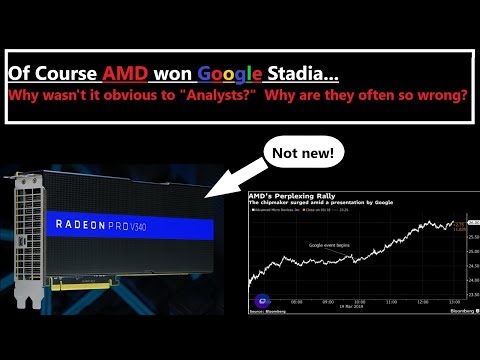 https://www.youtube.com/watch?v=7m93S53eaXQ
who probably demystify something even if mostly about finanical stuff
it uses Radeon Pro V340, guy in video say could run two player in 4K or 16 in 720p who is more realistic.
Grinding just make you go in circles.
Asking ZoS for nerfs is as stupid as asking for close air support from the death star.0 -
starkerealm✭✭✭✭✭
✭✭✭✭✭LiquidPony wrote: »starkerealm wrote: »anitajoneb17_ESO wrote: »Yep, I'm sure. It was clearly explained, detailed and emphasized. Not extra hardware required to use Stadia. Unless you believe Google executives would flatout lie at GDC, which I don't believe.
Any meaningful discussion about hardware requirements and cloud computing for gaming runs up against one issue that need to be reiterated.
Cloud computing, as a concept, is just dumb terminal architecture over a WAN. This, literally, goes back to the earliest intranet infrastructures. The client doesn't need much in the way of resources, because it's not doing any of the heavy lifting. However, the server side needs to be there.
I made a somewhat dismissive comment earlier, but it is still accurate. Cloud Computing, at its core, is buying a computer and then simultaneously leasing it to multiple people based on the idea that (statistically), "they can't all want to use it at the same time, right?"
Burn past the hype, and cloud computing is old. It's one of the earlier mainframe architectures rebranded for the 21st century. This approach to computing was in use back in the 60s. And, none of the fundamental problems with the architecture have been addressed.
As marketing goes, it really is a kind of shell game. "We have three customers, but only one PC, let's see if anyone notices."
A donkey is basically the same thing as a Ducati Panigale, right?
I honestly don't even know what you mean when you say "none of the fundamental problems with the architecture have been addressed".
More like a PT Cruiser is basically the same thing as a Dodge Neon. Sure, one may look better on the outside, but under the hood, it's a whole lot of, "second verse, same as the first."0 -
LiquidPony✭✭✭✭✭
✭✭✭starkerealm wrote: »LiquidPony wrote: »starkerealm wrote: »anitajoneb17_ESO wrote: »Yep, I'm sure. It was clearly explained, detailed and emphasized. Not extra hardware required to use Stadia. Unless you believe Google executives would flatout lie at GDC, which I don't believe.
Any meaningful discussion about hardware requirements and cloud computing for gaming runs up against one issue that need to be reiterated.
Cloud computing, as a concept, is just dumb terminal architecture over a WAN. This, literally, goes back to the earliest intranet infrastructures. The client doesn't need much in the way of resources, because it's not doing any of the heavy lifting. However, the server side needs to be there.
I made a somewhat dismissive comment earlier, but it is still accurate. Cloud Computing, at its core, is buying a computer and then simultaneously leasing it to multiple people based on the idea that (statistically), "they can't all want to use it at the same time, right?"
Burn past the hype, and cloud computing is old. It's one of the earlier mainframe architectures rebranded for the 21st century. This approach to computing was in use back in the 60s. And, none of the fundamental problems with the architecture have been addressed.
As marketing goes, it really is a kind of shell game. "We have three customers, but only one PC, let's see if anyone notices."
A donkey is basically the same thing as a Ducati Panigale, right?
I honestly don't even know what you mean when you say "none of the fundamental problems with the architecture have been addressed".
More like a PT Cruiser is basically the same thing as a Dodge Neon. Sure, one may look better on the outside, but under the hood, it's a whole lot of, "second verse, same as the first."
I understand that the dismissive and overly-simplistic analogies may be appealing to a certain type of person, but I seriously doubt anyone who actually works in this universe or even has more than a superficial understanding would agree.
Fundamentally "the cloud" and "mainframe computing" are different solutions to entirely different problems. Mainframe systems existed because computing power was scarce and expensive; cloud systems exist because computing power is abundant and cheap but managing and orchestrating those diverse resources is difficult and expensive. Mainframes were generally "one big computer" with batched/scheduled programming paradigms whereas "the cloud" focuses on dynamic self-service provisioning, elasticity, and asynchronous/parallel/reactive programming paradigms.
Sure, grandpa on his thin client may not see a significant difference other than speed and bells-and-whistles (sort of like a passenger in a horse-and-buggy may only see a difference in speed and bells-and-whistles if they get in the back seat of a 2019 Rolls Royce Phantom), but under the covers they are vastly different things.0 -
idk✭✭✭✭✭
✭✭✭✭✭OrangeTheCat wrote: »green_villain wrote: »google just announced their cloud gaming platform
no lags or latency issues anymore!
do you think it will improve cyrodiil performance if ever ESO will be available there?
You don't understand what Google is trying to do.
and I do not think OP does either.
See, I often work on servers half way around the world and as a result have a long lag time so I end up interfacing with the server via a remote desktop on a server much closer to eliminate the lag from travel distance. If I have to do a large upload to the server I preload it onto another server next to it to eliminate errors due to the lag. This is really no different than what Google is trying to do.
However, it does not magically solve the issues with the actual server performance. The majority of issues with ESO have to do with server performance. Cyrodill will not be impacted by using cloud computing. In Raids we sometimes experience server lag and we know it is server side because everyone is affected equally. Sometimes, though rarely, it has affected us loading into the same instance or has caused abnormally long load screens.
None of that would be solved by what Google has to offer. Most of us would not experience any improvement.
0