Maintenance for the week of August 10:
• [COMPLETE] NA megaservers for patch maintenance – August 10, 4:00AM EDT (8:00 UTC) - 12:00PM EDT (16:00 UTC)
• [COMPLETE] EU megaservers for patch maintenance – August 10, 8:00 UTC (4:00AM EDT) - 16:00 UTC (12:00PM EDT)
• [COMPLETE] NA megaservers for patch maintenance – August 10, 4:00AM EDT (8:00 UTC) - 12:00PM EDT (16:00 UTC)
• [COMPLETE] EU megaservers for patch maintenance – August 10, 8:00 UTC (4:00AM EDT) - 16:00 UTC (12:00PM EDT)
The lesson of New World

Taarente
✭✭✭✭
Amazon’s New World is being shut down. It has already been removed from sale, its final content update has been released, and the servers will close permanently in January 2027.
At launch, it reached more than 900,000 concurrent players on Steam. It had a beautiful world, excellent sound and environmental design, satisfying gathering and crafting, and combat that many people genuinely enjoyed. It was not a game without qualities, nor did it fail because nobody was interested in it.
It failed because Amazon never established a sufficiently clear and sustainable idea of what the game was supposed to be.
New World began as a heavily PvP-focused sandbox and was subsequently redirected towards a more conventional PvE MMO. The released game retained systems designed for the original concept while lacking enough content and depth to satisfy the audience attracted by the new one. Territory wars were important but accessible mainly to selected company players. PvE existed but was repetitive, while its endgame progression was excessively grindy and repeatedly redesigned.
It then launched before it was ready.
Players encountered enormous queues, broken abilities, exploits, item and gold duplication, bots, server problems and a damaged economy. Trading had to be disabled repeatedly in a game where crafting and its player economy were supposed to be central features.
Amazon substantially improved the game over the following years. Unfortunately, much of that work brought it towards the condition in which it should originally have launched. By then, confidence had been lost.
That should concern anyone responsible for the future of ESO.
An MMO rarely dies simply because it runs out of players one morning. It dies through the gradual erosion of confidence. Players stop believing that their time, money and emotional investment will be respected. They may continue logging in because of friends, established characters, homes, guilds and affection for the world, but their relationship with the game changes from enthusiasm to endurance.
There are several lessons here for ZOS.
Know what ESO fundamentally is
ESO’s greatest assets are Tamriel, its stories and characters, exploration, housing, social communities, and the identities players have built for their characters over many years.
New systems should support those strengths. They should not continually pull the game in different directions in pursuit of a hypothetical new audience.
Novelty is not necessarily improvement
A new progression system, currency or reward container is not automatically new content.
Veterancy, trade bars, rotating activities and additional reward structures only improve the game if the underlying activity is enjoyable and the reward feels worthwhile. Otherwise, they add administration rather than entertainment.
Fix the foundations before adding another floor
Persistent combat problems, Cyrodiil performance, broken encounters, group-finder difficulties and long-standing bugs undermine confidence in every new feature placed above them.
There comes a point when adding more systems to a game with unresolved structural problems stops looking ambitious and starts looking evasive.
Test the complete player experience
It is not enough for an activity to function technically.
A Whitestrake’s Mayhem reward container can open successfully while its contents remain profoundly disappointing. A dungeon can technically be completed while its mechanics make the ordinary pick-up-group experience confusing and miserable.
Somebody needs to play the finished activity and ask:
Was that enjoyable? Was it understandable? Did the reward justify the time? Would I voluntarily do it again?
Complexity has a cost
ESO now contains enormous numbers of sets, traits, currencies, upgrade materials, mythics, antiquities, scribing abilities, subclass combinations, champion points, curated drops, event systems and reward tracks.
Each individual system may have an explanation. Collectively, they risk making the game feel like an accounting package with dragons.
Good design is not measured by how many interacting systems can be created. Sometimes the best improvement is removing unnecessary complexity.
Do not reserve the game’s defining activities for a small minority
One of New World’s most distinctive features was its territory-war system, but access was controlled by companies selecting participants. Much of the wider population could therefore be excluded from the content that supposedly defined the game.
ESO should be careful not to design its most impressive activities almost exclusively around highly organised or expert groups. Difficult content has its place, but the broader population also needs meaningful, rewarding ways to participate.
Respect people’s investment
Repeated balance upheavals, set invalidation and major changes to established character identities teach players not to become attached to anything.
Why spend time obtaining, upgrading and learning a build if the next update may dismantle it? Balance changes will always be necessary, but constant disruption eventually turns anticipation into weariness.
Communication cannot replace delivery
Roadmaps, developer letters and statements saying that feedback has been heard have diminishing value when the same mistakes continue.
Players judge the game they receive, not the future described in an announcement. Confidence is restored by visibly closing the loop: identify the problem, explain the decision, implement the fix and verify that it worked.
Do not take loyal players for granted
Amazon eventually repositioned New World: Aeternum towards a console audience, while established PC players endured a long period with little new content. The relaunch produced another temporary increase in activity, but it did not create a sustainable recovery.
ZOS should be very careful about pursuing hypothetical future customers while making established players feel like inconvenient legacy customers.
ESO has an advantage that New World never possessed: decades of affection for the Elder Scrolls setting and more than a decade of players building lives within this particular version of Tamriel.
That advantage can also disguise decline.
People may continue playing because they love the world, their characters and their communities even after they have lost confidence in the people managing the game. Continued logins should not automatically be interpreted as satisfaction.
Many of us are still here because ESO created a wonderful fantasy world in which we have invested considerable time and money. Increasingly, however, it can feel as though the world is excellent but the landlord is the problem.
The lesson of New World is not that ZOS must produce more.
It is that ZOS should pause before adding further questionable systems, repair and simplify the game it already has, make existing activities consistently enjoyable and rewarding, and demonstrate that somebody responsible has played the finished result from the perspective of an ordinary player.
Amazon had sufficient money and technical resources to make an MMO. What it never found was a convincing answer to the essential question:
What will make people want to continue living in this world for the next five years?
ZOS should make certain it still knows its answer.
At launch, it reached more than 900,000 concurrent players on Steam. It had a beautiful world, excellent sound and environmental design, satisfying gathering and crafting, and combat that many people genuinely enjoyed. It was not a game without qualities, nor did it fail because nobody was interested in it.
It failed because Amazon never established a sufficiently clear and sustainable idea of what the game was supposed to be.
New World began as a heavily PvP-focused sandbox and was subsequently redirected towards a more conventional PvE MMO. The released game retained systems designed for the original concept while lacking enough content and depth to satisfy the audience attracted by the new one. Territory wars were important but accessible mainly to selected company players. PvE existed but was repetitive, while its endgame progression was excessively grindy and repeatedly redesigned.
It then launched before it was ready.
Players encountered enormous queues, broken abilities, exploits, item and gold duplication, bots, server problems and a damaged economy. Trading had to be disabled repeatedly in a game where crafting and its player economy were supposed to be central features.
Amazon substantially improved the game over the following years. Unfortunately, much of that work brought it towards the condition in which it should originally have launched. By then, confidence had been lost.
That should concern anyone responsible for the future of ESO.
An MMO rarely dies simply because it runs out of players one morning. It dies through the gradual erosion of confidence. Players stop believing that their time, money and emotional investment will be respected. They may continue logging in because of friends, established characters, homes, guilds and affection for the world, but their relationship with the game changes from enthusiasm to endurance.
There are several lessons here for ZOS.
Know what ESO fundamentally is
ESO’s greatest assets are Tamriel, its stories and characters, exploration, housing, social communities, and the identities players have built for their characters over many years.
New systems should support those strengths. They should not continually pull the game in different directions in pursuit of a hypothetical new audience.
Novelty is not necessarily improvement
A new progression system, currency or reward container is not automatically new content.
Veterancy, trade bars, rotating activities and additional reward structures only improve the game if the underlying activity is enjoyable and the reward feels worthwhile. Otherwise, they add administration rather than entertainment.
Fix the foundations before adding another floor
Persistent combat problems, Cyrodiil performance, broken encounters, group-finder difficulties and long-standing bugs undermine confidence in every new feature placed above them.
There comes a point when adding more systems to a game with unresolved structural problems stops looking ambitious and starts looking evasive.
Test the complete player experience
It is not enough for an activity to function technically.
A Whitestrake’s Mayhem reward container can open successfully while its contents remain profoundly disappointing. A dungeon can technically be completed while its mechanics make the ordinary pick-up-group experience confusing and miserable.
Somebody needs to play the finished activity and ask:
Was that enjoyable? Was it understandable? Did the reward justify the time? Would I voluntarily do it again?
Complexity has a cost
ESO now contains enormous numbers of sets, traits, currencies, upgrade materials, mythics, antiquities, scribing abilities, subclass combinations, champion points, curated drops, event systems and reward tracks.
Each individual system may have an explanation. Collectively, they risk making the game feel like an accounting package with dragons.
Good design is not measured by how many interacting systems can be created. Sometimes the best improvement is removing unnecessary complexity.
Do not reserve the game’s defining activities for a small minority
One of New World’s most distinctive features was its territory-war system, but access was controlled by companies selecting participants. Much of the wider population could therefore be excluded from the content that supposedly defined the game.
ESO should be careful not to design its most impressive activities almost exclusively around highly organised or expert groups. Difficult content has its place, but the broader population also needs meaningful, rewarding ways to participate.
Respect people’s investment
Repeated balance upheavals, set invalidation and major changes to established character identities teach players not to become attached to anything.
Why spend time obtaining, upgrading and learning a build if the next update may dismantle it? Balance changes will always be necessary, but constant disruption eventually turns anticipation into weariness.
Communication cannot replace delivery
Roadmaps, developer letters and statements saying that feedback has been heard have diminishing value when the same mistakes continue.
Players judge the game they receive, not the future described in an announcement. Confidence is restored by visibly closing the loop: identify the problem, explain the decision, implement the fix and verify that it worked.
Do not take loyal players for granted
Amazon eventually repositioned New World: Aeternum towards a console audience, while established PC players endured a long period with little new content. The relaunch produced another temporary increase in activity, but it did not create a sustainable recovery.
ZOS should be very careful about pursuing hypothetical future customers while making established players feel like inconvenient legacy customers.
ESO has an advantage that New World never possessed: decades of affection for the Elder Scrolls setting and more than a decade of players building lives within this particular version of Tamriel.
That advantage can also disguise decline.
People may continue playing because they love the world, their characters and their communities even after they have lost confidence in the people managing the game. Continued logins should not automatically be interpreted as satisfaction.
Many of us are still here because ESO created a wonderful fantasy world in which we have invested considerable time and money. Increasingly, however, it can feel as though the world is excellent but the landlord is the problem.
The lesson of New World is not that ZOS must produce more.
It is that ZOS should pause before adding further questionable systems, repair and simplify the game it already has, make existing activities consistently enjoyable and rewarding, and demonstrate that somebody responsible has played the finished result from the perspective of an ordinary player.
Amazon had sufficient money and technical resources to make an MMO. What it never found was a convincing answer to the essential question:
What will make people want to continue living in this world for the next five years?
ZOS should make certain it still knows its answer.
33
-
 Nemesis7884✭✭✭✭✭
✭✭✭✭✭Eso has been aroubd more than 10 years making it one of the longest running big name mmorpgs...10 -
Taarente✭✭✭✭Nemesis7884 wrote: »Eso has been aroubd more than 10 years making it one of the longest running big name mmorpgs...
Congratulations on missing the point perfectly.11 -
 MissNoir✭✭✭Sadly I can’t even enjoy the beauty of Tamriel anymore without my immersion constantly being interrupted by the noise of a roaring dragon just because someone with a certain weapon style is somewhere around the zone.
This is the first time ever I’m not buying the new “content”. I just absolutely do not want any of those weapon styles to be in my collection.-- Please visit my houses that are listed in Home Tours under my ingame username ClanNoir (PC/EU) --4 -
 SkaiFaith✭✭✭✭✭
✭✭OP's quote: "An MMO rarely dies simply because it runs out of players one morning. It dies through the gradual erosion of confidence. Players stop believing that their time, money and emotional investment will be respected. They may continue logging in because of friends, established characters, homes, guilds and affection for the world, but their relationship with the game changes from enthusiasm to endurance."
YOU SAY?
Man, this Banana is really good at doing the job of a Banana!
This Pineapple instead doesn't even understand what a Pineapple is!
Please! Give a raise to the Banana! Part ways with the Pineapple!
*AI performance optimizer steps in: "What if I play... Uno Reverse!"
Yeah, I don't think I have enough trust anymore to think I'll even be allowed to have a place here, being it forum or in-game, despite maintaining it with my money and play time for 10 years.
If soon you won't see me around here anymore it's likely I've never left ESO by my will, as I never wanted to do, but evidently ESO will feel better after having pushed me out - Sorry, I said ESO... To be fair it's not the game's fault. But definitely someone will be happy. When a player trusts more this feeling than the feeling of being important for the people he gives his money to, something is not working and going in a wrong way.
See ya guys~ (Brace for the incoming inevitable "Mod" Edit. Likely Thread closure too. Screenshot for posterity.)Edited by SkaiFaith on August 9, 2026 5:03PM"..........Anyway, here's how
to tell if your RPG
sign is cheap" - Tony(?)1 -
 vgastel✭✭✭Well said OP. New world had so much potential. In addition to what OP said New World had a bad monetization model. No eso+ equivalent and a meager crown store equivalent. The game couldn't self support. And god the initial problems were horrible. In the end, AI became a thing and Amazon changed their business priorities.3
 -
PoveusRonin✭✭✭An MMO rarely dies simply because it runs out of players one morning. It dies through the gradual erosion of confidence. Players stop believing that their time, money and emotional investment will be respected. They may continue logging in because of friends, established characters, homes, guilds and affection for the world, but their relationship with the game changes from enthusiasm to endurance.
It dies due to gradual loss of players. It matters not if they have confidence if they continue to log in and play. If they are giving money to a company, the company will continue on the same path.New World began as a heavily PvP-focused sandbox and was subsequently redirected towards a more conventional PvE MMO. The released game retained systems designed for the original concept while lacking enough content and depth to satisfy the audience attracted by the new one. Territory wars were important but accessible mainly to selected company players. PvE existed but was repetitive, while its endgame progression was excessively grindy and repeatedly redesigned.
A game can fully succeed being PvP only. adding a PvE aspect would not have mattered if they had enough interest and compelling gameplay for the PvP crowd.Edited by PoveusRonin on August 9, 2026 9:23PM1 -
 Treeshka✭✭✭✭✭
✭I think broader and most accessible content in the game is the quests and stories. So in my opinion, they should make deep and detailed stories with good plot. Cliffhangers even, so i can look forward for next batch of story.6 -
 Radiate77✭✭✭✭✭
✭✭New World was perfect when EoS was announced, it spent all of it’s time getting to that point…
Let that sink in every time you consider how long these Reworks are taking.Edited by Radiate77 on August 9, 2026 9:44PMDragon Priest [Restoring Light, Draconic Power, Grave Lord]
Death Knight [Grave Lord, Winter’s Embrace, Siphoning]
Pyromancer [Ardent Flame, Dawn’s Wrath, Earthen Heart]
Summoner [Living Death, Grave Lord, Daedric Summoning]
Ranger [Animal Companions, Green Balance, Shadow]
Druid [Earthen Heart, Animal Companions, Stormcalling]
Elementalist [Stormcalling, Winter’s Embrace, Ardent Flame]
Dawnguard [Dawn’s Wrath, Restoring Light, Ardent Flame]2 -
 Vonnegut2506✭✭✭✭✭
✭PoveusRonin wrote: »An MMO rarely dies simply because it runs out of players one morning. It dies through the gradual erosion of confidence. Players stop believing that their time, money and emotional investment will be respected. They may continue logging in because of friends, established characters, homes, guilds and affection for the world, but their relationship with the game changes from enthusiasm to endurance.
It dies due to gradual loss of players. It matters not if they have confidence if they continue to log in and play. If they are giving money to a company, the company will continue on the same path.New World began as a heavily PvP-focused sandbox and was subsequently redirected towards a more conventional PvE MMO. The released game retained systems designed for the original concept while lacking enough content and depth to satisfy the audience attracted by the new one. Territory wars were important but accessible mainly to selected company players. PvE existed but was repetitive, while its endgame progression was excessively grindy and repeatedly redesigned.
A game can fully succeed being PvP only. adding a PvE aspect would not have mattered if they had enough interest and compelling gameplay for the PvP crowd.
Care to point out the MMO's that are PvP only that are succeeding?1 -
 Ei8htba11✭✭✭✭✭Well said, this gets a bump.. someone at ZoS should at least read this and consider1
 -
 StackonClown✭✭✭✭✭Was night market a success? To me I couldn't really make the most of it.. due to few people online in my timezone.
And dont get me started on 'fighting a wall' 0
0 -
PoveusRonin✭✭✭Vonnegut2506 wrote: »PoveusRonin wrote: »An MMO rarely dies simply because it runs out of players one morning. It dies through the gradual erosion of confidence. Players stop believing that their time, money and emotional investment will be respected. They may continue logging in because of friends, established characters, homes, guilds and affection for the world, but their relationship with the game changes from enthusiasm to endurance.
It dies due to gradual loss of players. It matters not if they have confidence if they continue to log in and play. If they are giving money to a company, the company will continue on the same path.New World began as a heavily PvP-focused sandbox and was subsequently redirected towards a more conventional PvE MMO. The released game retained systems designed for the original concept while lacking enough content and depth to satisfy the audience attracted by the new one. Territory wars were important but accessible mainly to selected company players. PvE existed but was repetitive, while its endgame progression was excessively grindy and repeatedly redesigned.
A game can fully succeed being PvP only. adding a PvE aspect would not have mattered if they had enough interest and compelling gameplay for the PvP crowd.
Care to point out the MMO's that are PvP only that are succeeding?
Care to point out where I said MMO?0 -
Vonnegut2506✭✭✭✭✭
✭PoveusRonin wrote: »Vonnegut2506 wrote: »PoveusRonin wrote: »An MMO rarely dies simply because it runs out of players one morning. It dies through the gradual erosion of confidence. Players stop believing that their time, money and emotional investment will be respected. They may continue logging in because of friends, established characters, homes, guilds and affection for the world, but their relationship with the game changes from enthusiasm to endurance.
It dies due to gradual loss of players. It matters not if they have confidence if they continue to log in and play. If they are giving money to a company, the company will continue on the same path.New World began as a heavily PvP-focused sandbox and was subsequently redirected towards a more conventional PvE MMO. The released game retained systems designed for the original concept while lacking enough content and depth to satisfy the audience attracted by the new one. Territory wars were important but accessible mainly to selected company players. PvE existed but was repetitive, while its endgame progression was excessively grindy and repeatedly redesigned.
A game can fully succeed being PvP only. adding a PvE aspect would not have mattered if they had enough interest and compelling gameplay for the PvP crowd.
Care to point out the MMO's that are PvP only that are succeeding?
Care to point out where I said MMO?
Given that the exact wording you quoted mentioned New World being PvP-focused and then becoming a more conventional MMO -- hint, hint -- I assumed you knew they were speaking about MMO's.3 -
 RaikaNA✭✭✭✭✭
✭I'm going to miss New World so much
I loved the chest runs from elite zones... Love riding my turkey mount...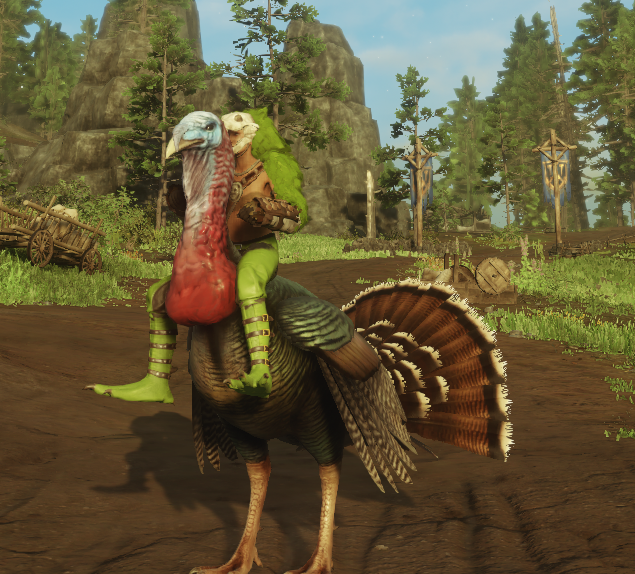
Loved the Turkulon event!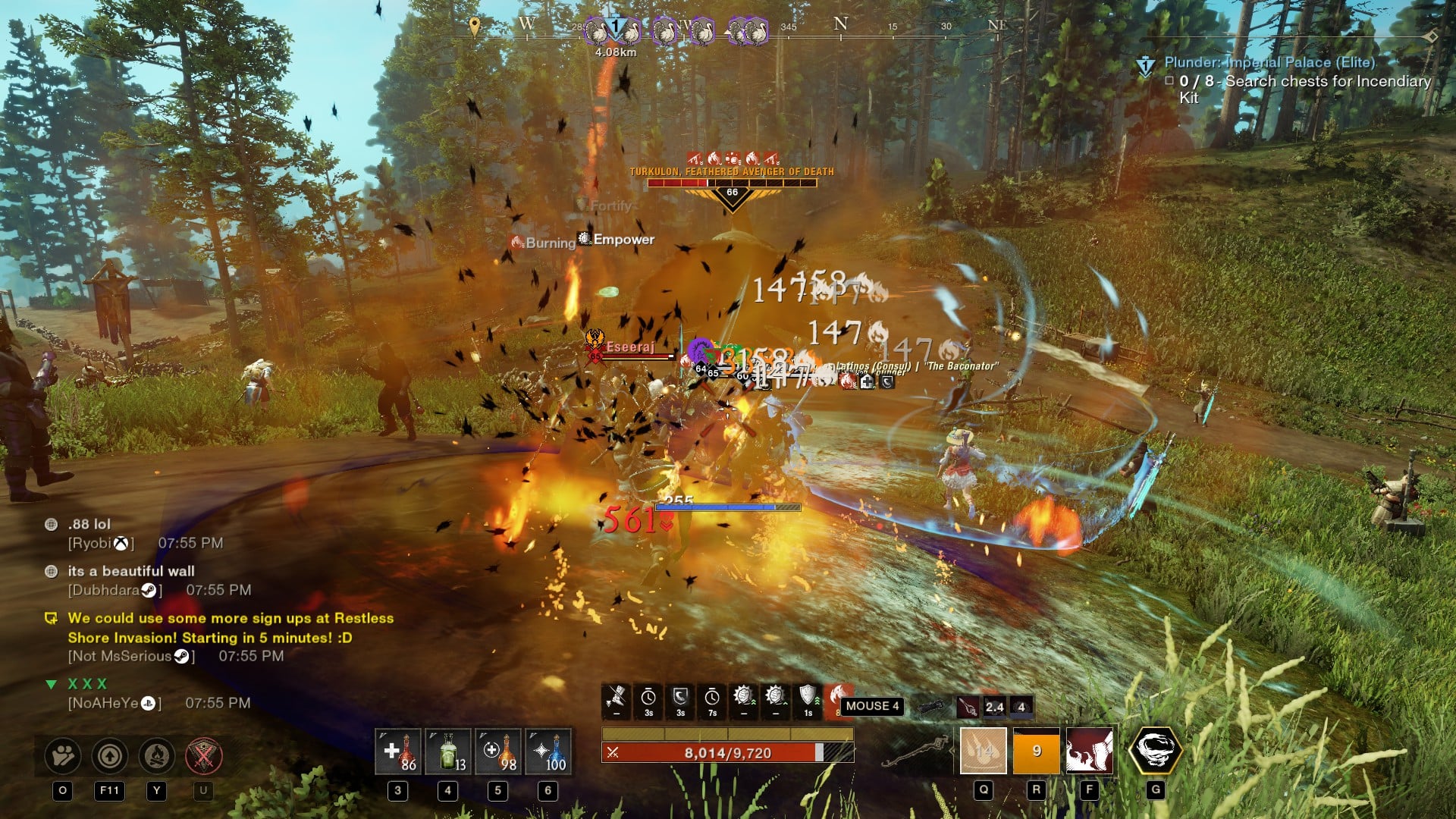
Loved how Turkeys can invade keeps and walk into people's houses...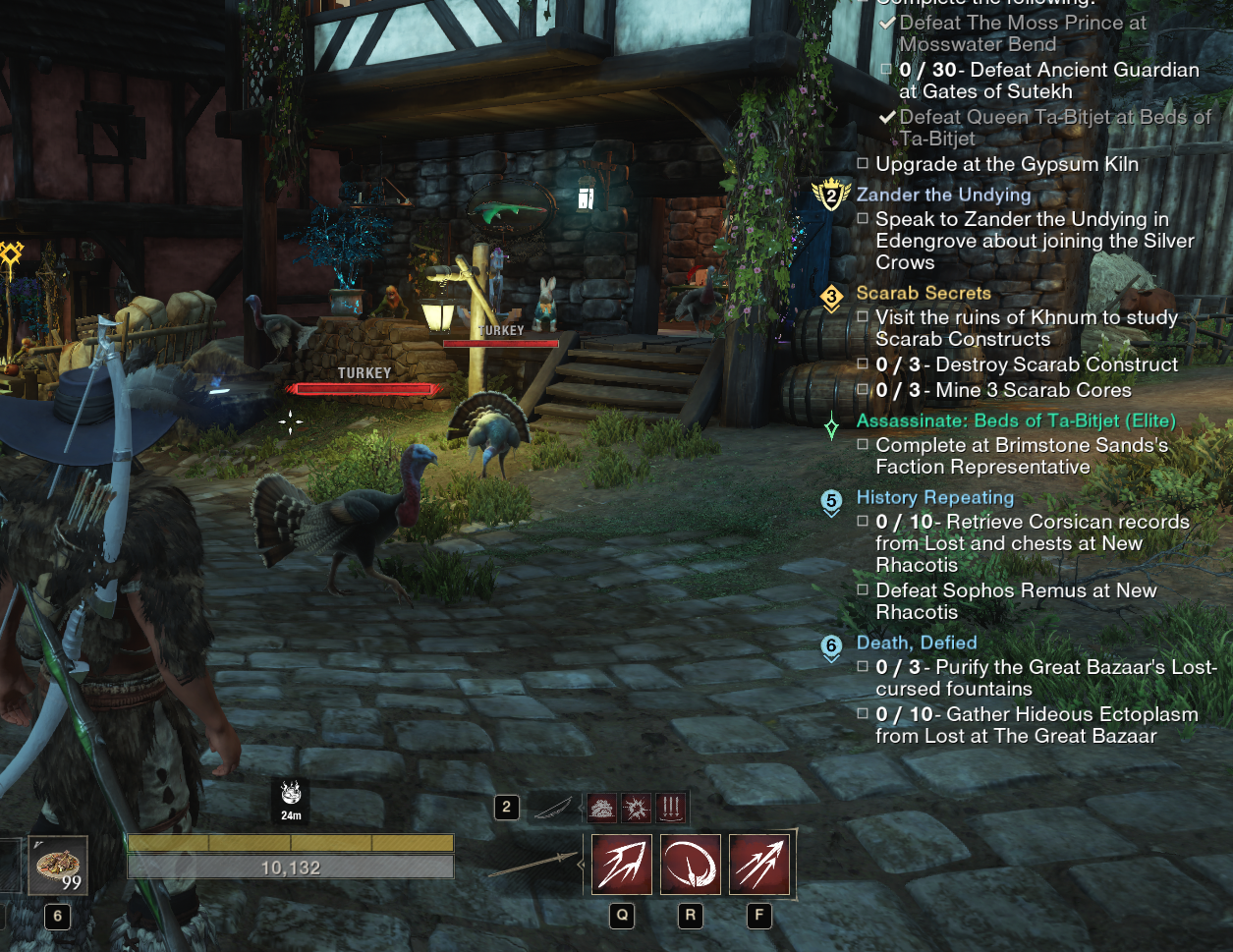
LOVED the turkeys in this game.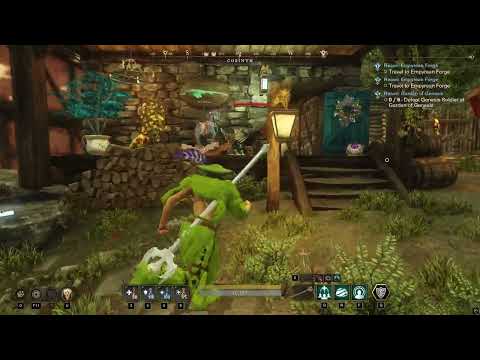 https://www.youtube.com/watch?v=hvuV3zOnELc
And I especially LOVE how you can flag up for PvP in open world... not having to rely on a campaign (Cyrodill) for your PvP needs.. https://www.youtube.com/watch?v=Lxr9dbCSs-M
New world is going to be missed for sure.
1 -
Radiate77✭✭✭✭✭
✭✭I'm going to miss New World so much
I loved the chest runs from elite zones... Love riding my turkey mount...
Loved the Turkulon event!
Loved how Turkeys can invade keeps and walk into people's houses...
LOVED the turkeys in this game.https://www.youtube.com/watch?v=hvuV3zOnELc
And I especially LOVE how you can flag up for PvP in open world... not having to rely on a campaign (Cyrodill) for your PvP needs..https://www.youtube.com/watch?v=Lxr9dbCSs-M
New world is going to be missed for sure.
New World fully captured me away from ESO.
I didn’t believe it was possible, but having picked it up a month before Nighthaven, I was experiencing that feeling I had when I first started playing this back in 2015… and it’s been 10 years.
Having only played the game for a few weeks, I was already queuing up into Arenas and participating in Outpost Rush and getting incredible results… I joined Covenant and got to participate in huge break-out fights in the middle of fields on the way to Outposts… the whole world felt so alive.
Such a shame.Dragon Priest [Restoring Light, Draconic Power, Grave Lord]
Death Knight [Grave Lord, Winter’s Embrace, Siphoning]
Pyromancer [Ardent Flame, Dawn’s Wrath, Earthen Heart]
Summoner [Living Death, Grave Lord, Daedric Summoning]
Ranger [Animal Companions, Green Balance, Shadow]
Druid [Earthen Heart, Animal Companions, Stormcalling]
Elementalist [Stormcalling, Winter’s Embrace, Ardent Flame]
Dawnguard [Dawn’s Wrath, Restoring Light, Ardent Flame]1 -
RaikaNA✭✭✭✭✭
✭I'm going to miss New World so much
I loved the chest runs from elite zones... Love riding my turkey mount...
Loved the Turkulon event!
Loved how Turkeys can invade keeps and walk into people's houses...
LOVED the turkeys in this game.https://www.youtube.com/watch?v=hvuV3zOnELc
And I especially LOVE how you can flag up for PvP in open world... not having to rely on a campaign (Cyrodill) for your PvP needs..https://www.youtube.com/watch?v=Lxr9dbCSs-M
New world is going to be missed for sure.
New World fully captured me away from ESO.
I didn’t believe it was possible, but having picked it up a month before Nighthaven, I was experiencing that feeling I had when I first started playing this back in 2015… and it’s been 10 years.
Having only played the game for a few weeks, I was already queuing up into Arenas and participating in Outpost Rush and getting incredible results… I joined Covenant and got to participate in huge break-out fights in the middle of fields on the way to Outposts… the whole world felt so alive.
Such a shame.
I had the same effect. Nighthaven was a beautiful expansion, and I enjoyed each moment of it. On my first character, I joined the covenant, but on my second character, I joined the Marauders because my guild migrated to the faction.
I enjoyed the pve elements of the game, like invasions and trials such as The Hive of Gorgons. What a trial that was LOL.
It should be criminal what Amazon is doing to New World. It's a crime to ruin such a highly potential game.
The game used to have a calming effect on me whenever I did open-world stuff like cutting trees and farming for resources.0 -
Radiate77✭✭✭✭✭
✭✭I'm going to miss New World so much
I loved the chest runs from elite zones... Love riding my turkey mount...
Loved the Turkulon event!
Loved how Turkeys can invade keeps and walk into people's houses...
LOVED the turkeys in this game.https://www.youtube.com/watch?v=hvuV3zOnELc
And I especially LOVE how you can flag up for PvP in open world... not having to rely on a campaign (Cyrodill) for your PvP needs..https://www.youtube.com/watch?v=Lxr9dbCSs-M
New world is going to be missed for sure.
New World fully captured me away from ESO.
I didn’t believe it was possible, but having picked it up a month before Nighthaven, I was experiencing that feeling I had when I first started playing this back in 2015… and it’s been 10 years.
Having only played the game for a few weeks, I was already queuing up into Arenas and participating in Outpost Rush and getting incredible results… I joined Covenant and got to participate in huge break-out fights in the middle of fields on the way to Outposts… the whole world felt so alive.
Such a shame.
I had the same effect. Nighthaven was a beautiful expansion, and I enjoyed each moment of it. On my first character, I joined the covenant, but on my second character, I joined the Marauders because my guild migrated to the faction.
I enjoyed the pve elements of the game, like invasions and trials such as The Hive of Gorgons. What a trial that was LOL.
It should be criminal what Amazon is doing to New World. It's a crime to ruin such a highly potential game.
The game used to have a calming effect on me whenever I did open-world stuff like cutting trees and farming for resources.
I’ve been saying we need the bard system they had over here in ESO, aswell as the matchmade Arenas. 3v3 Elimination with role-queue would be so popular.Edited by Radiate77 on August 10, 2026 6:34AMDragon Priest [Restoring Light, Draconic Power, Grave Lord]
Death Knight [Grave Lord, Winter’s Embrace, Siphoning]
Pyromancer [Ardent Flame, Dawn’s Wrath, Earthen Heart]
Summoner [Living Death, Grave Lord, Daedric Summoning]
Ranger [Animal Companions, Green Balance, Shadow]
Druid [Earthen Heart, Animal Companions, Stormcalling]
Elementalist [Stormcalling, Winter’s Embrace, Ardent Flame]
Dawnguard [Dawn’s Wrath, Restoring Light, Ardent Flame]0 -
 Usureki✭✭✭✭OP's post should be sent to every and all personnel participating in the development of ESO. Well said.0
 -
old_mufasa✭✭✭✭Nemesis7884 wrote: »Eso has been aroubd more than 10 years making it one of the longest running big name mmorpgs...
Congratulations on missing the point perfectly.
No he understood your point exactly and his comment invalidates the majority of your post because you're acting as if ESO doesn't know how to sustain itself. Giving it to been around for more than a decade and not many MMOs that are successful can do that. Well kind of contradict your doom and gloom post.
New world was pretty bad when it first released. Requiring requiring a complete revamp and time investment.
Many people are drawn to a shiny new thing but when the core is a turd they leave.
PVP and ESO has never been the primary focus it's a PVE MMO with PVP aspects just like
World of Warcraft.
And for years somebody comes in and post this whole thing that you're going to lose everybody if you don't revamp XYZ and those things didn't get revamped or taken forever to change and yet the games still here.
So maybe the issue here is the bias lies in how you look at the game and you think everybody else agrees with your version of how things should be.5 -
Ocelot9x✭✭✭✭✭old_mufasa wrote: »Nemesis7884 wrote: »Eso has been aroubd more than 10 years making it one of the longest running big name mmorpgs...
Congratulations on missing the point perfectly.
No he understood your point exactly and his comment invalidates the majority of your post because you're acting as if ESO doesn't know how to sustain itself. Giving it to been around for more than a decade and not many MMOs that are successful can do that. Well kind of contradict your doom and gloom post.
New world was pretty bad when it first released. Requiring requiring a complete revamp and time investment.
Many people are drawn to a shiny new thing but when the core is a turd they leave.
PVP and ESO has never been the primary focus it's a PVE MMO with PVP aspects just like
World of Warcraft.
And for years somebody comes in and post this whole thing that you're going to lose everybody if you don't revamp XYZ and those things didn't get revamped or taken forever to change and yet the games still here.
So maybe the issue here is the bias lies in how you look at the game and you think everybody else agrees with your version of how things should be.
Nope, one of the main selling point of ESO when it first launched was being the spiritual successor of DaoC; it then shifted on a more casual friendly pve experience till being the housing simulator that is now.
3 -
SerafinaWaterstar✭✭✭✭✭
✭✭old_mufasa wrote: »Nemesis7884 wrote: »Eso has been aroubd more than 10 years making it one of the longest running big name mmorpgs...
Congratulations on missing the point perfectly.
No he understood your point exactly and his comment invalidates the majority of your post because you're acting as if ESO doesn't know how to sustain itself. Giving it to been around for more than a decade and not many MMOs that are successful can do that. Well kind of contradict your doom and gloom post.
New world was pretty bad when it first released. Requiring requiring a complete revamp and time investment.
Many people are drawn to a shiny new thing but when the core is a turd they leave.
PVP and ESO has never been the primary focus it's a PVE MMO with PVP aspects just like
World of Warcraft.
And for years somebody comes in and post this whole thing that you're going to lose everybody if you don't revamp XYZ and those things didn't get revamped or taken forever to change and yet the games still here.
So maybe the issue here is the bias lies in how you look at the game and you think everybody else agrees with your version of how things should be.
Nope, one of the main selling point of ESO when it first launched was being the spiritual successor of DaoC; it then shifted on a more casual friendly pve experience till being the housing simulator that is now.
Really don’t recall that at all. Was excited for ESO due to Skyrim, as I think most were.1 -
gariondavey✭✭✭✭✭
✭✭✭SerafinaWaterstar wrote: »old_mufasa wrote: »Nemesis7884 wrote: »Eso has been aroubd more than 10 years making it one of the longest running big name mmorpgs...
Congratulations on missing the point perfectly.
No he understood your point exactly and his comment invalidates the majority of your post because you're acting as if ESO doesn't know how to sustain itself. Giving it to been around for more than a decade and not many MMOs that are successful can do that. Well kind of contradict your doom and gloom post.
New world was pretty bad when it first released. Requiring requiring a complete revamp and time investment.
Many people are drawn to a shiny new thing but when the core is a turd they leave.
PVP and ESO has never been the primary focus it's a PVE MMO with PVP aspects just like
World of Warcraft.
And for years somebody comes in and post this whole thing that you're going to lose everybody if you don't revamp XYZ and those things didn't get revamped or taken forever to change and yet the games still here.
So maybe the issue here is the bias lies in how you look at the game and you think everybody else agrees with your version of how things should be.
Nope, one of the main selling point of ESO when it first launched was being the spiritual successor of DaoC; it then shifted on a more casual friendly pve experience till being the housing simulator that is now.
Really don’t recall that at all. Was excited for ESO due to Skyrim, as I think most were.
Eso was very clearly marketed as a 3 way pvp mmo with pve elements from the start. I followed it in development and this was undeniably the case.PC NA @gariondavey, BG, IC & Cyrodiil Focused Since October 2017 Stamplar (main), Magplar, Magsorc, Stamsorc, StamDK, MagDK, Stamblade, Magblade, Magden, Stamden2 -
Fruity_Ninja✭✭✭✭New World was 🔥
Sad what happened to it
Unfortunately I worry ESO could follow the same suit, corporate suites from the parent company making business decisions that the developer has no control over
Having said that, ESO and New World should have had much bigger populations- your post perfectly summarizes some of the key issues that caused drops in player bases for both games
0 -
 Tannakaobi✭✭✭✭✭gariondavey wrote: »SerafinaWaterstar wrote: »old_mufasa wrote: »Nemesis7884 wrote: »Eso has been aroubd more than 10 years making it one of the longest running big name mmorpgs...
Congratulations on missing the point perfectly.
No he understood your point exactly and his comment invalidates the majority of your post because you're acting as if ESO doesn't know how to sustain itself. Giving it to been around for more than a decade and not many MMOs that are successful can do that. Well kind of contradict your doom and gloom post.
New world was pretty bad when it first released. Requiring requiring a complete revamp and time investment.
Many people are drawn to a shiny new thing but when the core is a turd they leave.
PVP and ESO has never been the primary focus it's a PVE MMO with PVP aspects just like
World of Warcraft.
And for years somebody comes in and post this whole thing that you're going to lose everybody if you don't revamp XYZ and those things didn't get revamped or taken forever to change and yet the games still here.
So maybe the issue here is the bias lies in how you look at the game and you think everybody else agrees with your version of how things should be.
Nope, one of the main selling point of ESO when it first launched was being the spiritual successor of DaoC; it then shifted on a more casual friendly pve experience till being the housing simulator that is now.
Really don’t recall that at all. Was excited for ESO due to Skyrim, as I think most were.
Eso was very clearly marketed as a 3 way pvp mmo with pve elements from the start. I followed it in development and this was undeniably the case.
Not really though. Much of the marketing did talk about the battle in Cyrodiil; that much is true. But it was always very clear that PVP would be just one zone, and the focus was just as much PVE as PVP. There was never any confusion over this, so you must have had tunnel vision.2 -
 I am only a couple of months in to this game, but I admire the OP.
I think the lack of trust is what concerns me the most, and the mising cohesiveness.
I struggle a lot with trying to find value in this game, I mean what does it actually give me in return for my time spent.
The main story ends with a Molag Bar fight, that pampers you thriugh it, so that you can finish the story. But then I came across Torvesard and I cannot defeat him, at least not for now.
The overland delves and dolmens npcs are dropping like flies and often you can just stand still and let the AoE kill them - so why is it so differentiated.
There is also long loading times, inertia like one day I can run from A to B in 6 secongs and other days it takes 10 seconds, flawed quests that suddenly ends and a lot of running around, to me unnessecary running around.
So compared to almost anything else I can spent time on, this game gives very little back. It's like it gets toned down all the time. First I can research an iten, and YEAH, I have kearned a new thing that improves my gaming - but then it takes a week to research and it just becomes doll and uninteresting and it gives me the idea to farm for money to buy items, but it then becomes repetetive.
I know this isn't TES or a solo playing game, but I feel like ZOS is profiting on lost love and new hope - and as you begin to peel the onion it becomes more and more hollow.0