The issues related to logging in to the North American PC/Mac megaserver have been resolved at this time. If you continue to experience difficulties at login, please restart your client. Thank you for your patience!
question for motif dev team, this will be deleted VERY FAST
-
 therift✭✭✭✭✭
✭✭✭Salvas_Aren wrote: »This is a NON-Issue.
Bethesda owns every design inputted into the mods that are created for any Elder Scrolls game. The author of the mod AGREED to this when they certainly read the fine print for mod creation.
Move along.
Take into consideration that some legal systems might declare such agreements null and void per se. If the modder is not an American, this could be important.
Such exceptions are very few. The exceptions that come to mind are Algeria, Iran, Libya, and a couple other North African and former Soviet Union states.
International copyright protections are governed by international treaty; the present standards are set by the TRIPS treaty administered by the World Trade Organization, which itself is derived in part from the Berne Convention of the late 1880s. The WTO membership list and subsequent signatories of TRIPS includes all but a handful of nations on Earth.
The TRIPs treaty specifically requires member states to enact legislation which requires creators of derivative works to obtain permission from the original IP creator. It also prohibits member states from enacting legislation preventing foreign IP owners from pursuing member states' citizens who have infringed on an IP.
The language in Bethesda's mod authorship is not only commonplace throughout most of the world, it is protected under several international treaties.
You would be correct if the mod author were Iranian. You would also be correct in practice if the mod author were Chinese, as the PRC is notoriously lax in its treaty obligations regarding IP protections.
An expert in international copyright protection and UN/WTO treaties could address this better than I, but it is sufficient to say that Bethesda's EULA language follows international conventions.
3 -
 Salvas_Aren✭✭✭✭✭
✭✭@therift
I didn't mean copyright protection per se as we experience it everywhere and every day.
I specifically meant a clause in the terms of a free-ish tool which grants the maker of the tool the copyright or maximum license for the created content. Since many European countries tend to live a policy where weaker parties are generally favoured by explicit protective laws, I'm quite sure there is a bunch of countries where the author of mod content will lack the legal ability to agree to such a special clause, since such non-synallagmatic clauses tend to be invalid if standardized and premade in some ToS.
Maybe I should present a more adequate analogy than knife and spoon: If Microsoft included a clause in the ToS of MS Word, that every document written within it becomes licensed to the corporation, this clause would be null and void too.1 -
therift✭✭✭✭✭
✭✭✭@Salvas_Aren
Well, that subject is outside my area of knowledge, and specific practice in E.U. law certainly is.
And many thanks for teaching me a new word. I had to look up 'synallagmatic'.
I think back in my basic law classes the instructors went with 'mutual contract' as it is easier to spell, lol2 -
Salvas_Aren✭✭✭✭✭
✭✭You're welcome.
The inability to agree to such a clause may even not be derived from the several national Copyright Acts, I suppose. Could be the general rule of consumer protection, and I trust a mod author would be treated as a consumer in such cases.
Therefore, it's not that trivial as some other guy stated here, that the modder at least agreed to something. If one knows he or she lacks the legal ability to agree to a contract, term or clause, clicking Read and Agreed has virtually no consequences. And then people will click the button anyway, for obvious reasons.
However, I also suppose this is not even OT, since this is only true for mods which do not or do mostly not contain vanilla meshes or other Bethesda work.Edited by Salvas_Aren on December 7, 2018 10:18PM2 -
 BoneShatterer✭✭✭for the curious .
youtube and search for immersive wepaon
immersive armor
but being ESO players die hards oyuguys must be too lame or lazy to do it yourself ehres a guide
1-www.youtube.com
2- search bar left lcik on it and write: immersive weapons skyrim1 -
 kargen27✭✭✭✭✭
✭✭✭✭✭"I rather tend to question such terms and clauses. It feels like you borrow a knife to carve a fancy spoon and the owner of the knife owns the spoon (or rather the design of it) once you're done. Therefore, it's no surprise that many legal systems would not allow such a transfer of copyright."
Interesting proposition.
Staying within your analogy, the spoon would be a new intellectual property unless it copied the design of the knife. That's a simplistic answer, but if we subject the analogy to too much analysis, it ceases to be useful.
Under American copyright law, it is very difficult to create new intellectual property derived from someone else's intellectual property, unless it is clearly within the 'fair use' doctrine. Art (such as a comedic parody sketch) and scholarly research are two common examples. Fair Use is not something that can be given a clear definition in all cases and variations; these are often decided individually in court. Bear in mind Bethesda is a U.S. subsidiary of a U.S. firm. They would most likely avail themselves of U.S. law wherever possible.
Author J.K. Rowling once won a lawsuit against an American citizen for copyright infringement. A fan had created an online encyclopedia of her Harry Potter(c) fantasy universe. Initially, the website was small, and even won praise from Rowling for it's quality as fan fiction (Fair Use doctrine as well as limited copyright use permission).
However, this fan was a touch obsessive. The simple encyclopedia grew in time to a massive work that attracted interest from an American book publisher to produce a printed version. This was outside Rowling's limited permission, so Rowling and Warner Bros. sued to prevent publication, won a small settlement, and won control over the fan-created website, which subsequently became the basis of a printed encyclopedia produced by Rowling.
The lesson is that anything created that is derived from another's intellectual property, excepting Fair Use purposes, is essentially the property of the entity from whom the work is derived. Another lesson is that although the original IP owner may give limited permission, if you annoy her, she might just take back everything you created that was derived from her IP.
The lesson for mod authors, or for any content creator working within someone else's creation, is to be damn careful, to be thorough in documenting permissions or public domain, and to expect to surrender ownership either at the time of creation or anytime the orginal IP owner cares to take possession.
I want to respond to the spoon analogy but am switching it to photography. I was a commercial photographer for quite a while. Early in my career I worked for other studios as a freelance photographer. Ownership of the photograph can come into question. Part of the equation for who owns the rights comes down to who owns the equipment. If I use the studios equipment I am out in the cold if I want to claim ownership of the photo unless I have an agreement signed and stating otherwise. If I use my own equipment and am not compensated for using my equipment I have a chance of claiming the photo is mine. So going back to the spoon whether the creator owns the spoon or not depends upon the agreement made with the person who owns the knife used to create it.
Not quite the same but I let an artist do paintings of some of my photographs so she could use them as displays at shows. The only rights I gave her was to use her paintings of my images as a display. Later she submitted one of her paintings to a magazine and they ran it on their cover. That broke our agreement so I sent her and the magazine a letter letting them know any future use of likenesses of my images would result in my filing against them for willful copyright infringement. The artist tried to argue as she didn't know the law but the magazine let me know they would make greater efforts to make sure any artist actually had distribution rights to the image. The short of it being even though the artist created the painting she have a right to sell it.and then the parrot said, "must be the water mines green too."1 -
 Bevik✭✭✭✭This makes me sad together with the fact that so many brilliant add-ons out there and they are just lazy to add them to the base game.1
 -
Salvas_Aren✭✭✭✭✭
✭✭"I rather tend to question such terms and clauses. It feels like you borrow a knife to carve a fancy spoon and the owner of the knife owns the spoon (or rather the design of it) once you're done. Therefore, it's no surprise that many legal systems would not allow such a transfer of copyright."
Interesting proposition.
Staying within your analogy, the spoon would be a new intellectual property unless it copied the design of the knife. That's a simplistic answer, but if we subject the analogy to too much analysis, it ceases to be useful.
Under American copyright law, it is very difficult to create new intellectual property derived from someone else's intellectual property, unless it is clearly within the 'fair use' doctrine. Art (such as a comedic parody sketch) and scholarly research are two common examples. Fair Use is not something that can be given a clear definition in all cases and variations; these are often decided individually in court. Bear in mind Bethesda is a U.S. subsidiary of a U.S. firm. They would most likely avail themselves of U.S. law wherever possible.
Author J.K. Rowling once won a lawsuit against an American citizen for copyright infringement. A fan had created an online encyclopedia of her Harry Potter(c) fantasy universe. Initially, the website was small, and even won praise from Rowling for it's quality as fan fiction (Fair Use doctrine as well as limited copyright use permission).
However, this fan was a touch obsessive. The simple encyclopedia grew in time to a massive work that attracted interest from an American book publisher to produce a printed version. This was outside Rowling's limited permission, so Rowling and Warner Bros. sued to prevent publication, won a small settlement, and won control over the fan-created website, which subsequently became the basis of a printed encyclopedia produced by Rowling.
The lesson is that anything created that is derived from another's intellectual property, excepting Fair Use purposes, is essentially the property of the entity from whom the work is derived. Another lesson is that although the original IP owner may give limited permission, if you annoy her, she might just take back everything you created that was derived from her IP.
The lesson for mod authors, or for any content creator working within someone else's creation, is to be damn careful, to be thorough in documenting permissions or public domain, and to expect to surrender ownership either at the time of creation or anytime the orginal IP owner cares to take possession.
I want to respond to the spoon analogy but am switching it to photography. I was a commercial photographer for quite a while. Early in my career I worked for other studios as a freelance photographer. Ownership of the photograph can come into question. Part of the equation for who owns the rights comes down to who owns the equipment. If I use the studios equipment I am out in the cold if I want to claim ownership of the photo unless I have an agreement signed and stating otherwise. If I use my own equipment and am not compensated for using my equipment I have a chance of claiming the photo is mine. So going back to the spoon whether the creator owns the spoon or not depends upon the agreement made with the person who owns the knife used to create it.
Not quite the same but I let an artist do paintings of some of my photographs so she could use them as displays at shows. The only rights I gave her was to use her paintings of my images as a display. Later she submitted one of her paintings to a magazine and they ran it on their cover. That broke our agreement so I sent her and the magazine a letter letting them know any future use of likenesses of my images would result in my filing against them for willful copyright infringement. The artist tried to argue as she didn't know the law but the magazine let me know they would make greater efforts to make sure any artist actually had distribution rights to the image. The short of it being even though the artist created the painting she have a right to sell it.
Your studio story would then be true for the spoon carver too if he where an employee or similar contractor of the knife owner. I supposed this not to be the case. I believe if there is some subordination in the relationship between Bethesda/Zenimax and modders, then it is probably a business-consumer one, rather than employer-employee.
Concerning your relationship to the painter: Compare your case to the relationship of Bethesda and modders: If vanilla meshes are used in mods, the parts which contain them are derived from Bethesda, like the painting is derived from your photograph. If the modder makes his own meshes, textures etc., it would be like your painter would need to ask the guy who sells her her brushes for permission.
Coming back to the particular painting: She is entitled to sell the painting? Since you are the artistic creator of the scenery (wow, that sounds odd ^^), you would have the right to bring it into first circulation. But, tbh, I never thought about the case of a painting derived from a photo. I just know, that copyright law can be quite odd, sometimes. 1 -
therift✭✭✭✭✭
✭✭✭If you are an employee creating a photograph for your employer in the capacity of an employee, the photograph copyright belongs to your employer. It isn't an issue of whether or not you used your employer's equipment as much as it is an issue that you are doing the work you were hired to do.
If you create a photograph on your own time, you are the copyright holder.
Regarding the painting, the painting is clearly a work that is a derivative of your copyright. You provided limited license: physical display at a certain type of venue for purposes of attracting clientele.
You are correct that submitting a painting derived from your photographic art was an infringement, and the magazine publisher negligently infringed for failing to assure itself the painter had copyright or permission. The former infringement was wilful, since the painter knew her work was derivative and exceeded your limited license; the latter merely negligent.
Under U.S. copyright law, the painter has no right to distribute, sell, or otherwise use the painting created as a derivative of your intellectual property unless the derivative work falls under 'Fair Use' doctrine. This is the essence and purpose of copyright law.
Ignorance of copyright law is no excuse, and had you decided to do more than be satisfied with acknowledgement and a warning, the painter would have had an unpleasant day in court.0 -
kargen27✭✭✭✭✭
✭✭✭✭✭Salvas_Aren wrote: »"I rather tend to question such terms and clauses. It feels like you borrow a knife to carve a fancy spoon and the owner of the knife owns the spoon (or rather the design of it) once you're done. Therefore, it's no surprise that many legal systems would not allow such a transfer of copyright."
Interesting proposition.
Staying within your analogy, the spoon would be a new intellectual property unless it copied the design of the knife. That's a simplistic answer, but if we subject the analogy to too much analysis, it ceases to be useful.
Under American copyright law, it is very difficult to create new intellectual property derived from someone else's intellectual property, unless it is clearly within the 'fair use' doctrine. Art (such as a comedic parody sketch) and scholarly research are two common examples. Fair Use is not something that can be given a clear definition in all cases and variations; these are often decided individually in court. Bear in mind Bethesda is a U.S. subsidiary of a U.S. firm. They would most likely avail themselves of U.S. law wherever possible.
Author J.K. Rowling once won a lawsuit against an American citizen for copyright infringement. A fan had created an online encyclopedia of her Harry Potter(c) fantasy universe. Initially, the website was small, and even won praise from Rowling for it's quality as fan fiction (Fair Use doctrine as well as limited copyright use permission).
However, this fan was a touch obsessive. The simple encyclopedia grew in time to a massive work that attracted interest from an American book publisher to produce a printed version. This was outside Rowling's limited permission, so Rowling and Warner Bros. sued to prevent publication, won a small settlement, and won control over the fan-created website, which subsequently became the basis of a printed encyclopedia produced by Rowling.
The lesson is that anything created that is derived from another's intellectual property, excepting Fair Use purposes, is essentially the property of the entity from whom the work is derived. Another lesson is that although the original IP owner may give limited permission, if you annoy her, she might just take back everything you created that was derived from her IP.
The lesson for mod authors, or for any content creator working within someone else's creation, is to be damn careful, to be thorough in documenting permissions or public domain, and to expect to surrender ownership either at the time of creation or anytime the orginal IP owner cares to take possession.
I want to respond to the spoon analogy but am switching it to photography. I was a commercial photographer for quite a while. Early in my career I worked for other studios as a freelance photographer. Ownership of the photograph can come into question. Part of the equation for who owns the rights comes down to who owns the equipment. If I use the studios equipment I am out in the cold if I want to claim ownership of the photo unless I have an agreement signed and stating otherwise. If I use my own equipment and am not compensated for using my equipment I have a chance of claiming the photo is mine. So going back to the spoon whether the creator owns the spoon or not depends upon the agreement made with the person who owns the knife used to create it.
Not quite the same but I let an artist do paintings of some of my photographs so she could use them as displays at shows. The only rights I gave her was to use her paintings of my images as a display. Later she submitted one of her paintings to a magazine and they ran it on their cover. That broke our agreement so I sent her and the magazine a letter letting them know any future use of likenesses of my images would result in my filing against them for willful copyright infringement. The artist tried to argue as she didn't know the law but the magazine let me know they would make greater efforts to make sure any artist actually had distribution rights to the image. The short of it being even though the artist created the painting she have a right to sell it.
Your studio story would then be true for the spoon carver too if he where an employee or similar contractor of the knife owner. I supposed this not to be the case. I believe if there is some subordination in the relationship between Bethesda/Zenimax and modders, then it is probably a business-consumer one, rather than employer-employee.
Concerning your relationship to the painter: Compare your case to the relationship of Bethesda and modders: If vanilla meshes are used in mods, the parts which contain them are derived from Bethesda, like the painting is derived from your photograph. If the modder makes his own meshes, textures etc., it would be like your painter would need to ask the guy who sells her her brushes for permission.
Coming back to the particular painting: She is entitled to sell the painting? Since you are the artistic creator of the scenery (wow, that sounds odd ^^), you would have the right to bring it into first circulation. But, tbh, I never thought about the case of a painting derived from a photo. I just know, that copyright law can be quite odd, sometimes.
I wasn't clear on the selling the painting thing. She would be allowed to sell the painting itself. She would not be allowed to sell copies of the painting. Same could apply if I photograph a sculpture then try and sell images.and then the parrot said, "must be the water mines green too."1 -
Salvas_Aren✭✭✭✭✭
✭✭Why? If the painting itself counts as a manifestation of your work, she would not be allowed to sell it within her business, since you have the exclusive right to bring each manifestation or copy of your work into circulation. Even if this manifestation required the hand of another artist to become reality. Unless you granted her to treat this copy as she likes, with the exception of making further copies.0 -
therift✭✭✭✭✭
✭✭✭Salvas_Aren wrote: »"I rather tend to question such terms and clauses. It feels like you borrow a knife to carve a fancy spoon and the owner of the knife owns the spoon (or rather the design of it) once you're done. Therefore, it's no surprise that many legal systems would not allow such a transfer of copyright."
Interesting proposition.
Staying within your analogy, the spoon would be a new intellectual property unless it copied the design of the knife. That's a simplistic answer, but if we subject the analogy to too much analysis, it ceases to be useful.
Under American copyright law, it is very difficult to create new intellectual property derived from someone else's intellectual property, unless it is clearly within the 'fair use' doctrine. Art (such as a comedic parody sketch) and scholarly research are two common examples. Fair Use is not something that can be given a clear definition in all cases and variations; these are often decided individually in court. Bear in mind Bethesda is a U.S. subsidiary of a U.S. firm. They would most likely avail themselves of U.S. law wherever possible.
Author J.K. Rowling once won a lawsuit against an American citizen for copyright infringement. A fan had created an online encyclopedia of her Harry Potter(c) fantasy universe. Initially, the website was small, and even won praise from Rowling for it's quality as fan fiction (Fair Use doctrine as well as limited copyright use permission).
However, this fan was a touch obsessive. The simple encyclopedia grew in time to a massive work that attracted interest from an American book publisher to produce a printed version. This was outside Rowling's limited permission, so Rowling and Warner Bros. sued to prevent publication, won a small settlement, and won control over the fan-created website, which subsequently became the basis of a printed encyclopedia produced by Rowling.
The lesson is that anything created that is derived from another's intellectual property, excepting Fair Use purposes, is essentially the property of the entity from whom the work is derived. Another lesson is that although the original IP owner may give limited permission, if you annoy her, she might just take back everything you created that was derived from her IP.
The lesson for mod authors, or for any content creator working within someone else's creation, is to be damn careful, to be thorough in documenting permissions or public domain, and to expect to surrender ownership either at the time of creation or anytime the orginal IP owner cares to take possession.
I want to respond to the spoon analogy but am switching it to photography. I was a commercial photographer for quite a while. Early in my career I worked for other studios as a freelance photographer. Ownership of the photograph can come into question. Part of the equation for who owns the rights comes down to who owns the equipment. If I use the studios equipment I am out in the cold if I want to claim ownership of the photo unless I have an agreement signed and stating otherwise. If I use my own equipment and am not compensated for using my equipment I have a chance of claiming the photo is mine. So going back to the spoon whether the creator owns the spoon or not depends upon the agreement made with the person who owns the knife used to create it.
Not quite the same but I let an artist do paintings of some of my photographs so she could use them as displays at shows. The only rights I gave her was to use her paintings of my images as a display. Later she submitted one of her paintings to a magazine and they ran it on their cover. That broke our agreement so I sent her and the magazine a letter letting them know any future use of likenesses of my images would result in my filing against them for willful copyright infringement. The artist tried to argue as she didn't know the law but the magazine let me know they would make greater efforts to make sure any artist actually had distribution rights to the image. The short of it being even though the artist created the painting she have a right to sell it.
Your studio story would then be true for the spoon carver too if he where an employee or similar contractor of the knife owner. I supposed this not to be the case. I believe if there is some subordination in the relationship between Bethesda/Zenimax and modders, then it is probably a business-consumer one, rather than employer-employee.
Concerning your relationship to the painter: Compare your case to the relationship of Bethesda and modders: If vanilla meshes are used in mods, the parts which contain them are derived from Bethesda, like the painting is derived from your photograph. If the modder makes his own meshes, textures etc., it would be like your painter would need to ask the guy who sells her her brushes for permission.
Coming back to the particular painting: She is entitled to sell the painting? Since you are the artistic creator of the scenery (wow, that sounds odd ^^), you would have the right to bring it into first circulation. But, tbh, I never thought about the case of a painting derived from a photo. I just know, that copyright law can be quite odd, sometimes.
I wasn't clear on the selling the painting thing. She would be allowed to sell the painting itself. She would not be allowed to sell copies of the painting. Same could apply if I photograph a sculpture then try and sell images.
Ah. Again, you provided specific license... and were kind to a fellow artist to do so.
Correct about the sculpture
Incidentally, the only thing I know about E.U. copyright laws is that France has a national copyright on daytime photographs of the Eiffel Tower, but apparently nighttime photographs are copyright of the photographer.
I don't know is that is true. I'm sure I read it somewhere but forgot the context.
0 -
kargen27✭✭✭✭✭
✭✭✭✭✭Yeah if I pressed the issue you would be correct that she legally couldn't sell her painting. Then it would get into infringement or willful infringement but that is taking us farther away from the original discussion.and then the parrot said, "must be the water mines green too."1 -
Salvas_Aren✭✭✭✭✭
✭✭The Eiffel Tower is public domain, since its architect is long dead. However, since 1990 the tower illumination at night is copyrighted, therefore, only daytime pictures can be public domain.1 -
therift✭✭✭✭✭
✭✭✭Salvas_Aren wrote: »The Eiffel Tower is public domain, since its architect is long dead. However, since 1990 the tower illumination at night is copyrighted, therefore, only daytime pictures can be public domain.
Ah, ty. I thought it curious, which is why the fact stuck in memory, albeit backwards.
Regarding original topic... I think the thread has strayed into a far more interesting and enjoyable discussion
0 -
Undefwun✭✭✭✭✭Great thread... OP thought he was gonna be so so controversial.. got buried by the real world... *wipes a tear*
10/10Drank Sinatra Sr - PvP Magblade - DC
Juggathot - PvP Mag Sorc - DC
Jedi Mind Crits - PvP A-Hole Bowblade - DC
Dollar Store Thor - PvP Stamplar - DC
The Bone Sumpremacy - baby Stamcro - DC
Wârden Freeman - PvP Stamden - DC (on hold)
Lauryn Heal - PvE Magplar DPS - DC
Lil Orc Chop - PvP Stam Sorc - EP
Hamuel L Jackson - PvE DPS & PvP Stam DK - EP
Chandler Bling - PvP Magden - EP
Mahalia Lightborn - exiled crafting toon - cos you know, she's AD3 -
 kendellking_chaosb14_ESO✭✭✭✭✭
✭No matter what using designs made by the modding community just highlights that Modder have a better sense of what players want them then ZoS. The Add ons in this game make it playable.Chaos Shadow-Scale: Shadow Archer
Chaos Death-Scale: Shadow Knight
Tanks-With-Sap-Essence: Dark Mage
Dark Brotherhood Listener: Blade of Argonia
Chaos Dragon-Scale: Draconic Shield Master
Chaos Light-Scale: Marsh Paladin
Chaos Lightning-Scale: Daedric Master
Hurricane Chaos: Storm Archer
Bask-In-My-Light: Warrior of The Light
Forged-In-Dragon-Fire: Pyro Mage
Guardian of The Hist: Light Mender
Chaos of Black Marsh: Master of The Burning Sword
Star of Chaos: Frost Blade Champion
Chaos-Lightning-Tower: Lightning Shield Master
For the King of Argonia
May Sithis hold back his Void2 -
 zaria✭✭✭✭✭
✭✭✭✭✭
Obviously MS claiming ownership of any word document would made it malware in cooperate or creative settings.Salvas_Aren wrote: »@therift
I didn't mean copyright protection per se as we experience it everywhere and every day.
I specifically meant a clause in the terms of a free-ish tool which grants the maker of the tool the copyright or maximum license for the created content. Since many European countries tend to live a policy where weaker parties are generally favoured by explicit protective laws, I'm quite sure there is a bunch of countries where the author of mod content will lack the legal ability to agree to such a special clause, since such non-synallagmatic clauses tend to be invalid if standardized and premade in some ToS.
Maybe I should present a more adequate analogy than knife and spoon: If Microsoft included a clause in the ToS of MS Word, that every document written within it becomes licensed to the corporation, this clause would be null and void too.
And no you would not want to use 360 in any setting there security is critical.
But the creation tool TOS is pretty reasonable, you can not claim copyright on any mod touched by it nor sue Bethesda for anything they do who has been done in mods, note this does not include stuff made outside it like 3d models textures or dialogue.
Armor I want to see the link and its lots of various fantasy variants of various real armor traditions.
Weapons is even harder as its less way to do them while trying to make something a bit realistic.Grinding just make you go in circles.
Asking ZoS for nerfs is as stupid as asking for close air support from the death star.0 -
Salvas_Aren✭✭✭✭✭
✭✭
Obviously MS claiming ownership of any word document would made it malware in cooperate or creative settings.Salvas_Aren wrote: »@therift
I didn't mean copyright protection per se as we experience it everywhere and every day.
I specifically meant a clause in the terms of a free-ish tool which grants the maker of the tool the copyright or maximum license for the created content. Since many European countries tend to live a policy where weaker parties are generally favoured by explicit protective laws, I'm quite sure there is a bunch of countries where the author of mod content will lack the legal ability to agree to such a special clause, since such non-synallagmatic clauses tend to be invalid if standardized and premade in some ToS.
Maybe I should present a more adequate analogy than knife and spoon: If Microsoft included a clause in the ToS of MS Word, that every document written within it becomes licensed to the corporation, this clause would be null and void too.
And no you would not want to use 360 in any setting there security is critical.
But the creation tool TOS is pretty reasonable, you can not claim copyright on any mod touched by it nor sue Bethesda for anything they do who has been done in mods, note this does not include stuff made outside it like 3d models textures or dialogue.
Armor I want to see the link and its lots of various fantasy variants of various real armor traditions.
Weapons is even harder as its less way to do them while trying to make something a bit realistic.
Now the ugliest question ever: Why?
Because ToS is not the right answer, since we figured out that there is in fact a chance that these clauses are just toilet paper terms. Just think about it, reserving a potentially unlimited amount of copyrights can't be anything than a clause contra bonos mores. At least in some jurisdictions.
Note: We still talk about the tool. Not about mods inlcuding vanilla assets. How these are treated heavily depends on how much effort was put into them, at least in some jurisdictions, which differentiate between editing and recreation.0 -
 Aliyavana✭✭✭✭✭
✭✭✭✭✭BoneShatterer wrote: »for the curious .
youtube and search for immersive wepaon
immersive armor
but being ESO players die hards oyuguys must be too lame or lazy to do it yourself ehres a guide
1-www.youtube.com
2- search bar left lcik on it and write: immersive weapons skyrim
Calls us lazy yet he is too lazy to back up his big claim with screenshot evidence and tells us to do it ourself?7 -
Bouldercleave✭✭✭✭✭
✭✭✭BoneShatterer wrote: »for the curious .
youtube and search for immersive wepaon
immersive armor
but being ESO players die hards oyuguys must be too lame or lazy to do it yourself ehres a guide
1-www.youtube.com
2- search bar left lcik on it and write: immersive weapons skyrim
Calls us lazy yet he is too lazy to back up his big claim with screenshot evidence and tells us to do it ourself?
Too lazy to even use spellcheck...0 -
 driosketch✭✭✭✭✭
✭✭✭BoneShatterer wrote: »for the curious .
youtube and search for immersive wepaon
immersive armor
but being ESO players die hards oyuguys must be too lame or lazy to do it yourself ehres a guide
1-www.youtube.com
2- search bar left lcik on it and write: immersive weapons skyrim
Huh? Well alright.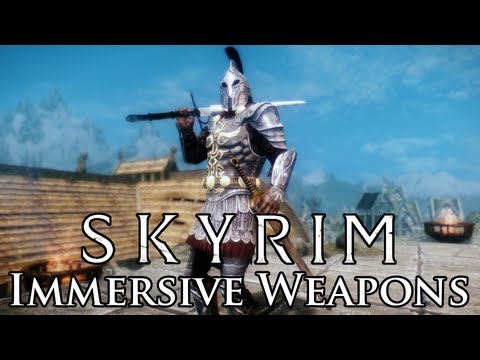 https://www.youtube.com/watch?v=xCNQOEEt5As
I don't see anything that looks like a Scalecaller weapon.Main: Drio Azul ~ DC, Redguard, Healer/Magicka Templar ~ NA-PC
●The Psijic Order●The Sidekick Order●Great House Hlaalu●Bal-Busters●0 -
 Oberstein✭✭✭looks like not deleted that fast.History, like a human being, is thirsty when it wakes from its slumber…History wants to drink up an enormous amount of blood. And even if history has tired of drinking blood, that’s only in regards to the amount. But what about quality? The larger the sacrifice is, the more delighted the cruel gods will be.1
 -
 MrGraves✭✭✭✭For a visual comparison of anything I can find that looks to be in the same theme/looking "similar" I made one for people that don't want to use google.
ESOScalecaller Heavy
Scalecaller light
Eso dragon priest
SkyrimSkyrim Dragon Priest
Skyrim Dragonscale
Skyrim Dragonplate
Now for the modders stuff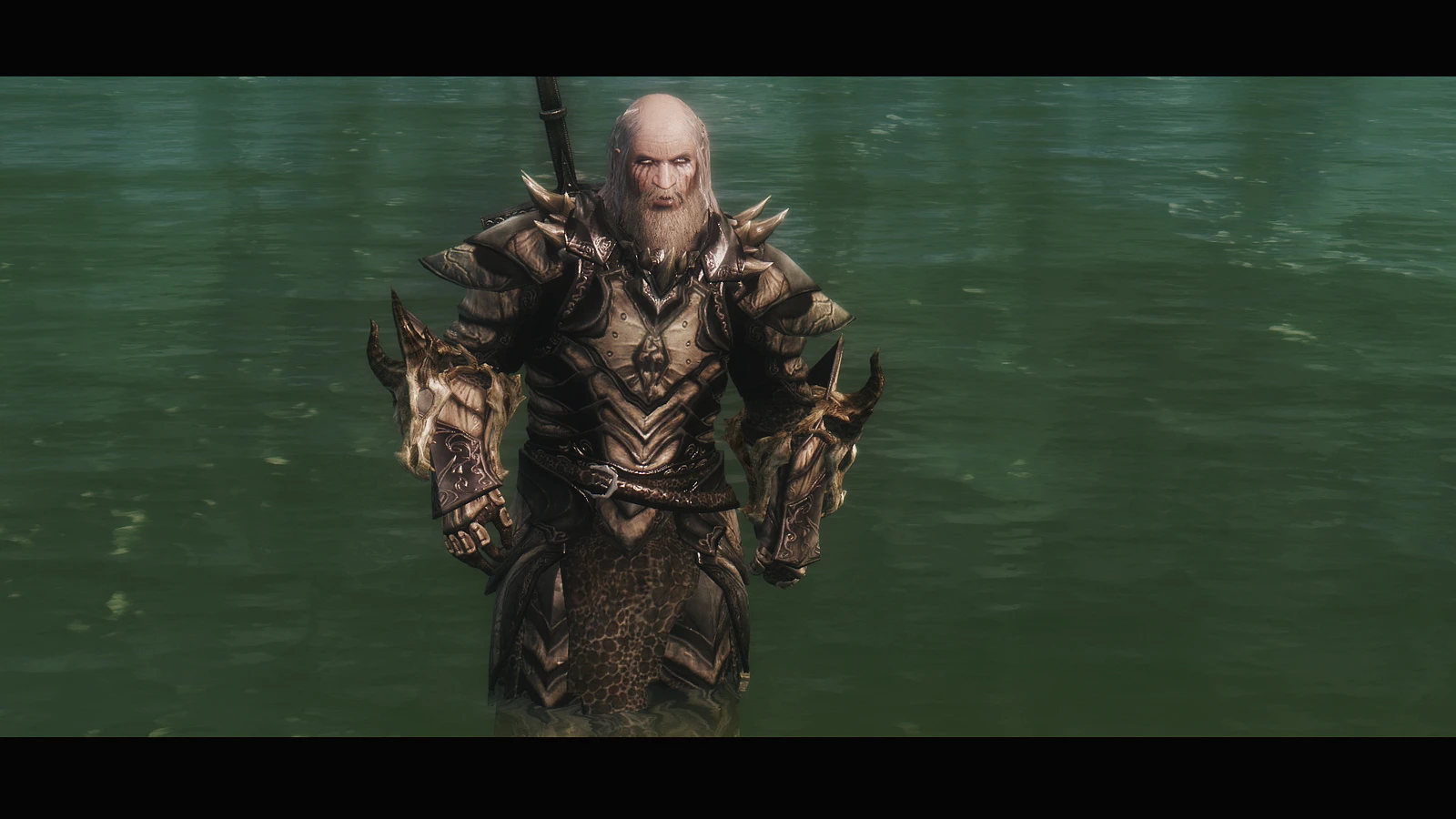

Looking at this I think Scalecaller is paying off of the Skyrim armours. Not the modders versions of dragon armour.2 -
driosketch✭✭✭✭✭
✭✭✭I made one for people that don't want to use google.
I mean, serious question here, are people expected to search endlessly for evidence that doesn't exist?Looking at this I think Scalecaller is paying off of the Skyrim armours. Not the modders versions of dragon armour.
Thank you all the same for the visual guide. It's very helpful. It's also the second example provided that goes against OP's claim. If they have some thing that proves the devs copied modders, let OP provide the third example.Main: Drio Azul ~ DC, Redguard, Healer/Magicka Templar ~ NA-PC
●The Psijic Order●The Sidekick Order●Great House Hlaalu●Bal-Busters●3 -
 starkerealm✭✭✭✭✭
✭✭✭✭✭driosketch wrote: »
I think that was the point. For the luls.driosketch wrote: »Looking at this I think Scalecaller is paying off of the Skyrim armours. Not the modders versions of dragon armour.
Thank you all the same for the visual guide. It's very helpful. It's also the second example provided that goes against OP's claim. If they have some thing that proves the devs copied modders, let OP provide the third example.
Yeah, I wouldn't even say, "ripping off." It's not like they're pulling the assets, the team clearly made some new stuff. Beyond that, there's a lot of armor styles from previous games that have made a return with varying changes. It'd be a little strange, and underwhelming, if they didn't match up with what you were expecting.1 -
 TheYKcid✭✭✭✭✭
✭✭BoneShatterer wrote: »for the curious .
youtube and search for immersive wepaon
immersive armor
but being ESO players die hards oyuguys must be too lame or lazy to do it yourself ehres a guide
1-www.youtube.com
2- search bar left lcik on it and write: immersive weapons skyrim
Wow what's up with the hostility?
You do understand that you're the one making a claim here, thus the burden of proof rests on you.
Scalecaller has always looked to me like a direct nod to Skyrim's Dragon Priests, so I don't agree with your premise anyway.PC/NA — Daggerfall Covenant — BGs, Kaalgrontiid
Kalazar Chalhoub — Redguard Nord Stamplar
Kalaron Caemor — Altmer Magsorc
Kalahad Cirith — Dunmer Magden3