Maintenance for the week of September 7:
• PC/Mac: No maintenance – September 7
• PC/Mac: No maintenance – September 7
Official Discussion Thread for "Anu vs. Padomay Crown Crates"

ZOS_Kevin
Community Manager
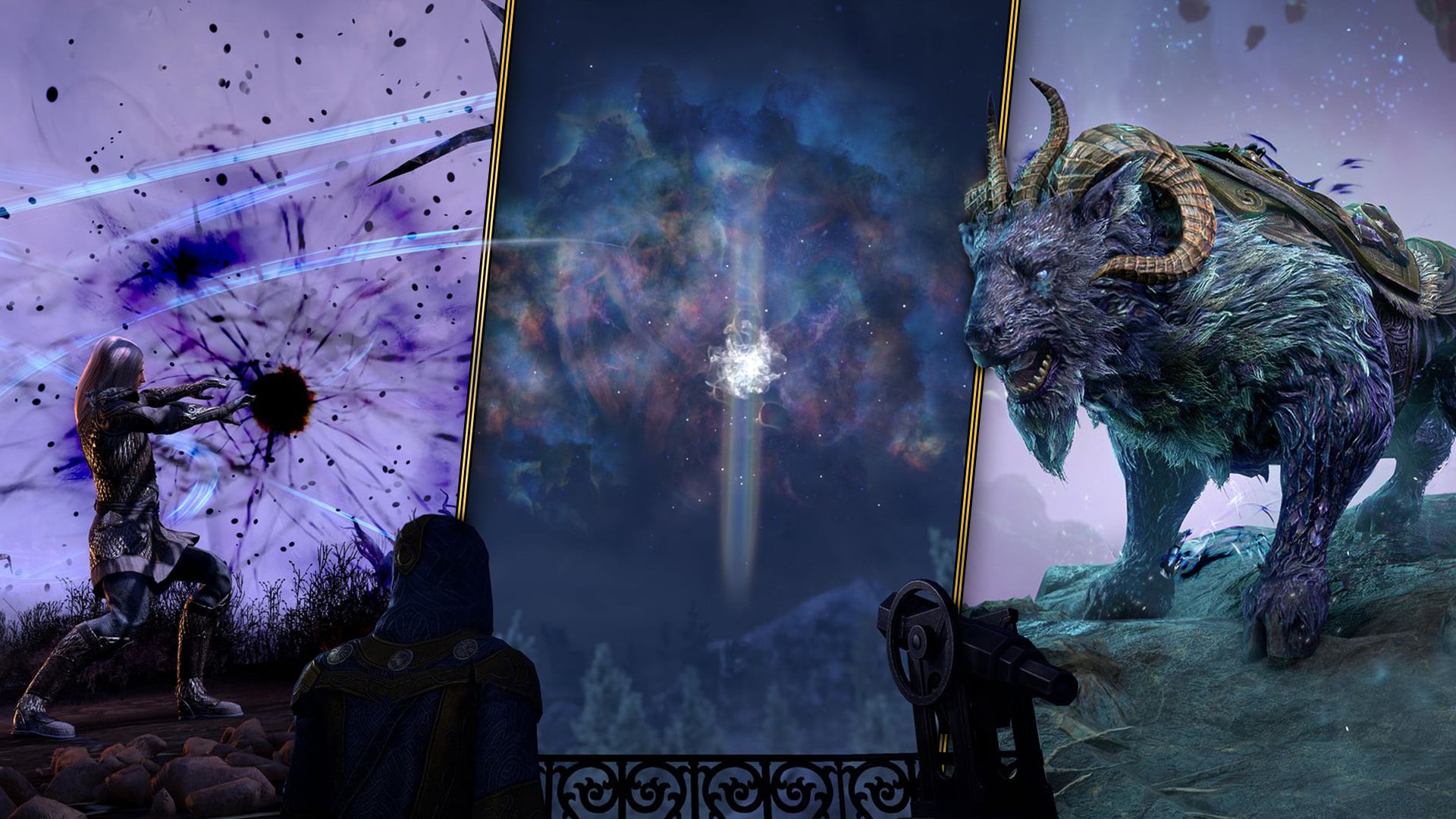
This is the official discussion thread for the upcoming crown crate, "Anu vs. Padomay Crown Crates"
Here's a full list of all the rewards contained in the new Anu vs. Padomay Crown Crate:
Radiant Apex Rewards:
- Manifestation of Order Steed
- Manifestation of Chaos Steed
- Eye of Magrus Senche
Apex Rewards:
- Manifestation of Order
- Finery of Elegant Chaos
- Armored Senche of Anu
- Armored Wolf of Padomay
- Armored Elk of Anu
- Armored Bear of Padomay
- Manifestation of Chaos
- Void Recall of Padomay
Legendary Rewards:
- Aetherean Rupture, Liminal
- Belkarth Senche-Tiger
- Greenshade Zebra
- Crown Crafting Motif 131: Militant Monk Style
- Eternal Marble
- Chaos of Padomay
- Tunic of Symmetry
- Chosen of Anu Battle Axe
- Chosen of Anu Maul
- Chosen of Anu Shield
- Chosen of Anu Sword
- Chosen of Padomay Greatsword
- Chosen of Padomay Mace
- Chosen of Padomay Staff
- Chosen of Padomay Axe
- Starsong Staircase, Spiral
- Harp of Harmonious Order
- Channel Duality
- Claw of Magrus Harvest
- Elemental Storm, Chaos Vortex
- Regeneration, Luminous Order
Epic Rewards:
- Luminous Raven
- Goat of Chaos
- Eye of Magnus Tomeshell
- Manifestation of Order Pony
- Padomay's Headdress
- Mask of Elegant Chaos
- Daggerfall Side Tress
- Fade to Light War-Locks
- Order's Symmetry Earcharms
- Padomay's Voidmask
- Band of Symmetry
- Eyes of Magrus
- Eyes of Anu
- Play to the Crowd
- Sigil Trim, Anu Pattern
- Sigil Trim, Padomay Pattern
- Chosen of Padomay Cuirass
- Chosen of Padomay Helmet
- Chosen of Anu Jack
- Chosen of Anu Helm
- Chosen of Anu Dagger
- Chosen of Padomay Bow
Superior Rewards:
- Chosen of Anu Belt
- Chosen of Anu Guards
- Chosen of Anu Boots
- Chosen of Anu Bracers
- Chosen of Anu Arm Cops
- Chosen of Padomay Girdle
- Chosen of Padomay Greaves
- Chosen of Padomay Sabatons
- Chosen of Padomay Gauntlets
- Chosen of Padomay Pauldrons
- Face Marks of Padomay
- Body Marks of Padomay
- Face Marks of Anu
- Body Marks of Anu
- Sign of Magrus Face Marks
- Sign of Magrus Body Marks
- Duality Feathered Sep Adder
- Belkarth Senche-Tiger Cub
- Greenshade Zebra Pony
- Daggerfall Longhair Cat
- Turquoise Swamp Jelly
- Striated Pony Guar
- Marble Platform, Anu Pattern Square
- Marble Platform, Padomay Pattern Square
- Marble Pillar, Anu Pattern
- Marble Pillar, Padomay Pattern
- Admire Me
- Muscle Flex
Community Manager for ZeniMax Online Studio and Elder Scrolls OnlineDev Tracker | Service Alerts | ESO Twitter
2
-
 WuffyCerulei✭✭✭✭✭
✭✭✭✭Recently renamed my main to Star Song, so I’m legally required to get those Starsong stairs lmaoPraying to Alkosh and Khenarthi that Sorcerer rework gives more build variety2 -
 BretonMage✭✭✭✭✭
✭✭✭I really wish we could have a Chosen of Anu staff. I'm not a fan of weapon styles being split up like that. Or missing, like with the Apocryphabound set.12 -
 LunaFlora✭✭✭✭✭
✭✭✭✭✭wow amazing a Zebra mount and pet ♥
i cannot wait to see all these items in-game, sounds like nice stuff.miaow this is my forum signature! my name is Luna ( she/her ).
🌸*throws cherry blossom on you*🌸
"Eagles advance, traveler! And may the Green watch and keep you."
🦬🦌🐰
PlayStation EU is my primary server.
LunaFloraBlossom on PlayStation 5 and PC.
my main character is a Bosmer Warden named Greehnhart in-game, Greenie Florahart in full.
all characters on PS EU:- Luna Blossom, Bosmer Dragonknight.
- Dotty Greehnhart, Bosmer Sorcerer.
- Lía Greehnhart, Khajiit Nightblade.
- Lady Greehnhart, Altmer Templar. Lady is her name and title.
- Holly Blossom, Altmer Sorcerer.
- Sally Jadehart, Argonian Nightblade. Like a green salamander.
- Dorothy Pizzalover, Orc Warden. add pizzas to the game please.
- Greehnhart, Bosmer Warden.
- Lúcia Azurehart, imperial Necromancer. Azureblight, she has a Maarselok outfit.
- Bunny Rubyhart, Dunmer Nightblade.
- Wisteria Antheia, Khajiit Templar. blue hair like the wisteria.
- Cynthia Turquesa, Breton Warden.
- Rubyhart, Bosmer Nightblade.
- Hestia Rubyhart, Dunmer Dragonknight.
- Aurelia Cherryhart, Altmer Warden. Spriggan.
- Aurora Honey, Redguard Templar. Meridian cultist.
- Speaks-With-Blossom, Argonian Warden.
- Lulu Nightshade, Nord Necromancer.
- Lunetta Gleamblossom, Bosmer Arcanist. Ohmes Khajiit.
- Dianna Hyacinth, Altmer Arcanist. Maormer, water hyacinth.
Links to my Housing threads:Weapon Racks
https://forums.elderscrollsonline.com/en/discussion/692081/housing-request-weapon-racks-wishlist-with-pictures
Desks
https://forums.elderscrollsonline.com/en/discussion/691313/housing-request-more-desk-furnishings-please
Orc
https://forums.elderscrollsonline.com/en/discussion/687765/wishlist-for-orcish-furnishings
Music control
https://forums.elderscrollsonline.com/en/discussion/683673/request-for-housing-music-changer
Sanguine
https://forums.elderscrollsonline.com/en/discussion/679400/housing-sanguine-furnishings-from-west-solstice-please
Statues
https://forums.elderscrollsonline.com/en/discussion/691652/housing-statues-from-zones-as-furnishings-please
Links to my Fashion threads:Tassets and Loincloths
https://forums.elderscrollsonline.com/en/discussion/650919/list-of-outfit-styles-without-tassets-and-loincloths-will-try-to-update
Outfit System refresh
https://forums.elderscrollsonline.com/en/discussion/690938/lunas-outfit-system-improvements-request-thread
Dye Stamps
https://forums.elderscrollsonline.com/en/discussion/688775/please-let-us-collect-the-dye-stamp-exclusive-dyes-outfit-system-request
Unavailable Styles
https://forums.elderscrollsonline.com/en/discussion/686841/please-release-all-unavailable-outfit-styles-for-outfits2 -
 SkaiFaith✭✭✭✭✭
✭✭Daggerfall Longhair Cat insta-buy.
Nice to see good new furnishings in Superior tier.
Finery of Elegant Chaos costume - I want to see how it is in game; I'd really like to get it but I can only hope in my luck with the 25 crates bundle... I won't try harder than that.
The two Polymorphs both intrigue me, but I already got the Soulrazer Knight recently, and am thinking of getting the other version of that one. I'll have to see which looks better with the Monster Slayer personality. Could surprise me."..........Anyway, here's how
to tell if your RPG
sign is cheap" - Tony(?)2 -
 AScarlato✭✭✭✭✭
✭✭✭Forgot my other insta-buy is the harp emote. I hope it's a full instrument and not an emote that plays for 2 seconds.0 -
 noblecron✭✭✭✭✭I am required to get that costume for my khajiit she's very celestial heavinly themed1
 -
 NotaDaedraWorshipper✭✭✭✭✭
✭✭✭✭✭Of course, when we finally get some nice heavily armoured mounts, there are few options, and none is a horse, or any more common mount animal. I strongly dislike how apex is getting filled out with badly designed costume, flashy recalls, and obnoxious polymorphs instead of more mount variety.
More flashy recalls that will assault my eyeballs. The Anu one would've been nice without the big bright symbol.
A single new hairstyle (Not recolour) which is again feminine, and also changes the haircolour slightly.
WoW-esque weapons. Why are they so large and thick?
At least some of the lesser tier cosmetics are nice. I quite like the headresses and masks, they look quite religious/cultist, which has been a bit lacking. Can maybe make some neat looking Divines priests outfits with those.[Lie] Of course! I don't even worship Daedra!4 -
NotaDaedraWorshipper✭✭✭✭✭
✭✭✭✭✭And I just loathe that unique furniture is now a regular part of crates. Pillars, platforms, glowing symbols etc? These should be available in game.[Lie] Of course! I don't even worship Daedra!8 -
 Ode2Order✭✭✭✭Genuine question as a harpist myself... Have any designers at ZOS ever seen a harp being played? Why is every single harp in this game facing the wrong way?7
 -
SkaiFaith✭✭✭✭✭
✭✭Zos, you got me... I spent way too much on this season. Good job!
I left a suggestion in crown store wishlist forum page 'cause I feel an item is missing... Otherwise phenomenal season.
Now back to eating my delicious dish of water - I'm broke XD (jk jk)"..........Anyway, here's how
to tell if your RPG
sign is cheap" - Tony(?)0 -
 Soarora✭✭✭✭✭
✭✭✭✭✭Please stop making Argonian hairstyles jokes. Everyone else gets a head full of hair and argonians get... a small tuft with a random long feather? What?
Aside from that and the gaping issue on one of the costumes (omg stop doing that too), this is probably my favorite crate of all time.[PC/NA] Dungeoneer (Tank/DPS), Semi-retired Trialist, and amateur Battlegrounder (DPS) with a passion for The Elder Scrolls lore.
Current GM of Hard Dungeoneers
Tanks: Sorcerer - Necromancer - Templar
DPS: Frost Warden - Stamarc - StamDK - Hybrid NB Healer
Ex-Healer: Warden - Arcanist
Dungeons: 34/34 HMs - 28/28 Tris4 -
Super nice items. In the past I would have happily blew all my seals of endeavors on these. But as I had no way to earn any more seals after purchasing and spending all of the ones in the Tomes pages. For about 40 days I have earned Tomes-that I can purchase nothing with. I have about 20,000. In 40 days I would have had around 5000 seals of endeavors? Oh wait...I have trade bars and can buy some of this stuff in the Gold Coast Bazaar...NOT. Course I barely earn any trade bars either. But I do earn TOMES!! Lots and lots of TOMES. So y,all are gonna give me 10 gold TEN GOLD per tome.
Please think about this-seals and or trade bars in exchange for Tomes. Update the GCB with new items when you update the crowns store items. Add additional reward pages with seals and gold bars as rewards to the Tomes throughout the season.
As is, there is NO incentive to log on daily.
Oh, lastly please don't break the economy with the 30,000 gold final reward for the new golden pursuits
Love the game, best MMORPG ever. Love a lot of the changes. Not loving the new "reward" system. Been ESO+ playing for ten years, hope to be playing ten more...4 -
 anadandy✭✭✭✭✭
✭✭Thank you for the Daggerfall Side tress braid. It looks lovely on my Imperial who can now finally let down her braid crown and not be confused with Isobel anymore. 🙂2 -
 driosketch✭✭✭✭✭
✭✭✭Some very nice items, glad I had enough gems and seals.
The Finery of Elegant Chaos dyes just fine. Went with white and gold wings on a healer. The Tunic of Symmetry is best left a mono color group. Channels are top cloth parts, including right skirt, then left under skirt, and finally the central circle with band wrapping around back and the sandals.Main: Drio Azul ~ DC, Redguard, Healer/Magicka Templar ~ NA-PC
●The Psijic Order●The Sidekick Order●Great House Hlaalu●Bal-Busters●0 -
NotaDaedraWorshipper✭✭✭✭✭
✭✭✭✭✭Please stop making Argonian hairstyles jokes. Everyone else gets a head full of hair and argonians get... a small tuft with a random long feather? What?
Aside from that and the gaping issue on one of the costumes (omg stop doing that too), this is probably my favorite crate of all time.
It's so tiresome, but complaining or giving critique about it does nothing. Argonians always draw the short straw[Lie] Of course! I don't even worship Daedra!2 -
 Diebesgut✭✭✭✭✭
.. Why isn't there an Anu bow?
Khajiit Sicherheitsdienst ~ Überprüfung von Schlössern aller Art ~ Khajiit Security ~ Inspection of any kind of locksKhajiit Gebrauchtwaren ~ Handel mit Waren aller Art ~ Khajiit Store ~ Trading of any kind of goodsPlaystation4 -
 ColovianHastur✭✭✭I'm not sure who writes the lore entries for these items, but the continued association of Anu with "order" and Padomay with "chaos" is just... eugh. It's like ESO devs are divided between those who understand what those terms actually mean when it comes to cosmogonies and those that do not.
Order, when it comes to cosmogonies, refers to the ordered universe, the cosmos. Chaos refers to the state of affairs before the creation of the ordered universe, when things were all jumbled into a primordial ocean, egg, or some form of totality where everything is fused together."Die Religion in Geschichte und Gegenwart" entry on Chaos:
Man kann deshalb im Alten Orient zwei parallele Vor- stellungen vom Ur-Ch. unterscheiden: Die erste stellt den Urzustand dar als Urflut und Urdunkelheit, woraus sich dann ein Ei oder ein Meerungeheuer entwickelte, die zweite als eine absolute Ganzheit, in welcher Himmel und Erde miteinander verschmolzen waren. Im ersten Fall vollzieht sich die Schöpfung durch Teilung des Eies oder Zerstückelung des Meerungeheuers, im zweiten durch die Scheidung des Himmels von der Erde. Alle diese mythischen Bilder veranschaulichen den Gedanken der ungeordneten und amorphen Totalität, der Finster- nis und der Nichtexistenz. Ähnliche Bilder (Urmeer, Himmel und Erde als Einheit, Weltei, Urwesen usw) sind in Indien, China, Japan, Indonesien, Polynesien und Afrika bezeugt. Wahrscheinlich hat sich eine Reihe die- ser kosmogonischen Motive vom Alten Orient aus ver- breitet.
Translation:
One may therefore distinguish, in the Ancient Near East, between two parallel conceptions of primordial chaos. The first presents the primordial state as a primeval flood and primordial darkness, from which there then developed either an egg or a sea monster; the second presents it as an absolute totality in which heaven and earth were fused together. In the first case, creation takes place through the splitting of the egg or the dismemberment of the sea monster; in the second, through the separation of heaven from earth. All these mythical images illustrate the idea of an unordered and amorphous totality, of darkness and nonexistence. Similar images (the primeval sea, heaven and earth as a unity, the cosmic egg, primordial beings, etc.) are attested in India, China, Japan, Indonesia, Polynesia, and Africa. It is probable that a number of these cosmogonic motifs spread outward from the Ancient Near East.
The main problem here is the erroneous identification of Anu with "order" and Padomay with "chaos", as both "order" and "chaos" have very specific meanings when we're dealing with cosmologies and cosmogonies.
Order is NOT stasis, and neither is chaos the same as change.
Chaos, when spoken of in reference to creation mythologies, refers to "a primordial state as a primeval flood and primordial darkness, from which there then developed either an egg or a sea monster", or as "an absolute totality in which heaven and earth were fused together".
In contrast, the Aurbis, the created universe, is order. The cosmos. Because that's what the word "cosmos" means - order. Specifically, the post-creation universe.
With this in mind, consider the following descriptions of the Anuic force in myths:Anu encompassed, and encompasses, all things. - The Heart of the World
Satak was First Serpent, the Snake who came Before, and all the worlds to come rested in the glimmer of its scales. But it was so big there was nothing but, and thus it was coiled around and around itself, and the worlds to come slid across each other but none had room to breathe or even be. - Satakal the Worldskin
There was first only Atak, the Great Root. It knew of nothing but itself, so it decided to be everything. - Children of the Root
Our lessers know the Source as two forms: Anu and Padomay, but this binary is without merit. One of the Lorkhan's Great Lies, meant to sunder us from the truth of Anuic unity. Our father, Sotha Sil, would have us know the truth: there is no Padomay. Padomay is the absence of value. The lack. A ghost that vanishes at first light. A Nothing. There is only Anu, sundered and known by many names, possessing many faces. The one. - Truth in Sequence
And in contrast, see how the Padomaic force is introduced and what happens because of its introduction:So that he might know himself he created Anuiel, his soul and the soul of all things. Anuiel, as all souls, was given to self-reflection, and for this he needed to differentiate between his forms, attributes, and intellects. Thus was born Sithis, who was the sum of all the limitations Anuiel would utilize to ponder himself. Anuiel, who was the soul of all things, therefore became many things, and this interplay was and is the Aurbis. - Heart of the World
And so the worlds called to something to save them, to let them out, but of course there was nothing outside the First Serpent, so aid had to come from inside it; this was Akel, the Hungry Stomach. Akel made itself known, and Satak could only think about what it was, and it was the best hunger, so it ate and ate. Soon there was enough room to live in the worlds and things began. These things were new and they often made mistakes, for there was hardly time to practice being things before. So most things ended quickly or were not good or gave up on themselves. Some things were about to start, but they were eaten up as Satak got to that part of its body. This was a violent time. Pretty soon Akel caused Satak to bite its own heart and that was the end. The hunger, though, refused to stop, even in death, and so the First Serpent shed its skin to begin anew. As the old world died, Satakal began, and when things realized this pattern so did they realize what their part in it was. - Satakal the Worldskin
Atak continued to grow until something came back from the nothing. It was like a root but had scales and eyes and a mouth. It told Atak that it was called Kota, and it had been growing, too. Now that it had a mouth, it was hungry. Atak named Kota for what it was: serpent! It put roots through the serpent's eyes. But Kota was old and strong like the root, and had grown fangs while it was away. It bit Atak. They coiled around each other. From their struggle, new things came to be. Atak learned things Kota had learned, including hunger, and so it bit Kota back. They ate and roiled for so long they became one and forgot their conflict. They shed their skin and severed their roots and called themselves Atakota, who said "Maybe." - Children of the Root
Remember that bit above about the primordial chaos sometimes being interpreted as an egg and how sometimes "creation takes place through the splitting of the egg"? Well, in a draft version of the Monomyth, the Hist referred to Sithis as Ixtaxh-thtithil-meht, meaning "Exact Egg-Cracker":"In most cultures, Anuiel is honored for his part of the interplay that creates the world, but Sithis is held in highest esteem because he's the one that causes the reaction. Sithis is thus the Original Creator, an entity who intrinsically causes change without design. Even the alien hist acknowledge this being, whom they call Ixtaxh-thtithil-meht, or "Exact Egg-Cracker"."
And ESO even canonised this name and its meaning in the Murkmire DLC:"The local Argonians call it Ixtaxh-Thitithil-Meht—literally the exact egg-cracker." - Famia Mercius
Anu and its cultural variants (such as Satak), by definition, are NOT order. The damn thing is a textbook example of a primordial chaos which is transformed by the introduction of an ordering force, that being Padomay/Sithis/Akel, thus giving birth to the ordered universe, the Aurbis/Satakal.
...
Phew. Rant is over.1 -
Soarora✭✭✭✭✭
✭✭✭✭✭NotaDaedraWorshipper wrote: »
Right? How hard would it have been to make a braided or even a “half shave” look? Surely you can braid feathers?
[PC/NA] Dungeoneer (Tank/DPS), Semi-retired Trialist, and amateur Battlegrounder (DPS) with a passion for The Elder Scrolls lore.
Current GM of Hard Dungeoneers
Tanks: Sorcerer - Necromancer - Templar
DPS: Frost Warden - Stamarc - StamDK - Hybrid NB Healer
Ex-Healer: Warden - Arcanist
Dungeons: 34/34 HMs - 28/28 Tris0 -
LadyBriarwoodSoul ShrivenI really like the void recall animation but I do not like the symbol that pops up.2
-
 Woven_HeartsSoul ShrivenThe crates are pretty good!
My main complaint is the Apex Manifestation of chaos steed’s front feet appear to behave like paws not cloven hooves, which looks really weird to me. It doesn’t land on its hooves at a run… maybe it would have turned out better to do a hybrid creature.
there’s also some gaping in the finery of elegant chaos outfit..
And I wish the new hairstyle colour could be changed,
Also, the elemental storm chaos vortex seems like it’s missing a sound effect or something?2 -
NotaDaedraWorshipper✭✭✭✭✭
✭✭✭✭✭NotaDaedraWorshipper wrote: »
Right? How hard would it have been to make a braided or even a “half shave” look? Surely you can braid feathers?
@Soarora I rather not have another High Hrothgar Braid or worse, Titanborn's Tresses
I miss the days of when argonians got the Roostertail Frills and the White River Braids. Yet even now with the better textures on feathers and using more jewelry in the styles, so many argonian styles are so extremely lacking. Where have nice full cover of feathers gone without big bald spots. Mixing big horns and spikes with feathers, or adding jewelry, painted or carved horns etc. I don't like the look of Lizard Rhinoceros much, but it's like the only one that is being creative with horns.[Lie] Of course! I don't even worship Daedra!3


