"Help, I got fired because I can't stop playing ESO!" 🐀

AlextheMuspel
✭✭✭
Alternative title: How ESO is intentionally designed to keep you playing despite the consequences in your real life.
Do not reply unless you went through the entire post
SKINNER BOX
Remember the "Skinner Box" experiment on operant conditioning?
"A hungry rat is placed inside into a small box, commonly known as a Skinner Box. The box was completely empty, aside from a small lever, a light and a small food box. If the rat pulled the lever, a small food pellet would be released into the box as a reward.
After a few minutes of sitting still, the rat would begin exploring the box. After a while the rat would accidentally pull down the lever and a food pellet would be released. After the fifth or sixth time pulling down the lever the rat would learn to pull the lever whenever it was hungry.
Then Skinner decided to change up the experiment. Using pigeons this time he had it peck a button in the middle of the box. Instead of dropping in a food pellet every time the button was pushed, he would instead drop in a food pellet at random.
Skinner was suprised by the results of this modified experiment. Instead of casually pulling the lever like the rat did in the previous experiment, the pigeon began pushing the button much more than before.
In fact, Skinner noted that the pigeon would continue pecking the button long after he had stopped handing out the rewards. He called this a Variable Ratio." [1]
Similar to the lever in the box, the variable ratio in MMORPG keeps the player "pulling the lever". ALL MMORPG's will use a variable ratio reward system in one way or another. In ESO, we get the random rare drops(nirncrux, aetherial dust, cipher) from collecting nodes. You get that little dopamine rush: oh, will I get heartwood from this node? No? Maybe the next one! Or: will I get that lead drop from this chest, or this mob? As a result, players will sit in front of their screens pulling that digital lever in the hope of that digital food pellet for hours upon hours.
A side note: these variable ratio reward mechanics are the exact same model used on slot machines.
THE MULTI-LEVER SKINNER BOX

A fixed ratio reward schedule is simple: A certain number of actions is required to obtain a reward. You always get a certain amount of exp killing the mobs and collecting nodes. It's a small drip of rewards on the micro-scale that allows users to see consistent progress.
All MMORPG's have a fixed ratio reward schedule of some kind. Generally it's repetitive and BORING. Players invented their own term for this kind of gameplay: "GRINDING". It may take years to max out a character based on the fixed ratio reward. [2]
With the implementation of cp2.0, the soft cap has raised a lot for players to do content they used to be able to do at cp810. ZOS realized that at cp810, the lever in the box is no longer working, so the players are no longer eager to pull the lever. Hence, they raised cp cap to put the players back on that grinding wheel.
A fixed interval reward schedule lever only appears at certain times. It alleviates the boredom of grinding for a short while. Players will have a break from their normal fixed ratio grind to attend an event, such as the Jester's Festival or Anniversary event. This type of reward schedule encourages players to put the game into their real-life schedules. I know some players have spent extra playtime during these events to get the rewards. The inspiration system and daily rewards also belong to this category. If you don't log in regularly, you lose tons of in-game items and experience.

The variable ratio reward schedule, as mentioned above, is the essential component of MMORPG's Skinner Box. Other than the rare drops, they're also often used in the damage system in games. There is always a chance of inflicting a Critical Hit which does far more damage than usual. Again, these critical hits happen on a variable ratio. This ratio can be improved with the player's stats and gear, but it's still a random occurrence. These in-game rewards give players a hit of the brain chemical dopamine. This is the same brain chemical released when GAMBLING and also highly addictive.[3]
Similar to crit chance, the variable ratio reward system is also embedded in sets that have a proc chance. Just take a random look at sets in ESO, and you'll get the picture:

Lastly, the variable interval reward schedule is more of an icing on the cake. The reward boxes that you'll get from events contain different items, some worth a ton of in-game currency, and others are worthless. You only get these reward boxes during events, so naturally, your expectation will be high. As a result, the players are more eager to pull the lever with this kind of reward fixed in mind.

COMPETITION
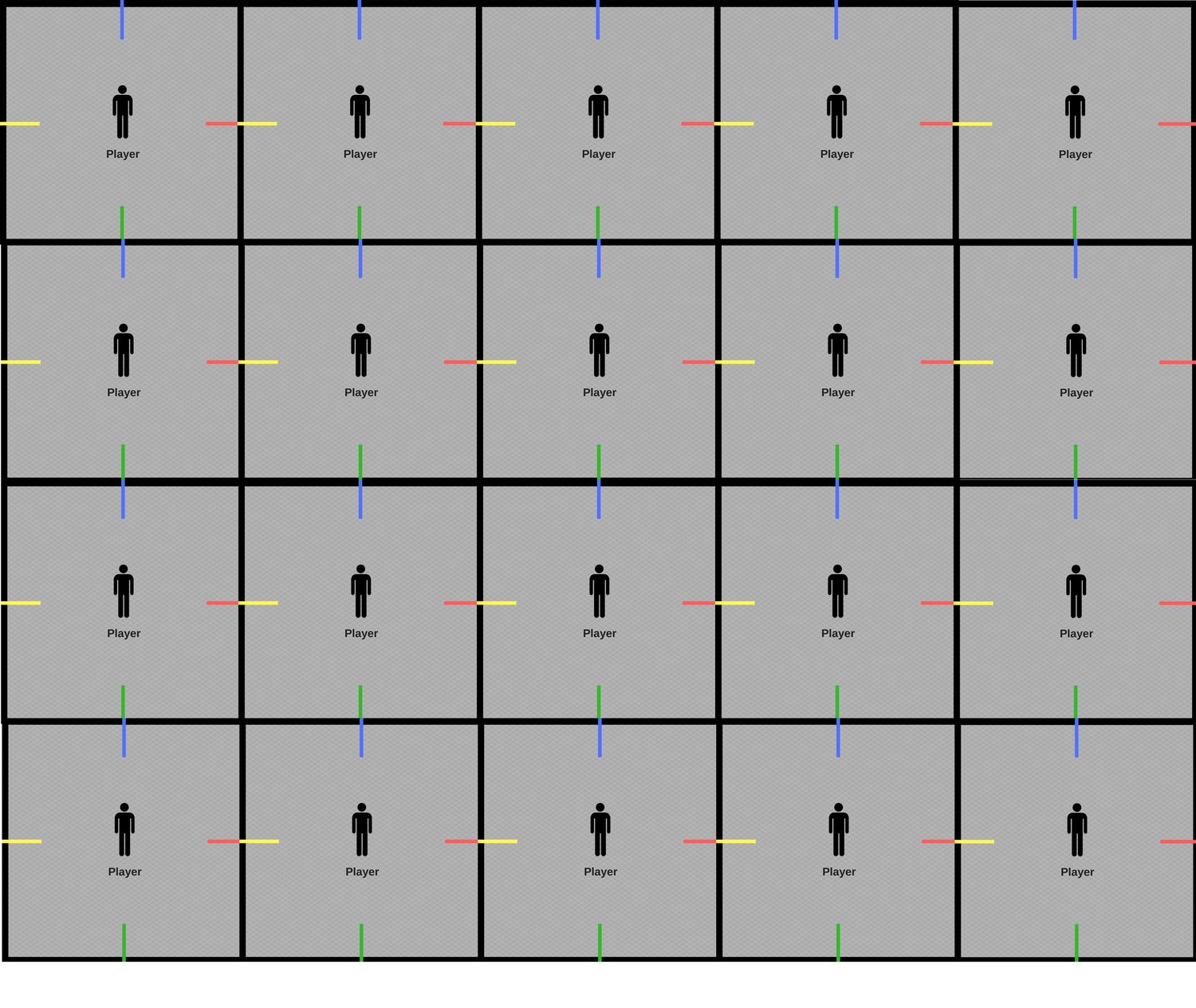
A “competition," by its very nature, is what psychologists call an “extrinsic incentive." Extrinsic simply means that the motivation to adopt a behavior or decision is sourced externally rather than internally. [4]. Before cp2.0, most players already at cp810 are not motivated to level up furthermore because it won't show up on the group roster. A player who's at cp2000 will be treated no differently from a player at cp810. However, after cp2.0, the cp810 player will be considered to have less power and experience than the cp2000 player because, well, it's human nature to be competitive. When the fixed reward schedule lever stopped working, ZOS manually added more levels for the players to compare and compete with each other. The players are merely lab rats, after all.
The opposite of extrinsic is what we call “intrinsic” motivation. When we are intrinsically motivated to do something we do it not because of an external reward, but simply because we are personally convinced that it is the right thing to do. [5]. When a player is at cp cap, they will be intrinsically motivated to do things that they enjoy. (e.g. questing with friends, role-playing, etc.). However, when an extrinsic incentive presents itself, it competes with intrinsic motivations for priority. As shown in this research, engagement-contingent and completion-contingent rewards significantly undermined self-reported interest. In other words, a cp cap of 3600 (extrinsic incentive) undermines the players' enjoyability of things they'd like to do in the game. (Here I assume that no one likes grinding).
In real life, competition can certainly be a positive thing for one's self-development. We admire people who have reached higher achievement than us so that we could be a better version of ourselves. However, the truth is, the overwhelming majority of ESO is usually based on WHO HAS SPENT THE MOST HOURS PLAYING IT. You'll unquestionably acquire better PvE skills if you practice on a dummy for hours at a time. As for PvP, it's essentially the same due to the lack of a ladder system. Your BG MMR will be higher than others as long as you're playing. Although there're some skills involved in PvP activity, for the majority of the game each player is inside their own box pulling the levers as fast as they can.
ADDICTION
Moving on to a more pressing issue: MMORPG addiction, or in this case, ESO addiction.
Addiction to an MMORPG is often dismissed by the community. However, I don't understand why the majority of people hold that attitude because this issue is more prevalent than you could imagine. Every aspect of MMORPG is intentionally designed to get you addicted. It is possible to play moderately, as it's possible to gamble without getting addicted to it. Nonetheless, gambling addicts still exist, and so are MMORPG addicts. The fact that it's not your case doesn't mean it's not a serious issue awaiting to be addressed.

People don't live inside MMO's. They live in the real world. Progression inside the game essentially amounts to nothing in the player's real life.
You, as a consumer, are basically renting ZOS's product. Take a look at TOS:
All of your in-game progression will be lost when ZOS pulls the plug whenever they'd like. ESO offers you an illusion that it's a lively world that is similar to reality. But no, ZeniMax is basically God in this virtual world of theirs. "ZeniMax may patch, update, or modify a Service at any time with or without notice to You. Notwithstanding the foregoing, ZeniMax has no obligation to make available any patches, updates, or modifications or correct any errors or defects in the Services." Unlike in the real world, you can talk and complain to "God" in this virtual universe, and that gives you some sense of control that you don't have in real life.
But people don't live inside MMO. I remember reading a post saying that they don't farm gears in-game, and the only farming that they do is attending to their little garden. I wholeheartedly agree with them, whoever it might be. Your plants will not suddenly disappear one day. But all of your in-game progression eventually will go "poof" one day.
I know I'll get a lot of hate comments in this thread. But I think you're not a lab rat, and you deserve to know that ESO is intentionally designed to keep you playing despite the consequences in your real life. Everyone has the right to freedom of thought, conscience and religion. The "God" of the virtual world that you love so much is malicious; they're doing everything they can to imprison you there, forever, pulling levers, competing with your fellow "rats".
Source:
[1][2][3] "ADDICTION - HOW MMORPG'S TURN YOU INTO A LAB RAT". https://www.mediavsreality.com/mediavsreality/2018/6/26/addiction-how-mmorpgs-turn-you-into-a-lab-rat
[4][5]"The Psychology of Competition". https://www.psychologytoday.com/ca/blog/socially-relevant/201506/the-psychology-competition
Edit: typographical error
Edited by AlextheMuspel on April 1, 2021 6:48PM Do not reply unless you went through the entire post
SKINNER BOX
Remember the "Skinner Box" experiment on operant conditioning?
"A hungry rat is placed inside into a small box, commonly known as a Skinner Box. The box was completely empty, aside from a small lever, a light and a small food box. If the rat pulled the lever, a small food pellet would be released into the box as a reward.
After a few minutes of sitting still, the rat would begin exploring the box. After a while the rat would accidentally pull down the lever and a food pellet would be released. After the fifth or sixth time pulling down the lever the rat would learn to pull the lever whenever it was hungry.
Then Skinner decided to change up the experiment. Using pigeons this time he had it peck a button in the middle of the box. Instead of dropping in a food pellet every time the button was pushed, he would instead drop in a food pellet at random.
Skinner was suprised by the results of this modified experiment. Instead of casually pulling the lever like the rat did in the previous experiment, the pigeon began pushing the button much more than before.
In fact, Skinner noted that the pigeon would continue pecking the button long after he had stopped handing out the rewards. He called this a Variable Ratio." [1]
Similar to the lever in the box, the variable ratio in MMORPG keeps the player "pulling the lever". ALL MMORPG's will use a variable ratio reward system in one way or another. In ESO, we get the random rare drops(nirncrux, aetherial dust, cipher) from collecting nodes. You get that little dopamine rush: oh, will I get heartwood from this node? No? Maybe the next one! Or: will I get that lead drop from this chest, or this mob? As a result, players will sit in front of their screens pulling that digital lever in the hope of that digital food pellet for hours upon hours.
A side note: these variable ratio reward mechanics are the exact same model used on slot machines.
THE MULTI-LEVER SKINNER BOX
MMORPG as an advanced version of Skinner Box
MMORPG's use a far more advanced Skinner Box than the original experiments in 1948.
The box that MMO's put you in have multiple levers that all work on different schedules to ensure the player sticks around for as long as possible.
A fixed ratio reward schedule is simple: A certain number of actions is required to obtain a reward. You always get a certain amount of exp killing the mobs and collecting nodes. It's a small drip of rewards on the micro-scale that allows users to see consistent progress.
All MMORPG's have a fixed ratio reward schedule of some kind. Generally it's repetitive and BORING. Players invented their own term for this kind of gameplay: "GRINDING". It may take years to max out a character based on the fixed ratio reward. [2]
With the implementation of cp2.0, the soft cap has raised a lot for players to do content they used to be able to do at cp810. ZOS realized that at cp810, the lever in the box is no longer working, so the players are no longer eager to pull the lever. Hence, they raised cp cap to put the players back on that grinding wheel.
A fixed interval reward schedule lever only appears at certain times. It alleviates the boredom of grinding for a short while. Players will have a break from their normal fixed ratio grind to attend an event, such as the Jester's Festival or Anniversary event. This type of reward schedule encourages players to put the game into their real-life schedules. I know some players have spent extra playtime during these events to get the rewards. The inspiration system and daily rewards also belong to this category. If you don't log in regularly, you lose tons of in-game items and experience.
Missed a day? Well, no reward for you!
The variable ratio reward schedule, as mentioned above, is the essential component of MMORPG's Skinner Box. Other than the rare drops, they're also often used in the damage system in games. There is always a chance of inflicting a Critical Hit which does far more damage than usual. Again, these critical hits happen on a variable ratio. This ratio can be improved with the player's stats and gear, but it's still a random occurrence. These in-game rewards give players a hit of the brain chemical dopamine. This is the same brain chemical released when GAMBLING and also highly addictive.[3]
Similar to crit chance, the variable ratio reward system is also embedded in sets that have a proc chance. Just take a random look at sets in ESO, and you'll get the picture:
All of these sets are aimed at keeping you pulling the lever
Lastly, the variable interval reward schedule is more of an icing on the cake. The reward boxes that you'll get from events contain different items, some worth a ton of in-game currency, and others are worthless. You only get these reward boxes during events, so naturally, your expectation will be high. As a result, the players are more eager to pull the lever with this kind of reward fixed in mind.
Maybe I'll be as lucky as him if I keep opening boxes!
COMPETITION
THE HIGHER LEVELS HAVE SIMPLY SPENT MORE TIME PULLING THE LEVERS IN THEIR BOX THAN THE LOWER PLAYERS.
A “competition," by its very nature, is what psychologists call an “extrinsic incentive." Extrinsic simply means that the motivation to adopt a behavior or decision is sourced externally rather than internally. [4]. Before cp2.0, most players already at cp810 are not motivated to level up furthermore because it won't show up on the group roster. A player who's at cp2000 will be treated no differently from a player at cp810. However, after cp2.0, the cp810 player will be considered to have less power and experience than the cp2000 player because, well, it's human nature to be competitive. When the fixed reward schedule lever stopped working, ZOS manually added more levels for the players to compare and compete with each other. The players are merely lab rats, after all.
The opposite of extrinsic is what we call “intrinsic” motivation. When we are intrinsically motivated to do something we do it not because of an external reward, but simply because we are personally convinced that it is the right thing to do. [5]. When a player is at cp cap, they will be intrinsically motivated to do things that they enjoy. (e.g. questing with friends, role-playing, etc.). However, when an extrinsic incentive presents itself, it competes with intrinsic motivations for priority. As shown in this research, engagement-contingent and completion-contingent rewards significantly undermined self-reported interest. In other words, a cp cap of 3600 (extrinsic incentive) undermines the players' enjoyability of things they'd like to do in the game. (Here I assume that no one likes grinding).
In real life, competition can certainly be a positive thing for one's self-development. We admire people who have reached higher achievement than us so that we could be a better version of ourselves. However, the truth is, the overwhelming majority of ESO is usually based on WHO HAS SPENT THE MOST HOURS PLAYING IT. You'll unquestionably acquire better PvE skills if you practice on a dummy for hours at a time. As for PvP, it's essentially the same due to the lack of a ladder system. Your BG MMR will be higher than others as long as you're playing. Although there're some skills involved in PvP activity, for the majority of the game each player is inside their own box pulling the levers as fast as they can.
Reality of MMORPG
ADDICTION
Moving on to a more pressing issue: MMORPG addiction, or in this case, ESO addiction.
Addiction to an MMORPG is often dismissed by the community. However, I don't understand why the majority of people hold that attitude because this issue is more prevalent than you could imagine. Every aspect of MMORPG is intentionally designed to get you addicted. It is possible to play moderately, as it's possible to gamble without getting addicted to it. Nonetheless, gambling addicts still exist, and so are MMORPG addicts. The fact that it's not your case doesn't mean it's not a serious issue awaiting to be addressed.
Addiction
People don't live inside MMO's. They live in the real world. Progression inside the game essentially amounts to nothing in the player's real life.
You, as a consumer, are basically renting ZOS's product. Take a look at TOS:
ZeniMax does not guarantee that any Services will be accessible or available at all times, in all countries and/or all geographic locations, at any given time, or that ZeniMax will continue to offer any particular Services for any particular length of time. Except as prohibited by applicable law and subject to the Statutory Obligations (as defined in Section 1), ZeniMax reserves the right to change and update Content without notice to You. ZeniMax also reserves the right to refuse Your request(s) to acquire Content, and to limit or block any request to acquire Content, including, but not limited to, Downloadable Content and Game Mods, for any reason.
All of your in-game progression will be lost when ZOS pulls the plug whenever they'd like. ESO offers you an illusion that it's a lively world that is similar to reality. But no, ZeniMax is basically God in this virtual world of theirs. "ZeniMax may patch, update, or modify a Service at any time with or without notice to You. Notwithstanding the foregoing, ZeniMax has no obligation to make available any patches, updates, or modifications or correct any errors or defects in the Services." Unlike in the real world, you can talk and complain to "God" in this virtual universe, and that gives you some sense of control that you don't have in real life.
But people don't live inside MMO. I remember reading a post saying that they don't farm gears in-game, and the only farming that they do is attending to their little garden. I wholeheartedly agree with them, whoever it might be. Your plants will not suddenly disappear one day. But all of your in-game progression eventually will go "poof" one day.
I know I'll get a lot of hate comments in this thread. But I think you're not a lab rat, and you deserve to know that ESO is intentionally designed to keep you playing despite the consequences in your real life. Everyone has the right to freedom of thought, conscience and religion. The "God" of the virtual world that you love so much is malicious; they're doing everything they can to imprison you there, forever, pulling levers, competing with your fellow "rats".
Source:
[1][2][3] "ADDICTION - HOW MMORPG'S TURN YOU INTO A LAB RAT". https://www.mediavsreality.com/mediavsreality/2018/6/26/addiction-how-mmorpgs-turn-you-into-a-lab-rat
[4][5]"The Psychology of Competition". https://www.psychologytoday.com/ca/blog/socially-relevant/201506/the-psychology-competition
Edit: typographical error
9
-
Welcome to modern day MMOs - and unfortunately, most modern day gaming.
So what's the point of the dissertation?
Because none of this is new, or news. You're not making any grand revelations here. This is pretty well known, standard, stuff and has been for years - that only the billion-dollar gaming companies are trying to argue isn't "gambling" or "addictive."
Edited by mystkldrgnb14_ESO on April 1, 2021 6:53PM13 -
RunForTheHills✭✭✭This was too long to read completely. However, skimming it, I believe that you did not actually get fired from your job for playing ESO and are just hypothesizing that someone with an addictive personality could.5
-
AlextheMuspel✭✭✭Dark_Lord_Kuro wrote: »Ill respond anyway!
You’re welcomed to respond! The red text is aimed at ppl who leave hate comments, or disagree with an issue that’s already addressed in the original post.0 -
 Great post, but of course you can expect addicts to ridicule it.Edited by RecktrithiusOediphitry on April 1, 2021 7:01PM0
 -
josiahva✭✭✭✭✭
✭Umm, I think you might be overthinking this. ESO is a game. Most people will play it to relax...and most people don't get most of their enjoyment from random drops and crit chances...most people get their enjoyment from the game from increasing their personal skill at whatever content they want to do. As for myself, I go long periods without playing the game at all, its only when I am bored and have nothing to do in real life that I even log on anyway, I am more likely to pick up a book and read than log into ESO.2 -
 ArchangelIsraphel✭✭✭✭✭
✭✭✭✭✭*slow clap* I see what you did there.Legends never die
They're written down in eternity
But you'll never see the price it costs
The scars collected all their lives
When everything's lost, they pick up their hearts and avenge defeat
Before it all starts, they suffer through harm just to touch a dream
Oh, pick yourself up, 'cause
Legends never die0 -
AlextheMuspel✭✭✭RunForTheHills wrote: »This was too long to read completely. However, skimming it, I believe that you did not actually get fired from your job for playing ESO and are just hypothesizing that someone with an addictive personality could.
I did fail several uni courses bc of excessive gaming : ( (I said “gaming” but it’s really just ESO)0 -
 NettleCarrier✭✭✭✭✭I did go through the entire post and...congrats...you described what basically every video game that values customer retention does - next!
Seriously though, if a human can't prioritize games over important aspects of their life then they've got other issues. It could be worse, for some it's drugs or smoking, or something worse. Let's be glad it's just a video game!GM of Gold Coast Corsairs - PCNA4 -
Starlock✭✭✭✭✭
✭✭✭✭✭Thanks for posting. We'll see how long this thread stays up. See also the website I link to in my signature.1 -
 robertthebard✭✭✭✭✭mystkldrgnb14_ESO wrote: »Welcome to modern day MMOs - and unfortunately, most modern day gaming.
So what's the point of the dissertation?
Because none of this is new, or news. You're not making any grand revelations here. This is pretty well known, standard, stuff and has been for years - that only the billion-dollar gaming companies are trying to argue isn't "gambling" or "addictive."
Sure, if by "modern day MMOs" you mean "welcome to every MMO ever made". They are all designed to keep you playing as long as possible, with the hope that, in the interim, you'll spend some money, either on a sub, or on cosmetics or convenience items.2 -
AlextheMuspel✭✭✭mystkldrgnb14_ESO wrote: »Welcome to modern day MMOs - and unfortunately, most modern day gaming.
So what's the point of the dissertation?
Because none of this is new, or news. You're not making any grand revelations here. This is pretty well known, standard, stuff and has been for years - that only the billion-dollar gaming companies are trying to argue isn't "gambling" or "addictive."
If you already knew this, you should post this information on internet. If I realized it earlier, you might save me 10 grand.
0 -
AlextheMuspel✭✭✭NettleCarrier wrote: »I did go through the entire post and...congrats...you described what basically every video game that values customer retention does - next!
Seriously though, if a human can't prioritize games over important aspects of their life then they've got other issues. It could be worse, for some it's drugs or smoking, or something worse. Let's be glad it's just a video game!
You must be joking, right? I’m intolerant to alcohol, and I can’t smoke bc of lung issues. Not to mention street drugs, you gotta be informative to get the stuff. But MMORPG is right there, on the computer, anyone, even a 3-year-old can access it. Can you imagine a 3 yo going to a casino? It’s absolutely nonsense to compare MMORPG addiction to other forms of substance abuse.0 -
 SickleCider✭✭✭✭✭
✭✭✭You get a gold star for citations and formatting. 👏 Language got a little hyperbolic toward the end. Watch out for that when you're trying to write an objective analysis. It's hard to keep the passion in check, I know.✨🐦✨ Blackfeather Court Commission ✨🐦✨6 -
RunForTheHills✭✭✭AlextheMuspel wrote: »RunForTheHills wrote: »This was too long to read completely. However, skimming it, I believe that you did not actually get fired from your job for playing ESO and are just hypothesizing that someone with an addictive personality could.
I did fail several uni courses bc of excessive gaming : ( (I said “gaming” but it’s really just ESO)
Well, it is certainly possible to get fired for it in these days when many people are working from home. I don't think it is likely in an office environment though unless you call in sick a lot. There are a lot of distractions in your first year of college that can sidetrack your education and high schools do not give kids the study habits they need to succeed in college. Particularly the smart kids who cruise through high school without needing to study.1 -
 Fennwitty✭✭✭✭✭
✭✭I did read the whole thing. But not entirely sure what the takeaway is.
I agree MMO addiction is real, as is gambling addiction. Western society hasn't tried especially hard to prevent either one. Generally it's left up to individuals (and their families, etc.). If more lawsuits succeed, legislation passes and so on this may change in the future.
But you're right, companies use what they can do get people playing and buying. They can point out that not everyone is impacted the same way. But most basic 'game theory' involves the same principles to drive motivation and reward -- with no ill intent.
This particular quoted aspect is incorrect though, I'm fairly certain.The inspiration system and daily rewards also belong to this category. If you don't log in regularly, you lose tons of in-game items and experience.
I think instead of inspiration (crafting XP) you mean Enlightenment. Enlightenment does not require or encourage you to log in daily. You can be offline for 12 days, your Enlightenment will only continue to build making it *easier* for you to catch up.
"If you end up not using up all your Enlightenment while you play, it will continue to accrue for a maximum of 12 days. Once you hit the limit, you will not gain any additional Enlightenment until you begin to use it by gaining XP."
https://help.elderscrollsonline.com/app/answers/detail/a_id/40960/~/how-does-enlightenment-work?
For the daily login rewards, I consider that both true and false. Not logging in, yes you are technically missing out on some number of items.
However, none of those items are critical or game changing. They're conveniences or cosmetic. Some games, especially mobile 'gacha games' can have quite a lot more serious 'daily rewards' than ESO offers. In comparison ESO's daily rewards are effectively worth maybe a little in-game gold, but that's it.
A huge number of end-game players merely destroy the daily rewards. Crafting speed boosts are worthless to master crafters. Horse training is worthless to maxed-out characters. The potions, food and poisons are trivial to replace with in-game items and actually make inventory management harder since they frequently don't stack correctly.PC NA2 -
 M_Volsung✭✭✭✭✭Bloody hell... if I felt like reading a novel I have shelves full of books"In the Deep Halls, Far from Men;
Forsaken Red Mountain, Twisted Kin;
Hail the Mind, Hail the Stone;
Dwarven Pride, Stronger than Bone"
—Dwemer Inquiries I-III, Thelwe Ghelein2 -
 Araneae6537✭✭✭✭✭
✭✭✭✭✭I read the whole post and yes, of course games are designed to keep you playing — such has been true since the arcade games, no? I think it’s much too far to say it’s malicious, and different players respond differently to these stimuli as with anything else. I know a lot of players aren’t overly worried about their CP. I’d like to get to 1800 but it’s not my focus or priority — rather I give a thought to using XP buffs when doing certain activities that I enjoy anyway and did for other rewards. And what about the “true endgame” — housing and fashion? Those are purely intrinsically motivated (not counting those who want a rare flashy mount for the purpose of impressing others).
The real world often fails to be rewarding in one or more ways. Obviously you should improve what you can, but that is not always possible and there’s nothing wrong with escaping into a game.
But you do make good points and I do think people should think about what they want to do or buy and why, and make sure it’s really worth it to them. I feel that grinding seldom is and should not be participated in beyond the point that is enjoyed. For instance, I’m going to enjoy getting as many gift boxes as I can this event but I’m not going to stress about maximizing it or that some days I will have more time than others. 2
2 -
robertthebard✭✭✭✭✭AlextheMuspel wrote: »NettleCarrier wrote: »I did go through the entire post and...congrats...you described what basically every video game that values customer retention does - next!
Seriously though, if a human can't prioritize games over important aspects of their life then they've got other issues. It could be worse, for some it's drugs or smoking, or something worse. Let's be glad it's just a video game!
You must be joking, right? I’m intolerant to alcohol, and I can’t smoke bc of lung issues. Not to mention street drugs, you gotta be informative to get the stuff. But MMORPG is right there, on the computer, anyone, even a 3-year-old can access it. Can you imagine a 3 yo going to a casino? It’s absolutely nonsense to compare MMORPG addiction to other forms of substance abuse.
...and nothing there runs counter to what the poster said. If you have an addiction, you do, in fact, have other issues. It's not on me to save you from yourself, that's on your family, if you can keep them, and on you to seek the help.
2 -
Varana✭✭✭✭✭
✭✭✭Nice write-up.
As mystkldrgnb14_ESO said, none of this is exactly news. On the contrary, I've seen quite some people I knew (mostly from other online stuff) entirely disappear into WoW back in the day (mid-2000s), and there are very similar mechanics at play in other modern games.
The last paragraph is quite a bit overblown, though. 1 -
AlextheMuspel✭✭✭Nice write-up.
As mystkldrgnb14_ESO said, none of this is exactly news. On the contrary, I've seen quite some people I knew (mostly from other online stuff) entirely disappear into WoW back in the day (mid-2000s), and there are very similar mechanics at play in other modern games.
The last paragraph is quite a bit overblown, though.
What I meant is that I am uninformed of this information while being addicted to this game. I was talking to my hypothetical past self in that paragraph. Doesn't everyone deserve to know what they're getting in? If so, then the last paragraph, partially quoted from the Universal Declaration of Human Rights, is perfectly fit for this situation.1 -
AlextheMuspel✭✭✭robertthebard wrote: »AlextheMuspel wrote: »NettleCarrier wrote: »I did go through the entire post and...congrats...you described what basically every video game that values customer retention does - next!
Seriously though, if a human can't prioritize games over important aspects of their life then they've got other issues. It could be worse, for some it's drugs or smoking, or something worse. Let's be glad it's just a video game!
You must be joking, right? I’m intolerant to alcohol, and I can’t smoke bc of lung issues. Not to mention street drugs, you gotta be informative to get the stuff. But MMORPG is right there, on the computer, anyone, even a 3-year-old can access it. Can you imagine a 3 yo going to a casino? It’s absolutely nonsense to compare MMORPG addiction to other forms of substance abuse.
...and nothing there runs counter to what the poster said. If you have an addiction, you do, in fact, have other issues. It's not on me to save you from yourself, that's on your family, if you can keep them, and on you to seek the help.
Oh I assume the cigarette ads promoting that smoking cigarette is good for your health in the early 20th century has nothing to do with the rise of lung cancer. It is a known fact that the tobacco industry, beginning in the 1950s, used sophisticated public relations approaches to undermine and distort the emerging science. You'd been the perfect target for those ads. Sheep never blame the big corporations; they blame themselves and their families. If you don't consider yourself as a human being, then I have nothing to say to you.1 -
 Psiion✭✭✭✭Greetings all,
Seeing as this thread has run its course, we have gone ahead and closed it down. Keep in mind that Baiting is against the Forums Community Rules, and generally non-constructive.Trolling or Baiting: The act of trolling is defined as something that is created for the intent to provoke conflict, shock others, or to elicit a strong negative or emotional reaction. It’s okay and very normal to disagree with others, and even to debate, but provoking conflict, baiting, inciting, mocking, etc. is never acceptable in the official The Elder Scrolls Online community. If you do not have something constructive or meaningful to add to a discussion, we strongly recommend you refrain from posting in that thread, and find another discussion to participate in instead. It is also not constructive or helpful to publicly call out others and accuse them of trolling, or call them a troll—please refrain from doing so. If you genuinely believe someone is trolling, please report the post or thread to the ESO Team, and leave it at that.1


This discussion has been closed.