Maintenance for the week of May 4:
• PC/Mac: No maintenance – May 4
• PC/Mac: No maintenance – May 4
Open Toed Footwear

Triumpf
✭
Why are so many of the battle gear footwear. open toed? If it was actual battle what do you think I would be chopping off first? Yup, without toes it would be a lot harder to maneuver, much less stand up. I don't know who thought of it, but I think it's stupid. I know it's a minor cosmetic thing but it bugs Me. What do you think?
"One more drink & you'll be good looking" - Overheard in a Windhelm tavern
7
-
 PKMN12✭✭✭✭✭there are A LOT of problems with the armors in this game. Half the heavy armor does not protect the throat at all, for example.1
 -
 I completely agree with you Pk, the throat should be protected! The toes.. I guess you could stand loosing? I mean as long as you got the foot you're mobile..
- Former WoW Player, SWTOR Player, Neverwinter Player
- PS4 Player
- PSN: Othiion
Odon von Gerhardt (DC) Templar, Werewolf, Imperial
Lareas nightblossom (DC) Nightblade Archer, Werewolf, Bosmer
**Need a werewolf bite for free? Contact my characters ingame and I will provide**2 -
 Glurin✭✭✭✭✭
✭✭✭You ever tried wearing boots with two inch long toenails?
"He who fights with monsters should look to it that he himself does not become a monster...when you gaze long into the abyss the abyss also gazes into you..."8 -
 emeraldbay✭✭✭✭✭While I'm of the mindset that Khajiit are able to retract their claws, there's a reason why you don't declaw the hind paws of your pets.
Like cats, I imagine Khajiit rely naturally upon their claws providing traction, extra balance, etc. during battle. Therefore, open-toes make sense.
Argonians as well seem to have long claws, or “talons,” perhaps, which are likely not retractable. Open-toed footwear would be the only way to go, if this is the case, aside from shaving the claws down until they fit, which would likely get painful very quickly.
Not to mention the fact that Argonians likely rely on their hind claws as well.
Further, during the times of the Romans and Greeks (which I know this isn't, but just hear me out), open-toed footwear were common to wear to war due to comfort and ease of mobility. They allow air to pass through to the feet, and make blisters a less common occurrence.Edited by emeraldbay on May 10, 2015 7:38AM-T h e - A l d m e r i - I n i t i a t i v e-— O r d e r - o f - t h e - R a v y n —3 -
I'd crack up if I saw a Khajiit get all feral in a fight like some kitties do. I have 5 Savannahs, and one of them, my big F-2 gets cobra-spitty and will roll onto her back to get ya real well with those back claws should you really incur her wrath. At her size, I tell folks to try to avoid that scenario.

I don't mind the open-toed look so much, but boots would be lovely if those aren't available. I just started playing this week, so sadly, I'm wearing what seem to be bandages...?1 -
 MercyKilling✭✭✭✭✭Bryndwr_Badmoon wrote: »
I don't mind the open-toed look so much, but boots would be lovely if those aren't available. I just started playing this week, so sadly, I'm wearing what seem to be bandages...?
Don't worry, the armor becomes much more prudish as you level up, until eventually you have not even one square inch of skin showing for some of the styles.I am not spending a single penny on the game until changes are made to the game that I want to see.
1) Remove having to be in a guild to sell items to other players at a kiosk.
2) Cosmetic modding for armor and clothing.
3) Difficulty slider.
4) Fully customizable player housing that isn't tied to anything in the game other than having the correct resources and enough gold to build. Don't tie it to PvP, guild membership, or anything at all. Oh, make it instanced so as not to take up world map space, too. Zeni screwed this one up already.
Any /one/ of these things implemented would get me spending again, maybe even subbing.1 -
emeraldbay✭✭✭✭✭
There’s a satisfying selection of savory sabatons suited for spelunking, sir, I swear!Bryndwr_Badmoon wrote: »I'd crack up if I saw a Khajiit get all feral in a fight like some kitties do. I have 5 Savannahs, and one of them, my big F-2 gets cobra-spitty and will roll onto her back to get ya real well with those back claws should you really incur her wrath. At her size, I tell folks to try to avoid that scenario.
I don't mind the open-toed look so much, but boots would be lovely if those aren't available. I just started playing this week, so sadly, I'm wearing what seem to be bandages...?
...Ahem. Yes, there are boots.Edited by emeraldbay on May 10, 2015 7:57AM-T h e - A l d m e r i - I n i t i a t i v e-— O r d e r - o f - t h e - R a v y n —2 -
I'd crack up if I saw a Khajiit get all feral in a fight like some kitties do. I have 5 Savannahs, and one of them, my big F-2 gets cobra-spitty and will roll onto her back to get ya real well with those back claws should you really incur her wrath. At her size, I tell folks to try to avoid that scenario.MercyKilling wrote: »Bryndwr_Badmoon wrote: »
I don't mind the open-toed look so much, but boots would be lovely if those aren't available. I just started playing this week, so sadly, I'm wearing what seem to be bandages...?
Don't worry, the armor becomes much more prudish as you level up, until eventually you have not even one square inch of skin showing for some of the styles.
Oh no!! See, I'm not lookin' to be a hootchie momma bootie flinger or anything, but a little belly showing nice feminine armor would be nice!1 -
 Egonieser✭✭✭✭✭
✭OMG!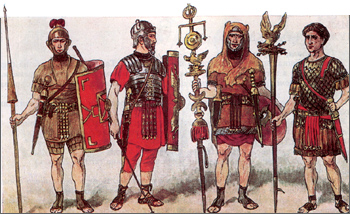

This ^
Suck it up and move on people.
Armor will not protect you if you were a *** warrior.
A good warrior can fight naked with just the essential tools when used properly.
Romans were half naked, greeks were half naked - and those were the best warriors and armies in known history. Too much armour hinders mobility and they knew that. They couldn't have done half their gamechanging manoeuvres if they had worn the armour like in ESO.Edited by Egonieser on May 10, 2015 12:16PMSometimes, I dream about...cheese...
Dermont - v16 Pompous Altmer Sorcerer (With a very arrogant face!)
Egonieser - v16 Nord Stamina Dragonborn Wannabe
Endoly - v16 Tiny Redguard Sharpened MaceBlade
Egosalina - v16 Breton Cheesus Beam Specialist
Egowen - v16 Dunmer Whipping Expert (Riding crops eluded her)
(Yes, I had to grind all these to v16)
Akamanakh - lvl 22 Khajiit GankBlade (Inspired by Top Cat)
Targos Icewind - lvl 34 Imperial (Future) Jabplar
(CP 830+)
PC - EU0 -
 Morduil✭✭✭Romans were half naked, greeks were half naked - and those were the best warriors and armies in known history. Too much armour hinders mobility and they knew that. They couldn't have done half their gamechanging manoeuvres if they had worn the armour like in ESO.
Not to get too picky, but that's not totally true.
On the battlefield, both Roman and Greek infantries were relatively slow in manoeuvring, sacrificing battlefield mobility for cohesion of formation. Alexander the Great was famed for battlefield mobility, but that was due to his hetairoi cavalry - the Macedonian infantry phalanx was deeply umanoeuvrable, used as the anvil to the cavalry hammer.
The main weakness of the Roman army was its underappreciation of cavalry, and this on occasion had catastrophic consequences when their (in battle) relatively slow moving infantry were faced by a more cavalry-based, fast manoeuvring enemy - for example at Carrhae. Later in the Empire cavalry became a more important part of the typical Imperial army composition (the Republic and Principate had it, often in large numbers - as in the Gallic Wars - but it was mostly peripheral to the infantry in numbers and military tactics) but they were still quite lightly armoured, and this was not necessarily an advantage, as at Adrianople where they were no match for the more heavily armoured Gothic cavalry.
The primary reasons for the use of relatively light armour in the ancient world was twofold: first) metal armour was expensive, and second) the Mediterranean and Mesopotamian climates are extremely hot.
2 -
Bryndwr_Badmoon wrote: »I'd crack up if I saw a Khajiit get all feral in a fight like some kitties do. I have 5 Savannahs, and one of them, my big F-2 gets cobra-spitty and will roll onto her back to get ya real well with those back claws should you really incur her wrath. At her size, I tell folks to try to avoid that scenario.MercyKilling wrote: »Bryndwr_Badmoon wrote: »
I don't mind the open-toed look so much, but boots would be lovely if those aren't available. I just started playing this week, so sadly, I'm wearing what seem to be bandages...?
Don't worry, the armor becomes much more prudish as you level up, until eventually you have not even one square inch of skin showing for some of the styles.
Oh no!! See, I'm not lookin' to be a hootchie momma bootie flinger or anything, but a little belly showing nice feminine armor would be nice!
Well.. I know Bosmer light armor (Bosmer being Wood Elf if you didn't know) has a top that shows quite a good amount of belly for females.- Former WoW Player, SWTOR Player, Neverwinter Player
- PS4 Player
- PSN: Othiion
Odon von Gerhardt (DC) Templar, Werewolf, Imperial
Lareas nightblossom (DC) Nightblade Archer, Werewolf, Bosmer
**Need a werewolf bite for free? Contact my characters ingame and I will provide**1 -
Well.. I know Bosmer light armor (Bosmer being Wood Elf if you didn't know) has a top that shows quite a good amount of belly for females.
@Xilidevil Thanks so much!
0 -
Gidorick✭✭✭✭✭
✭✭✭✭✭I've chosen different, less efficient footware because of the open-toed shoes. I think they offer plenty of both.What ESO really needs is an Auction Horse.
That's right... Horse.
Click HERE to discuss.
Want more crazy ideas? Check out my Concept Repository!0 -
 Moonscythe✭✭✭✭✭Bryndwr_Badmoon wrote: »I'd crack up if I saw a Khajiit get all feral in a fight like some kitties do. I have 5 Savannahs, and one of them, my big F-2 gets cobra-spitty and will roll onto her back to get ya real well with those back claws should you really incur her wrath. At her size, I tell folks to try to avoid that scenario.MercyKilling wrote: »Bryndwr_Badmoon wrote: »
I don't mind the open-toed look so much, but boots would be lovely if those aren't available. I just started playing this week, so sadly, I'm wearing what seem to be bandages...?
Don't worry, the armor becomes much more prudish as you level up, until eventually you have not even one square inch of skin showing for some of the styles.
Oh no!! See, I'm not lookin' to be a hootchie momma bootie flinger or anything, but a little belly showing nice feminine armor would be nice!
Well.. I know Bosmer light armor (Bosmer being Wood Elf if you didn't know) has a top that shows quite a good amount of belly for females.
Bosmer light has long sleeves but Bosmer medium is just an x of leather in the front. Don't talk to me about losing my toes when some cat is ripping out my totally unprotected belly. What is with calling armor which does it's job by covering tender, tearable flesh with leather prudish? I'd rather be protected than titillate.Scura di Notte - Altmer Nightblade (gear)
Lalin del Sombra - Bosmer Sorcerer (alchemy/enchanting)
Angevin Sarkany - Bosmer Dragonknight
Alkemene Velothi - Dunmer Warden (Morrowind)
Sanna yos'Phalen - Altmer Sorcerer (provisioning)
Cosima di Mattina -Altmer Sorcerer
Naria Andrano - Dunmer Templar
Luca della Serata - Redguard Templar1 -
@MoonscytheBosmer light has long sleeves but Bosmer medium is just an x of leather in the front. Don't talk to me about losing my toes when some cat is ripping out my totally unprotected belly. What is with calling armor which does it's job by covering tender, tearable flesh with leather prudish? I'd rather be protected than titillate.
I'm less than week in and am hoping to be a healer as my main character, so that means standing behind someone, right?
hehehe1 -
RiCatSoul ShrivenPerhaps nail and toe nail polish in colors can be added? Nothing like a little style to dress things up1
-
 UrQuan✭✭✭✭✭
✭✭✭✭✭
This was one of my fields of study back in University, and you've got it pretty much exactly.Romans were half naked, greeks were half naked - and those were the best warriors and armies in known history. Too much armour hinders mobility and they knew that. They couldn't have done half their gamechanging manoeuvres if they had worn the armour like in ESO.
Not to get too picky, but that's not totally true.
On the battlefield, both Roman and Greek infantries were relatively slow in manoeuvring, sacrificing battlefield mobility for cohesion of formation. Alexander the Great was famed for battlefield mobility, but that was due to his hetairoi cavalry - the Macedonian infantry phalanx was deeply umanoeuvrable, used as the anvil to the cavalry hammer.
The main weakness of the Roman army was its underappreciation of cavalry, and this on occasion had catastrophic consequences when their (in battle) relatively slow moving infantry were faced by a more cavalry-based, fast manoeuvring enemy - for example at Carrhae. Later in the Empire cavalry became a more important part of the typical Imperial army composition (the Republic and Principate had it, often in large numbers - as in the Gallic Wars - but it was mostly peripheral to the infantry in numbers and military tactics) but they were still quite lightly armoured, and this was not necessarily an advantage, as at Adrianople where they were no match for the more heavily armoured Gothic cavalry.
The primary reasons for the use of relatively light armour in the ancient world was twofold: first) metal armour was expensive, and second) the Mediterranean and Mesopotamian climates are extremely hot.
I would also add that part of Alexander's fame for battlefield mobility also comes from his strategic mobility. His forces were able to march farther in a day than their enemies, and show up on the battlefield before the opposing forces were prepared. This alone often allowed them to out-maneuver them in battle (especially as his forces were famed for marching for hours and almost immediately entering battle with little to no rest).
It's also worth noting that the Macedonian phalanx, as unmaneuverable as it was, was still light and maneuverable compared to the earlier phalanxes seen during the Peloponnesian War, or the Greco-Persian Wars. Maneuvering with those phalanxes of heavy hoplites generally consisted of going in a straight line forward, and then (once contact had been made with the enemy) slowly shifting to the left, regardless of the wishes of the commander.
Someone stole my sweetrollCaius Drusus Imperial DK (DC)
Bragg Ironhand Orc Temp (DC)
Neesha Stalks-Shadows Argonian NB (EP)
Falidir Altmer Sorcr (AD)
J'zharka Khajiit NB (AD)Isabeau Runeseer Breton Sorc (DC)
Fevassa Dunmer DK (EP)
Manut Redguard Temp (AD)
Tylera the Summoner Altmer Sorc (EP)
Svari Snake-Blood Nord DK (AD)Ashlyn D'Elyse Breton NB (EP)
Filindria Bosmer Temp (DC)
Vigbjorn the Wanderer Nord Warden (EP)
Hrokki Winterborn Breton Warden (DC)
Basks-in-the-Sunshine Argonian Temp2 -
MercyKilling✭✭✭✭✭
This was one of my fields of study back in University, and you've got it pretty much exactly.Romans were half naked, greeks were half naked - and those were the best warriors and armies in known history. Too much armour hinders mobility and they knew that. They couldn't have done half their gamechanging manoeuvres if they had worn the armour like in ESO.
Not to get too picky, but that's not totally true.
On the battlefield, both Roman and Greek infantries were relatively slow in manoeuvring, sacrificing battlefield mobility for cohesion of formation. Alexander the Great was famed for battlefield mobility, but that was due to his hetairoi cavalry - the Macedonian infantry phalanx was deeply umanoeuvrable, used as the anvil to the cavalry hammer.
The main weakness of the Roman army was its underappreciation of cavalry, and this on occasion had catastrophic consequences when their (in battle) relatively slow moving infantry were faced by a more cavalry-based, fast manoeuvring enemy - for example at Carrhae. Later in the Empire cavalry became a more important part of the typical Imperial army composition (the Republic and Principate had it, often in large numbers - as in the Gallic Wars - but it was mostly peripheral to the infantry in numbers and military tactics) but they were still quite lightly armoured, and this was not necessarily an advantage, as at Adrianople where they were no match for the more heavily armoured Gothic cavalry.
The primary reasons for the use of relatively light armour in the ancient world was twofold: first) metal armour was expensive, and second) the Mediterranean and Mesopotamian climates are extremely hot.
I would also add that part of Alexander's fame for battlefield mobility also comes from his strategic mobility. His forces were able to march farther in a day than their enemies, and show up on the battlefield before the opposing forces were prepared. This alone often allowed them to out-maneuver them in battle (especially as his forces were famed for marching for hours and almost immediately entering battle with little to no rest).
It's also worth noting that the Macedonian phalanx, as unmaneuverable as it was, was still light and maneuverable compared to the earlier phalanxes seen during the Peloponnesian War, or the Greco-Persian Wars. Maneuvering with those phalanxes of heavy hoplites generally consisted of going in a straight line forward, and then (once contact had been made with the enemy) slowly shifting to the left, regardless of the wishes of the commander.
I love it when people make posts like this as if they have empirical proof that it's fact, when the cold hard truth of the matter is....we really just don't know. We cannot /know/, for we were not /there/. At best, we guess.
Remember, history is written by the victor, and back then by very flowery prose that was likely greatly exaggerated. Add in the fact that when translating to another language, nuances are invariably lost and you end up with at BEST a blurred picture of what actually happened.
Note that I am not attacking you or your knowledge, which I firmly believe was hard work and much study for you...I am questioning the sources of knowledge. Until time travel is no longer science fiction..we truly cannot know for certain anything that happened in the past. (Well, before more efficient record keeping was discovered/utilized. And I still question some recent history. ) I am not spending a single penny on the game until changes are made to the game that I want to see.
1) Remove having to be in a guild to sell items to other players at a kiosk.
2) Cosmetic modding for armor and clothing.
3) Difficulty slider.
4) Fully customizable player housing that isn't tied to anything in the game other than having the correct resources and enough gold to build. Don't tie it to PvP, guild membership, or anything at all. Oh, make it instanced so as not to take up world map space, too. Zeni screwed this one up already.
Any /one/ of these things implemented would get me spending again, maybe even subbing.0 -
UrQuan✭✭✭✭✭
✭✭✭✭✭
Given that we have detailed accounts of many of the battles and campaigns of those eras from both sides, and that we have enough written and physical evidence to know exactly what the equipment was that the different forces used... Yup, we can actually be very very confident of the above. Much more so than we can about many other, more recent, eras of history.MercyKilling wrote: »
This was one of my fields of study back in University, and you've got it pretty much exactly.Romans were half naked, greeks were half naked - and those were the best warriors and armies in known history. Too much armour hinders mobility and they knew that. They couldn't have done half their gamechanging manoeuvres if they had worn the armour like in ESO.
Not to get too picky, but that's not totally true.
On the battlefield, both Roman and Greek infantries were relatively slow in manoeuvring, sacrificing battlefield mobility for cohesion of formation. Alexander the Great was famed for battlefield mobility, but that was due to his hetairoi cavalry - the Macedonian infantry phalanx was deeply umanoeuvrable, used as the anvil to the cavalry hammer.
The main weakness of the Roman army was its underappreciation of cavalry, and this on occasion had catastrophic consequences when their (in battle) relatively slow moving infantry were faced by a more cavalry-based, fast manoeuvring enemy - for example at Carrhae. Later in the Empire cavalry became a more important part of the typical Imperial army composition (the Republic and Principate had it, often in large numbers - as in the Gallic Wars - but it was mostly peripheral to the infantry in numbers and military tactics) but they were still quite lightly armoured, and this was not necessarily an advantage, as at Adrianople where they were no match for the more heavily armoured Gothic cavalry.
The primary reasons for the use of relatively light armour in the ancient world was twofold: first) metal armour was expensive, and second) the Mediterranean and Mesopotamian climates are extremely hot.
I would also add that part of Alexander's fame for battlefield mobility also comes from his strategic mobility. His forces were able to march farther in a day than their enemies, and show up on the battlefield before the opposing forces were prepared. This alone often allowed them to out-maneuver them in battle (especially as his forces were famed for marching for hours and almost immediately entering battle with little to no rest).
It's also worth noting that the Macedonian phalanx, as unmaneuverable as it was, was still light and maneuverable compared to the earlier phalanxes seen during the Peloponnesian War, or the Greco-Persian Wars. Maneuvering with those phalanxes of heavy hoplites generally consisted of going in a straight line forward, and then (once contact had been made with the enemy) slowly shifting to the left, regardless of the wishes of the commander.
I love it when people make posts like this as if they have empirical proof that it's fact, when the cold hard truth of the matter is....we really just don't know. We cannot /know/, for we were not /there/. At best, we guess.
Remember, history is written by the victor, and back then by very flowery prose that was likely greatly exaggerated. Add in the fact that when translating to another language, nuances are invariably lost and you end up with at BEST a blurred picture of what actually happened.
Note that I am not attacking you or your knowledge, which I firmly believe was hard work and much study for you...I am questioning the sources of knowledge. Until time travel is no longer science fiction..we truly cannot know for certain anything that happened in the past. (Well, before more efficient record keeping was discovered/utilized. And I still question some recent history. )
Someone stole my sweetrollCaius Drusus Imperial DK (DC)
Bragg Ironhand Orc Temp (DC)
Neesha Stalks-Shadows Argonian NB (EP)
Falidir Altmer Sorcr (AD)
J'zharka Khajiit NB (AD)Isabeau Runeseer Breton Sorc (DC)
Fevassa Dunmer DK (EP)
Manut Redguard Temp (AD)
Tylera the Summoner Altmer Sorc (EP)
Svari Snake-Blood Nord DK (AD)Ashlyn D'Elyse Breton NB (EP)
Filindria Bosmer Temp (DC)
Vigbjorn the Wanderer Nord Warden (EP)
Hrokki Winterborn Breton Warden (DC)
Basks-in-the-Sunshine Argonian Temp5 -
UrQuan✭✭✭✭✭
✭✭✭✭✭
Which were actually introduced for cavalry... It made them more steady in their stirrups in battle. Not stilettos, naturally, but simply a very pronounced heel that was the precursor to the high heels we've seen women wear for the last century (give or take).Well, it beats high heels.
Someone stole my sweetrollCaius Drusus Imperial DK (DC)
Bragg Ironhand Orc Temp (DC)
Neesha Stalks-Shadows Argonian NB (EP)
Falidir Altmer Sorcr (AD)
J'zharka Khajiit NB (AD)Isabeau Runeseer Breton Sorc (DC)
Fevassa Dunmer DK (EP)
Manut Redguard Temp (AD)
Tylera the Summoner Altmer Sorc (EP)
Svari Snake-Blood Nord DK (AD)Ashlyn D'Elyse Breton NB (EP)
Filindria Bosmer Temp (DC)
Vigbjorn the Wanderer Nord Warden (EP)
Hrokki Winterborn Breton Warden (DC)
Basks-in-the-Sunshine Argonian Temp1 -
 Iselin✭✭✭✭✭
✭✭✭
Which were actually introduced for cavalry... It made them more steady in their stirrups in battle. Not stilettos, naturally, but simply a very pronounced heel that was the precursor to the high heels we've seen women wear for the last century (give or take).Well, it beats high heels.
Yeah... I was referring to the Asian MMO art style, not manly man heels
2 -
 dafox187✭✭✭Why are so many of the battle gear footwear. open toed? If it was actual battle what do you think I would be chopping off first? Yup, without toes it would be a lot harder to maneuver, much less stand up. I don't know who thought of it, but I think it's stupid. I know it's a minor cosmetic thing but it bugs Me. What do you think?
has many amazing ideas from fourm to talk about on eso live talks about sandles
don't get mad at my spelling, autocorrect doesn't cover fantasy.
Why couldn't the Khajiit go to the party? She had to be Elsweyr.1 -
rynth✭✭✭✭✭Romans were half naked, greeks were half naked - and those were the best warriors and armies in known history. Too much armour hinders mobility and they knew that. They couldn't have done half their gamechanging manoeuvres if they had worn the armour like in ESO.
Not to get too picky, but that's not totally true.
On the battlefield, both Roman and Greek infantries were relatively slow in manoeuvring, sacrificing battlefield mobility for cohesion of formation. Alexander the Great was famed for battlefield mobility, but that was due to his hetairoi cavalry - the Macedonian infantry phalanx was deeply umanoeuvrable, used as the anvil to the cavalry hammer.
The main weakness of the Roman army was its underappreciation of cavalry, and this on occasion had catastrophic consequences when their (in battle) relatively slow moving infantry were faced by a more cavalry-based, fast manoeuvring enemy - for example at Carrhae. Later in the Empire cavalry became a more important part of the typical Imperial army composition (the Republic and Principate had it, often in large numbers - as in the Gallic Wars - but it was mostly peripheral to the infantry in numbers and military tactics) but they were still quite lightly armoured, and this was not necessarily an advantage, as at Adrianople where they were no match for the more heavily armoured Gothic cavalry.
The primary reasons for the use of relatively light armour in the ancient world was twofold: first) metal armour was expensive, and second) the Mediterranean and Mesopotamian climates are extremely hot.
to get picky the Romans were not slow on the battlefield, actually they were quite good at maneuverability it was one of their greatest assets. Now if you are talking in the days before Scipio Africanus then there is a bit of truth that they were not flexible. But, after reforms Romans changed their tactics and became very, very maneuverable on the battlefield its one of the reasons why they won so many battles when out numbered. As for cavalry the Romans never adopted them as a main stay of the army, most cavalry were conscripts of barbarians. But by far and large the whole Roman "army" was centered upon its infantry cohorts. Also key reason cavalry wasn't the most reliable in battle was because there was no stirrup back then.
When asked what he would do for a Klondike bar. Grand Moff Tarkin said "why I would blow up Alderaan."0 -
Moonscythe✭✭✭✭✭
Which were actually introduced for cavalry... It made them more steady in their stirrups in battle. Not stilettos, naturally, but simply a very pronounced heel that was the precursor to the high heels we've seen women wear for the last century (give or take).Well, it beats high heels.
And lets not forget cowboy boots which have heels for very similar reasons.Scura di Notte - Altmer Nightblade (gear)
Lalin del Sombra - Bosmer Sorcerer (alchemy/enchanting)
Angevin Sarkany - Bosmer Dragonknight
Alkemene Velothi - Dunmer Warden (Morrowind)
Sanna yos'Phalen - Altmer Sorcerer (provisioning)
Cosima di Mattina -Altmer Sorcerer
Naria Andrano - Dunmer Templar
Luca della Serata - Redguard Templar1 -
 LameoveR✭✭✭✭Age of knights ends when crossbows's bolts start to pierce their "OMG HEAVY METAL ARMOR FULLMETAL JACKET!!!!"
And i'm not sure that full metal armor can save you of... FIRE FROST OR LIGHTING damage
1 -
Morduil✭✭✭[/quote]
to get picky the Romans were not slow on the battlefield, actually they were quite good at maneuverability it was one of their greatest assets. Now if you are talking in the days before Scipio Africanus then there is a bit of truth that they were not flexible. But, after reforms Romans changed their tactics and became very, very maneuverable on the battlefield its one of the reasons why they won so many battles when out numbered. As for cavalry the Romans never adopted them as a main stay of the army, most cavalry were conscripts of barbarians. But by far and large the whole Roman "army" was centered upon its infantry cohorts. Also key reason cavalry wasn't the most reliable in battle was because there was no stirrup back then.
[/quote]
They weren't completely unmanoeuvrable, but that manoeuvrability was one of their greatest assets is just not true - again, consider Carrhae, or Abrittus, or Edessa. Their greatest assets were discipline and cohesion, created by training and the internal unit and command structure. Once deployed, the main formation was largely committed. Flexibility was much more provided by the use of reserves, not the maneouvrability of the main force. Furthermore, if caught unprepared, disaster could ensue, the Teutoberg Forest being the most disastrous example.
Re. cavalry, that is all true, and some of the reasons why the situation was as I described (apart from the idea that their lacking stirrups made them unreliable - consider both the Parthians and the Huns, as well as Alexander's hetairoi, the invention of stirrups made heavy cavalry much more devastating, but not more reliable; as a possible advantage it is, however, here irrelevant as the Romans' foes didn't have them either), but I was focusing on the infantry as more germane to this game.
0